Nearly half of WA sheriffs face misconduct complaints, according to key agency
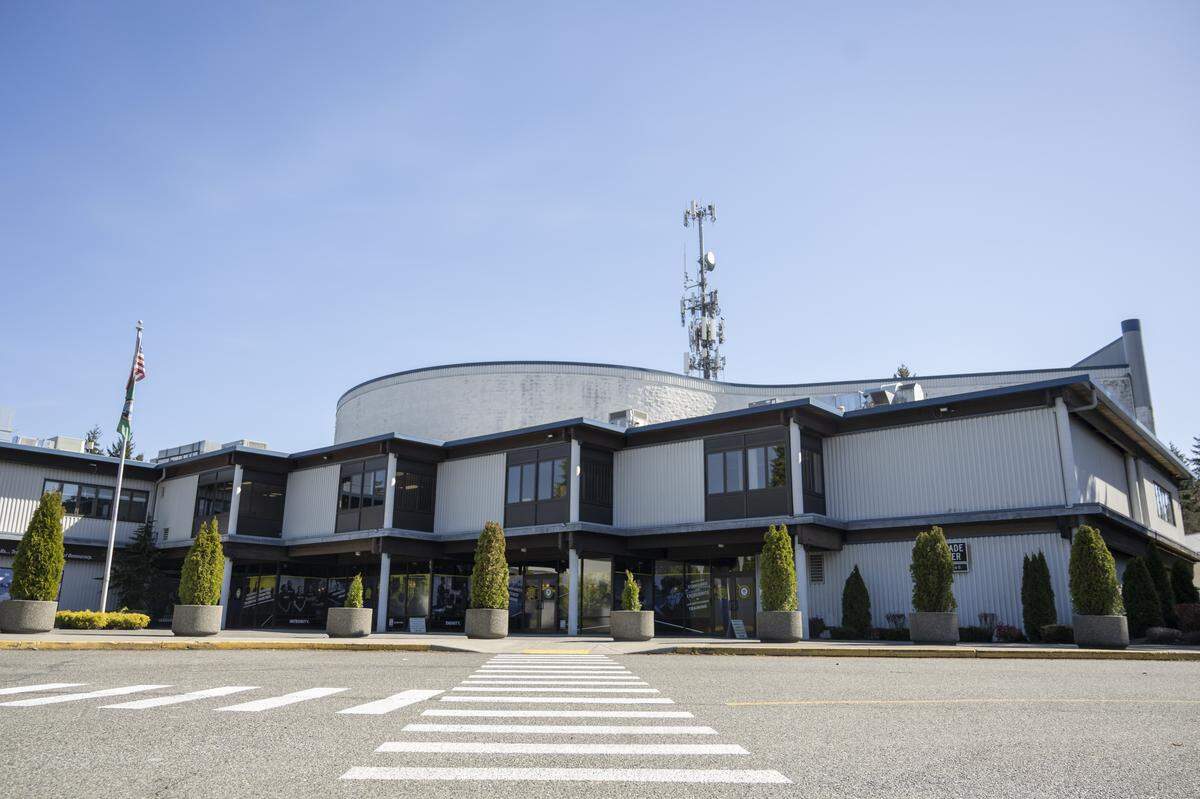
Nearly half of the elected sheriffs in Washington state face allegations of misconduct lodged by the public with the state’s Criminal Justice Training Commission, which has the authority to suspend or revoke a cop’s certification as a law enforcement officer.
Under a new law set to take effect at the end of April, an elected sheriff’s office will be declared vacant if the licensing body strips them of their certification. The law faces two legal challenges.
Each of Washington’s 39 counties, except for King County, selects its sheriff through elections. According to public records held by the CJTC, 18 sitting sheriffs have open certification cases regarding allegations of misconduct.
The allegations include complaints about discriminatory posts on social media, claims of falsifying government documents, ties to alleged extremist groups and purported unlawful arrests or criminal incidents that weren’t properly investigated.
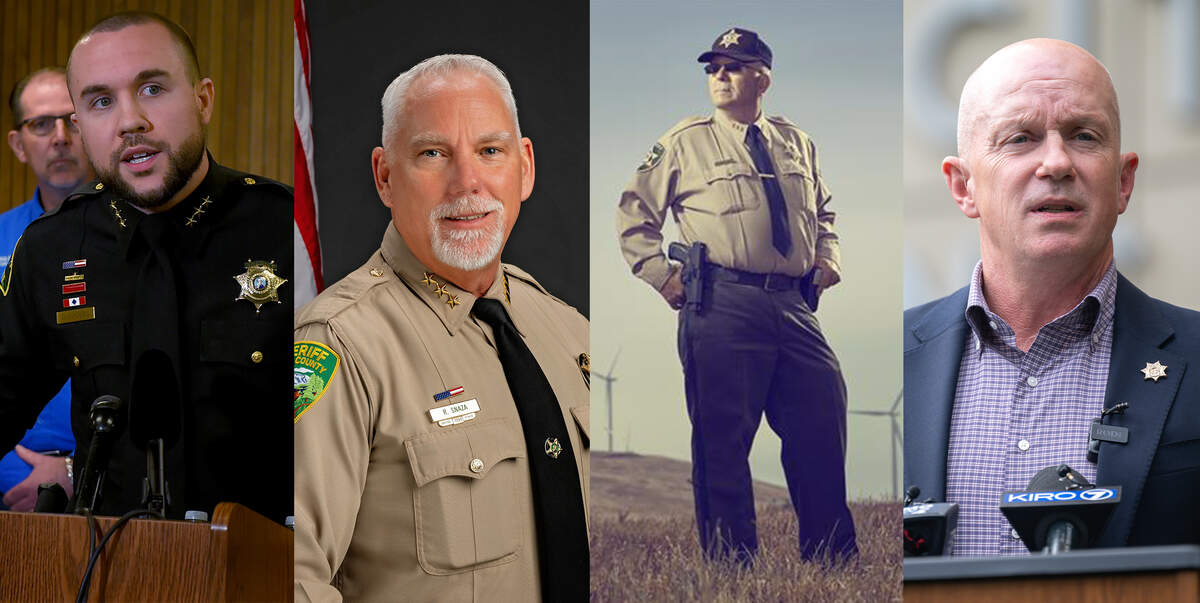
Topping the list of sheriffs with the most cases, as of April 3, is Pierce County Sheriff Keith Swank, with 10 certification cases. He is followed by Klickitat County Sheriff Bob Songer with eight cases, Lewis County Sheriff Robert Snaza with seven cases and Thurston County Sheriff Derek Sanders with six.
The 14 other sheriffs each have between one and three open cases. They represent Adams, Asotin, Benton, Clark, Columbia, Ferry, Franklin, Garfield, Grays Harbor, Lincoln, Mason, Pacific, Snohomish and Yakima counties.
Most of the certification cases opened for the 18 sheriffs are in the intake-review portion of the CJTC’s process for determining whether allegations of misconduct are true. At that stage, the CJTC’s Certification Bureau writes a summary of the allegations and evidence and either recommends the case be closed or referred for investigation. None of the cases are at the investigation stage.
In some cases, if misconduct allegations are found to be true, state law RCW 43.101.105 says the CJTC must revoke the officer’s certification. That includes instances where an officer has been convicted of a felony or a gross misdemeanor domestic-violence offense.
In other cases, the same law says the commission may suspend or revoke the certification or require remedial training. That includes cases where an officer is found to have made statements or online posts that involve discrimination against a person based on a number of protected statuses.
Social media posts are a shared complaint
A common complaint against Songer, Sanders and Swank is about their use of social media.
Seven out of Swank’s 10 certification cases are related to statements he’s made on his X account, which identifies him as the elected sheriff of Pierce County. Some of the cases, for example, allege that Swank was engaging in misconduct when he asked his 34,000 followers in September if it was time to ban transgender people from owning guns. Another claimed Swank harmed LGBTQ+ Washingtonians when he told the State Patrol it should be “embarrassed” for making an apology after troopers inadvertently interrupted a Pride flag-raising ceremony at the state capitol.
Swank did not respond to a request for comment for this story. He has previously brushed aside complaints made against him with the CJTC and said on X that he “won’t be silenced.”
Sanders has three certification cases alleging misconduct for his use of social media. One is for trading insults on Facebook with Swank and making a comment that the complainant described as age-based discrimination.
Another complained more generally about the way Sanders communicates on social media. On his Facebook page, “Sheriff Sanders,” he frequently posts details of recent public-safety incidents, praises deputies who have won awards and sometimes replies to commenters. A November 2025 complaint filed with the CJTC did not identify any specific posts but said his tone and content appeared inconsistent with standards of professionalism outlined in the Thurston County Sheriff’s Office policy manual.
“Across multiple posts, Sheriff Sanders has engaged in commentary that comes across as mocking, dismissive or antagonistic toward individuals and community members who hold differing viewpoints,” the anonymous complainant wrote. “While elected officials are entitled to express opinions, the manner in which these posts are delivered reflects poorly on the Office of the Sheriff and may undermine public trust.”
Sanders declined to respond to the misconduct allegations because each of them are open and pending investigation by the CJTC. He said he would be happy to “chime in” when investigations are complete.
In an April 21 email to The News Tribune, Sanders said citizens should expect to see more complaints submitted against sheriffs now that Senate Bill 5974 has been signed into law. He said there is now a path to circumvent the process of electing or recalling sheriffs.
“The complaint can be anonymous, it doesn’t have to be true, it can lack context, and most importantly, there is no penalty for lying on the complaint form,” Sanders said. “It’s a low risk, high reward system for complainants, especially those with political motives.”
Songer said in an April 16 phone call that people have a right to file complaints against him or other sheriffs, but he took issue with complaints filed anonymously.
“You don’t even know who’s filing the complaint,” Songer said. “There’s a lot of times that really explains why they’re filing the complaint. They might be unhappy with a sheriff’s conclusion on something. Got a ticket, and they’re not happy about it. It could be a number of things.”
Songer has one certification case related to his social media use. In February 2025, a person from a concerned citizens group — who identified herself by name — complained that Songer made comments on social media stating he intended to allocate resources to federal immigration enforcement operations. The complainant said Songer expressed an intent to ignore Washington’s so-called sanctuary law, the Keep Washington Working Act, that prohibits cooperation between local law enforcement and federal immigration authorities.
In a video posted to the Facebook page for the Klickitat County Sheriff’s Office in December 2024, Songer said he had a message for ICE.
“If you need any help at all, put me on speed dial,” Songer said in the video. “We will be there to help you.”
Songer told The News Tribune he doesn’t think the CJTC should be looking at police officers’ social media posts as a source of possible misconduct. He said he hadn’t given up his First Amendment rights.
“The problem is, again, is a situation where the state is trying to control sheriffs, period,” Songer said.
Alleged ties to extremist groups
Swank and Songer also have certification cases about their ties to a group that complainants and the Anti-Defamation League describe as an extremist group, the Constitutional Sheriffs and Peace Officers Association.
Swank has said he is not a member of the group, which, according to the States United Democracy Center, a nonpartisan nonprofit, asserts that a sheriff’s law enforcement powers supersede those of any elected official at any level of government.
Songer told The News Tribune he is a proud board member of the group. His position as a constitutional sheriff has been documented by national news media such as NPR and The New Yorker.
Asked what values he shares with the constitutional sheriffs movement, Songer referred to intervening when citizens rights are violated by the state or federal government.
“In other words, they stand for the God-given inalienable rights that God gave us, and that’s to protect the citizens,” Songer said. “And that’s whether they’re Democrat or Republican or Independent, doesn’t matter. If their rights are being violated, our job as a constitutional sheriff is to intervene and protect their rights.”
Songer noted that he had stood against various state mandates during the COVID-19 pandemic, such as the requirement that state employees be vaccinated against the coronavirus. There were also recommendations from government public health organizations that people wear masks to slow the virus’ spread.
“I would do it again in a New York second,” Songer said. “Where does the government get off telling you how you’re supposed to respond to the virus, which by the way, turned out to be a bunch of B.S. I didn’t require my deputies to get the stab.”
Songer received four complaints in May 2024 after he organized a town hall meeting. The meeting was a response to county commissioners signaling their intent to shutter the Klickitat County Jail. Complainants said Songer used the meeting to show attendees a video about the constitutional sheriffs movement.
Anonymous complaints described it as propaganda. Songer said it had to do with people’s constitutional rights, and he thought it was educational.
“Predictably, the town hall devolved into bitter shouting, profanity, and obscene gestures …” one complainant told the CJTC.
Swank has one certification case for speaking in January at a Constitutional Sheriffs and Peace Officers Association event at a church in Puyallup. Songer also spoke at the event.
“I also have concerns that some of the statements made by these Sheriffs at this rally may raise other concerns about the disregard for rights of people, like transgender individuals, which may fall under RCW 43.101.105,” the complaint that led to the case states.
Swank used part of his speech to address his certification cases and the legislation that led to the new law ousting sheriffs from office if they are decertified, Senate Bill 5974.
“One of the things that would be disqualifying would be hate speech,” Swank said at the event. “You know, the stuff I post on X, such as trans women are men. They want to decertify me for that, and if they pass this legislation, then they can decertify me and then remove me from office.”
Other cases
Swank’s other certification cases relate to his comments before a state Senate committee that landed him in hot water earlier this year, and claims that he altered text messages a public records officer asked him to hand over.
In January, Swank testified in Olympia before the Senate Committee on Law & Justice on Senate Bill 5974 and a bill that proposed banning law enforcement from wearing masks to hide their identities. Gov. Bob Ferguson later signed both bills into law. During Swank’s testimony, he told legislators he didn’t recognize their authority to impose these controls on him.
“When you try to remove me from office, thousands of Pierce County residents will surround the County-City Building in downtown Tacoma and will not allow that to happen,” Swank said. “I hope it doesn’t come to that, but I and they are prepared. Are you prepared?”
Days later, a woman connected to the Washington Coalition for Police Accountability complained that Swank’s comments were “grossly insubordinate.”
“In light of the current happenings across our country with politicians being targeted and murdered, this unhinged anger needs to be addressed immediately before people get hurt,” the complaint stated.
After the Washington Association of Sheriffs and Police Chiefs announced it would consider expelling Swank from the organization for his comments — which has so far not happened — Swank told The News Tribune that he didn’t think his comments were threatening.
Swank’s certification case related to allegations that he altered text messages stems from a lawsuit brought against Joan Mell, a private attorney who has claimed to represent Swank in an official capacity. In October, the King County Superior Court judge presiding over the case wrote in a court order that Swank appeared to have altered messages he texted Mell to remove messages that could be seen as offensive.
In November, a complaint sent to the CJTC referred to a News Tribune story about the issue and alleged that Swank had engaged in dishonesty. Further reporting from The News Tribune found that a little more than four dozen texts Swank sent in 2024 were not included in screenshots Swank initially gave a public records officer. Missing texts included vulgarities used to reference county prosecutors.
Swank later told The News Tribune he wasn’t trying to hide anything, and that the texts were omitted by mistake.
This story was originally published April 24, 2026 at 5:00 AM.