Pierce County sheriff candidates Jackson, Swank want to ‘get tough’ on crime. Can they?
Listen to how the two candidates running to be Pierce County’s next sheriff talk about how they would enforce the law, and you’ll hear “tough on crime” rhetoric that promises greater accountability from those who commit crimes, particularly young people.
Keith Swank, a retired Seattle Police Department captain, is running against Sheriff’s Department patrol chief Patti Jackson. Swank said in a recent interview with KOMO News that young people who commit violent crimes are not being held accountable, and as sheriff he would work with the Prosecuting Attorney’s Office and judges to more often hold them in pretrial detention.
“There really is evil out there in the world,” Swank said. “And just because someone is young doesn’t mean that they’re not evil.”
Jackson told the same TV station that youth are committing adult-sized crimes, creating violence and chaos, and that policymakers aren’t holding them responsible because of the recognition that young people’s minds aren’t fully developed.
“We need to get tough and hold people accountable,” Jackson said.

Whichever candidate is elected, will they be able to make their “tough on crime” approach a reality within the state and Pierce County’s systems of justice?
Some restrictions stand in the way, including state laws that affect juvenile justice, booking restrictions for adults and juveniles and staffing shortages in corrections. But the county’s elected prosecutor, the judge who presently presides over juvenile court and the youth detention center’s administrator say they are ready to work in partnership with the county’s next sheriff to address crime.
How to do that isn’t up to any singular law enforcement, judicial or administrative position.
Pierce County Prosecutor Mary Robnett recently told The News Tribune that her office would like to hold more juveniles charged with felonies in custody, but prosecutors often are disappointed that juvenile defendants are released on either low or no bail. The same goes for adults.
Getting tougher isn’t a switch she can flip alone.
When a person is arrested on suspicion of breaking the law and brought to Pierce County Jail or Remann Hall, the juvenile detention center, whether they’re booked into the facility is an administrative decision that, as Robnett explained, revolves around policies that the court oversees. The jail and Remann Hall have different booking policies.
Once a person is charged with a crime, it’s up to an adjudicator such as a judge to decide whether that person will be released with the promise that they’ll attend their next court date, or if they should be jailed with some amount of bail. Robnett said whether that’s a high or low bail is another judicial decision.
‘Book and release’ policies
At the jail, bookings still have some of the same restrictions that were in place during the worst of the COVID-19 pandemic. According to the Corrections Bureau’s booking protocol as of Oct. 11, chief Kevin Roberts is prioritizing bed space for “those posing an imminent risk to public safety,” due to low corrections staffing.
People are booked and remain in custody if they’re arrested on felony charges that are class A felonies, violent crimes against persons, theft of a motor vehicle, possession of a stolen vehicle, felony eluding, organized retail theft, residential burglary or domestic-violence and DUI arrests.
If that’s not what they were arrested for, the person will be booked and released with a court date — after being photographed and having their fingerprints taken. Exceptions can be made on a case-by-case basis.
There are about 40 open positions in corrections, an improvement from the 66 vacancies it had in April last year. Sheriff’s Department spokesperson Sgt. Darren Moss said when you count people out on leave for things like injuries or maternity, the jail is still short by about 70 staffers.
If Pierce County’s next sheriff wants to jail more adults, they will have to solve a staffing crisis that has persisted for years in corrections facilities throughout the country. According to the Marshall Project, a nonprofit newsroom that covers the U.S. criminal justice system, U.S. Census Bureau data shows that in 2022, the number of people working for state prisons was the lowest in two decades.
Restrictions on juvenile bookings, investigations
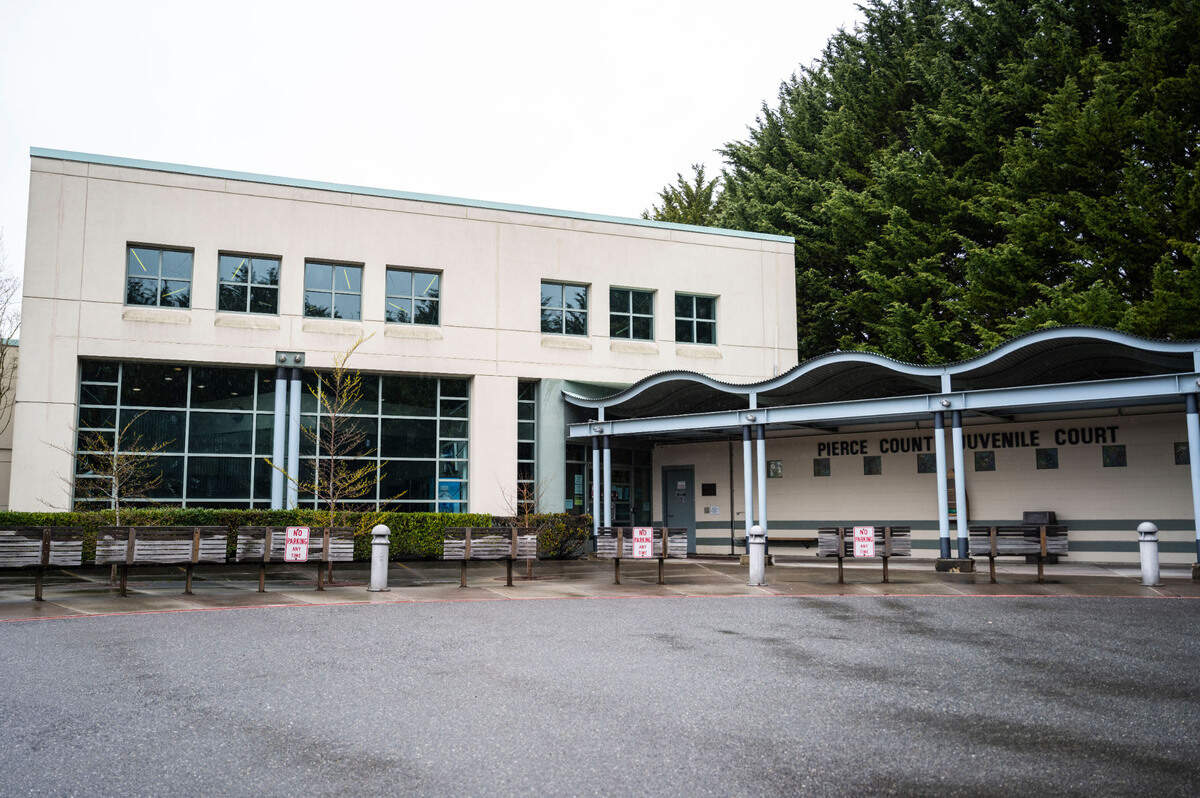
In Remann Hall, booking children into detention is more restrictive.
Since March 2020, the facility only has booked juveniles arrested on suspicion of committing felony crimes, according to Juvenile Court administrator TJ Bohl. Requests to override that policy can be heard on a case-by-case basis, but Bohl or a judge need very specific details about what occurred and how.
Robnett referred to that policy as a change in philosophy in juvenile justice.
“Twenty years ago, there were 150 kids in custody at Remann Hall,” Robnett said. “So that’s a change.”
There are now about 26 to 32 young people in the facility each day, according to Bohl, and most of them are detained for very serious offenses, including murder, armed robbery and serious assaults.
That decline in population at the detention center was a deliberate shift that began in 2003. The idea was to move away from incarceration as a first choice for all children accused of a crime, in favor of getting them into community-based programs that involve things such as individual and family therapy, arts classes, boat building and other programming.
Bohl said Remann Hall tries to take a data-driven approach to juvenile justice, and research is increasingly clear that the initial decision to keep kids incarcerated actually increases their overall risk to the community.
“We know that when young people are connected to their family, when we know they’re connected to school, when we know they’re connected to work or employment or sports or positive activities in the community, we know they have better chances to succeed,” Bohl said.
State law also mandates that the first time a juvenile is referred to the court for a misdemeanor or gross misdemeanor, they will be diverted out of the criminal justice system, according to Robnett. She sees that policy as a good thing. Prosecutors have discretion to decide whether second-time referrals for low-level offenses are diverted or filed with the court.
Still, if a child is accused of committing a violent act, they are going to be booked into Remann Hall, first time or not, according to Judge Joseph Evans, the presiding judge in juvenile court. There is a difference between felony-level assault and misdemeanor, which he said can be violent. If someone has been charged with a shooting, stabbing, assaulting a person with a weapon, pointing a gun in their face, a serious robbery — anything along those lines — Evans said they’re going to be booked.
“They are not going to get out at least until they see a judge,” Evans said. “Most of the time they’re not going to be released until the case is resolved one way or the other.”
Remann Hall’s booking policies have drawn frustration from local law enforcement. Most recently, Fife Police Chief Peter Fisher called out the facility in an Oct. 29 news release for refusing to book a 17-year-old boy who was reported to be throwing things in his house Oct. 24, punching holes in a wall and assaulting his parents.
Fisher said not being able to book the teenager to create a cooling-off period between him and his family creates a “no-win situation.”
“Take the juvenile suspect into custody only to have no available jail option and be left scrambling to figure out release options or do nothing and risk harm to the victim family members as well as accusations of failing to do their job and potential lawsuits resulting from any assault or property damage that occurs after the officer leaves because the officer did not make an arrest when they clearly had probable cause,” as Fisher explained it.
In this specific instance, Bohl said, Fife police did not provide police reports or any additional information about the incident so juvenile-court officials could assess whether detention was appropriate for the teenager, who he said had no criminal history.
Evans said the court is constantly in communication with law enforcement, and the court has made adjustments in the past 10 months based on some of their concerns. He said the court understands it’s an issue to have a teenager who is out of control and causing a disruption in their home.
“That doesn’t always mean that booking them at Remann Hall is the solution,” Evans said. “But by the same token it doesn’t mean that booking them is not something that probably would work for a short period of time. It’s really a case-by-case basis.”
Bohl said he thinks it’s an opportunity for the community to look at the challenges and re-imagine solutions that could meet the need in a more effective way. He said he’s visited jurisdictions across the country and noted some have used assessment centers, which provide a centralized point of intake to address a young person’s concerning behavior and identify underlying problems.
Another legislative decision that has lately frustrated police is a law that prevents law enforcement from questioning a juvenile suspected of a crime before they are connected with a lawyer.
The law, which began as House Bill 1140, took effect in January 2022. It was informed by research that shows youth don’t fully comprehend their rights or understand the consequences of waiving them, according to the American Civil Liberties Union of Washington. Aside from making investigations more difficult, law enforcement has criticized it as hampering its ability to have conversations with young people to deter them from a life of crime.
Before the law took effect, Yakima County Sheriff Bob Udell told the Yakima Herald-Republic that if deputies can’t get statements from young people, “we can’t help them.”
Robnett told The News Tribune there are real difficulties investigating juvenile crime because of legal constraints.
“For practical purposes it means that you can’t talk to a kid,” Robnett said.
Aging juvenile detention center a problem
Remann Hall, which was built in 1971, wasn’t designed for the modern criminal justice system, according to Bohl. It’s capacity is now 40 juveniles due to changes in how kids can be housed, federal regulations and staffing.
It has a small number of functional housing pods, and others don’t have running water or HVAC systems, Bohl said. Since 2003, federal regulations require secure juvenile facilities to maintain 1:8 staffing ratios during the day. He said ideally the facility would have mental health resources that are separate from the detention facility and more counselors on site.
Bohl said the work Remann Hall has done for the past 20 years overall has led to fewer young people being referred to the court. There was a significant drop during the pandemic, followed by a small uptick in 2023 and 2024, according to Bohl, but he says the numbers aren’t what they were pre-COVID.
At the same time, he said, he’s concerned by increases in offenses such as robberies and carjackings. He’s heard two kinds of responses to that problem.
“One is kind of a more, ‘Get tough on crime,’ and all kids need to be incarcerated,” Bohl said. “And the other that you’ll see nationally and in our state, in some areas, is trying to get more kids diverted out of the system and prevent young people from even getting involved in the justice system.”
Once juveniles get into the system, Bohl said, the costs are high and outcomes aren’t good for kids. He said the court’s goal is to build a better system that helps all young people realize their potential.
“We are actively working to change the system so it can be more effective and not be a revolving door,” Bohl said.