Cost of COVID-19: ‘Every one of those deaths has a story.’ Here’s Pierce County’s first
READ MORE
Cost of COVID-19
A closer look at the more than 400 Pierce County residents have died due to the coronavirus pandemic.
Expand All
It was a different world back then, Rosella Berreman recalled in December.
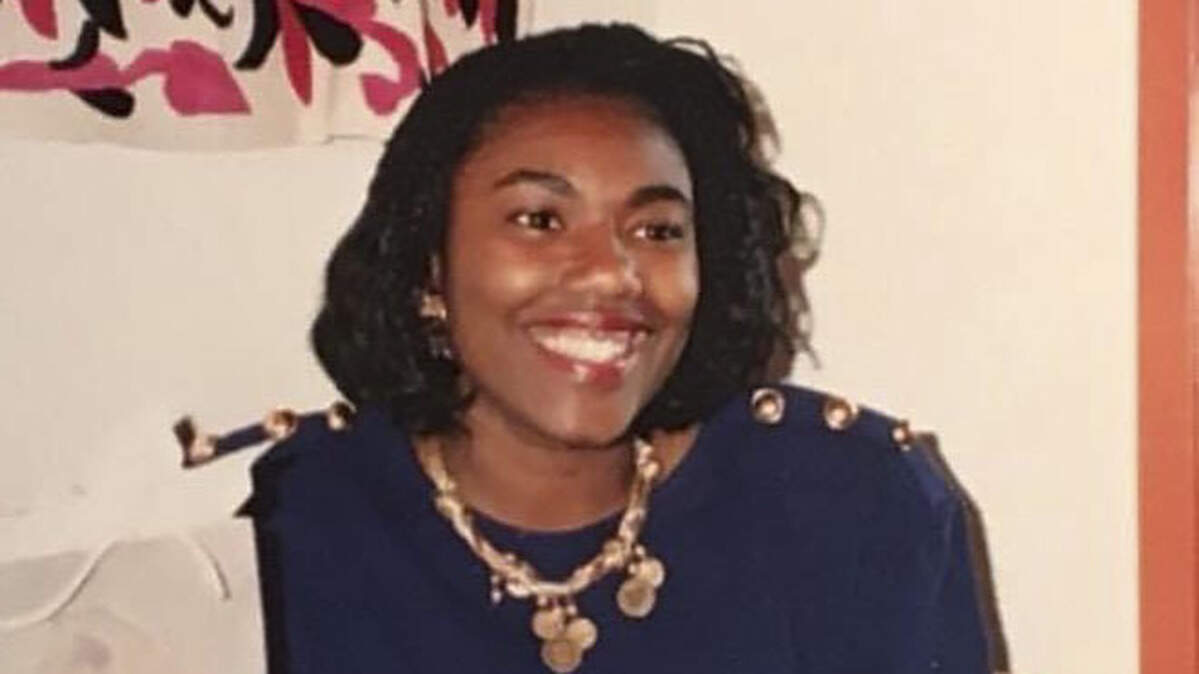
It had been nine months since her daughter, 50-year-old Shawna Berreman, became the first Pierce County resident whose death was linked to COVID-19.
A seeming eternity had passed since Shawna began experiencing shortness of breath in late February while working at her house, her mother explained.
On March 6, when Shawna was taken to Good Samaritan Hospital in Puyallup by ambulance, the responding paramedics were still breaking in their new personal protective equipment, she remembered.
Less than two weeks later, her daughter — who was eventually put into a medically induced coma and placed on a ventilator — was dead.
COVID-19 spiked Shawna Berreman’s temperature, and eventually caused her organs to fail, her mother said.
“We really didn’t think COVID was here. You have to understand that,” Berreman recounted by phone from her family’s South Hill home, which sits on two and a half acres. “When (Shawna) first started feeling bad, it was February. They said COVID was in Lynwood. Nobody said COVID was in Pierce County.”
“For a long time I was in denial (Shawna) was gone,” Berreman continued.
“She walked out the door; she should walk back in it.”
As the coronavirus pandemic continues to rage across the country, the grim milestones keep coming. Almost exactly a year after the first U.S. case of COVID-19 was confirmed — in Snohomish County — the death toll across the country surpassed 400,000.
In Pierce County, the Tacoma-Pierce County Health Department has now confirmed more than 30,000 cases of COVID-19 and more than 370 deaths.
Each loss underscores the devastating scope of the pandemic, and the unsettling anonymity of the public health crisis.
According to Tacoma-Pierce County Health Department Director Dr. Anthony Chen, unless someone has personally experienced the pain and grief wrought by COVID-19, the pandemic’s severity can feel vague, testing an overwhelmed public’s ability to understand and empathize.
In fact, even knowing precisely how many people have died from COVID-19 at any one time can be difficult, health department spokesperson Dale Phelps said.
The numbers can be elusive. While the Tacoma-Pierce County Health Department reported its 373rd death on Jan. 21, information maintained by the state Department of Health put the number of Pierce County deaths at 436.
Phelps largely attributed the discrepancy in the two data sets to multiple agencies collecting and updating information in real time, during a crisis for which no one was prepared.
Meanwhile, even when the public does learn of COVID-19 deaths, state law limits how much information can be shared, Phelps said.
With The Cost of COVID-19, The News Tribune aims to take a small step toward humanizing the impact of COVID-19 in Pierce County.
By sharing the stories of some of those who have died, the paper hopes to illuminate the very real, personal and ongoing toll of the coronavirus pandemic in our neighborhoods and communities.
Over the course of two months, The News Tribune has conducted hours of interviews with families throughout the area who have lost a loved one.
Shawna Berreman was the first.
‘Every death has a story’
According to the Jan. 21 release from Tacoma-Pierce County Health Department — which have become abstract daily reminders of the pandemic’s severity — Pierce County’s 373rd reported COVID-19 victim was identified only as “a man in his 90s from Tacoma.”
On March 18, Berreman’s death — which occurred the prior day, on March 17 — was reported much the same way.
Foreshadowing what was to come, the health department confirmed that “a Puyallup woman in her 50s died of complications from COVID-19.”
The release also noted that the woman had “multiple underlying health conditions.”
For most, Shawna Berreman’s death was a statistic.
As we’ve now come to expect, there was no mention of Shawna Berreman’s identity, who she was, or the details of her life, like her love of spontaneous road trips, the ocean and animals — particularly German Shepherds.
There was no way to know Berreman was a single mother with a young daughter.
At a somber news conference that day, Pierce County Executive Bruce Dammeier tried to put Berreman’s death into perspective. His remarks described a reality we have all been forced to come to terms with in the days and months since. COVID-19 was here, it was real and it would change everything.
Shawna Berreman — like the many who have followed her — would not be walking back through the door.
“This is a day we hoped would never come, but knew we needed to plan for,” Dammeier said as the pandemic began to take hold in Pierce County.
At the time, Rosella Berreman wasn’t ready to talk about her daughter succumbing to COVID-19, at least to the media.
When The News Tribune reported Shawna’s death, loved ones asked the paper to withhold her name.
It was all too fresh, Berreman said.
Chen told The News Tribune that state medical privacy laws serve an important purpose, protecting information without family consent, including potentially sensitive death certificate data.
At the same time, Chen also stressed that “every one of those deaths is someone.”
“Every one of those deaths has a family,” Chen said.
“Every one of those deaths has a story.”
‘From interaction to memory’
For Rosella Berreman, any initial hesitation to talk about her daughter’s death was rooted primarily in a mother’s pain.
She had just lost her “best friend,” she said. And she was angry, because she felt like the doctors weren’t prepared to treat her daughter and the health department had portrayed Shawna as being particularly susceptible.
“I was kind of mad, because they said she had underlying health conditions,” Berreman explained. “Granted, she was overweight and she had high blood pressure, but that was it. She was very active. It wasn’t like Shawna was sick.”
Most importantly, the 73-year-old also found herself with a new responsibility: Caring for the daughter Shawna left behind. Her name is Mallory, and she recently turned 12.
“My granddaughter has been very stoic,” Berreman said of how Mallory has coped with Shawna’s death. “We’ve gone through a lot of changes, as she’s gone from being a child to an adult.”
“She had a steep learning curve on how to grow up real quick,” Berreman added.
According to University of Washington Psychology Professor Shannon Dorsey, who specializes in the treatment of trauma in children and adolescents, everyone reacts to grief and loss differently.
Citing her experiencing working with death-related trauma, Dorsey said it’s important to provide space for people to talk about who they’ve lost — good and bad — while helping people understand they still have a connection with someone who has died.
Dorsey said healthy reactions to death often include finding ways to honor the deceased, including traditional funerals and other ceremonies associated with death. The curtailment of these cherished services due to COVID-19 precautions has been particularly hard on some, she noted.
Dorsey described this as part of the process of converting a relationship “from interaction to memory.”
“Keeping someone alive, keeping their memory alive, is being able to realize you still have a relationship with that person,” Dorsey said.
“One of the biggest issues for children, cross culturally, is we often don’t talk a lot about people who have died,“ she continued. “But things have to be talked about for children to process that grief and that loss.”
Asked what the potential lasting impact of the COVID-19 pandemic might be on the public — in particular those who haven’t been personally touched by death — Dorsey said that one day the health crisis will be something people are able to “put into context.”
Broadly speaking, Dorsey emphasized that “people are resilient,” while also noting that some will require help, and issues like isolation, increased substance use or short-term depression are likely to “reverberate.”
Importantly, Dorsey said that tuning out some of the negative news and headlines — consciously or unconsciously — can make sense right now for many people.
“How do you do your job that day and take care of your children if you allow yourself to really feel all the loss we’ve had?” Dorsey said.
Chen agreed, likening the experience to living through a war or a famine.
However, he also described the situation as a double-edged sword.
Compartmentalizing and soldiering on might be necessary coping mechanisms for many, but apathy, fatigue or numbness have clearly led some to ignore important public health precautions, he said.
“I think in the Spring, almost everyone understood it. They were afraid, and they took the precautions. Now, it’s like people have forgotten,” Chen said.
“That first case we got, it was a big deal. The first death we got was definitely a big deal. Then we watched the numbers … and they just kept going up,” Chen continued. “People are not feeling that sense of urgency or fear anymore.”
For a family that has lost someone to COVID-19, it must be incredibly painful to watch, Chen said.
Berreman agreed.
She’s seen the impact on her granddaughter, she said, who sometimes “becomes irate” when she sees someone not wearing a mask in public.
Thinking back to March, Berreman said she’s grateful Mallory had a chance to visit the hospital to say goodbye to her mother shortly before she died, and touch her one last time.
Given how much the world has changed since then, she doubts such a visit would be allowed today.
“My brave granddaughter said, ‘Momma, if you have to go, go ahead and go. I don’t want you to go, but if you have to go, go,’” Berreman recalled of the visit.
“For us, COVID is so real,” Berreman said.
‘An amazing mother’
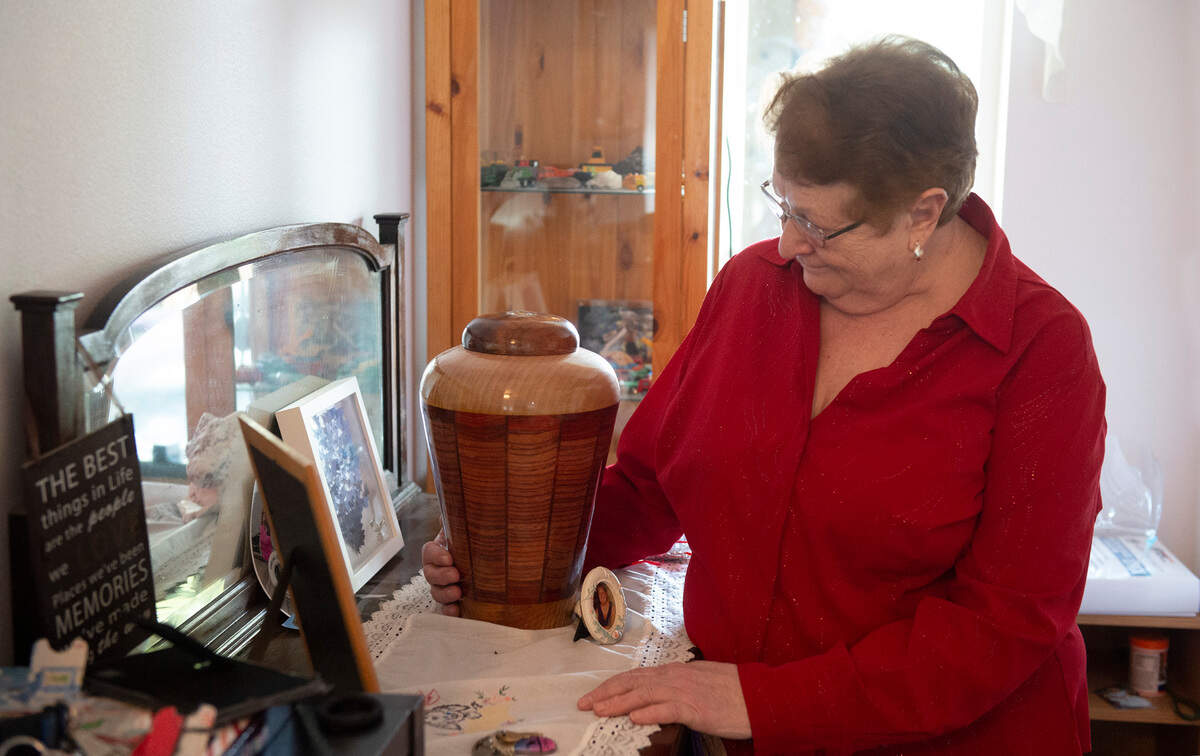
Motherhood, Berreman recalled, was something that Shawna always dreamed of.
More specifically, Shawna “wanted a little girl, and she wanted her to be blonde and healthy.”
With Mallory, who was born in 2009, “she got it,” Berreman said.
Thirty-nine at the time, Shawna had grown up surrounded by grandparents and cousins, and longed to have a family of her own, Berreman explained.
Berreman said her daughter — who worked in Tacoma as an X-ray technician for a group of oral surgeons — was committed to becoming a good parent, describing Shawna as a “single mother by choice.”
Given their close relationship, Berreman said Shawna asked her “to be her second parent” before Mallory was born.
At the time, Berreman had no idea what that commitment would mean.
Today, Berreman said she shares custody of Mallory with Shawna’s younger brother, Robert.
“Shawna wanted kids, and she was getting older, and she decided that she wanted to have a child,” Berreman said. “ I said ‘OK,’ never thinking that she would really go through with it. But she did it.”
In the months that have followed Shawna’s death, Berreman said she has largely tried to focus on providing Mallory with stability, and the kind of childhood normalcy her daughter enjoyed while growing up.
Like her mother, who was raised playing baseball, participating in 4H and training dogs, Berreman said she knows her daughter wanted Mallory to be “well-rounded.” If there was an activity Mallory would enjoy — whether it was acting, art classes or participating in local parades as a young pageantry princess — Shawna made it happen, Berreman said.
Now, she’s trying to do the same for Mallory, as best she can.
At the family home on South Hill, Berreman also noted that her daughter’s love of animals appears to have been passed on.
Shawna left a German Shepherd and two goats to tend to, while Mallory’s guinea pig Daisy has been a “salvation,” Berreman said.
Recently, Berreman also helped Mallory paint and redecorate her room, which was one of several promises her mom made prior to her death.
With Mallory preparing to go from grade school to middle school — a transition that began online last fall — Shawna had told her daughter she could “redo her room, from being a little girl to a preteen,” Berreman explained.
Given the circumstances, Berreman said Mallory is faring as well as could be expected.
“She’s been an amazing child, because Shawna was an amazing mother,” Berreman said. “I keep (Shawna’s memory) alive and well, because I had her for 50 years. She was my best friend.”
Asked about her own reaction to her daughter’s death, Berreman said she tries to spend as much time with Mallory as possible remembering Shawna, because she knows she wouldn’t want them to get lost in grief.
Shawna was an optimist, a person of faith and the kind of mother who believed there was always a lesson in adversity, according to Berreman.
But that doesn’t mean it’s been easy. There have been plenty of trying times since her daughter passed away, Berreman said.
“The hardest thing for me is she didn’t get to finish,” Berreman said of her daughter’s death.
“She had so much left to live.”
— If you’ve lost a loved one to COVID-19, we’d like to tell your story. Please email us at newstips@thenewstribune.com.
This story was originally published January 22, 2021 at 6:00 AM.
.png)