Seahawks don’t need Russell Wilson’s approval to restructure his deal for more cap space
Tom Brady’s done it.
Patrick Mahomes has done it.
Will Russell Wilson?
Brady, the greatest NFL winner of all time, who Wilson wants to equal someday, signed a restructured contract with the Tampa Bay Buccaneers to remain with the Super Bowl champions through 2022, at a lower salary-cap cost to his team this year.
Hours later Friday, ESPN reported 2020 Super Bowl winner Patrick Mahomes of AFC-champion Kansas City agreed to restructure his 10-year, $450 million deal to save the Chiefs $17 million in cap space in 2021.
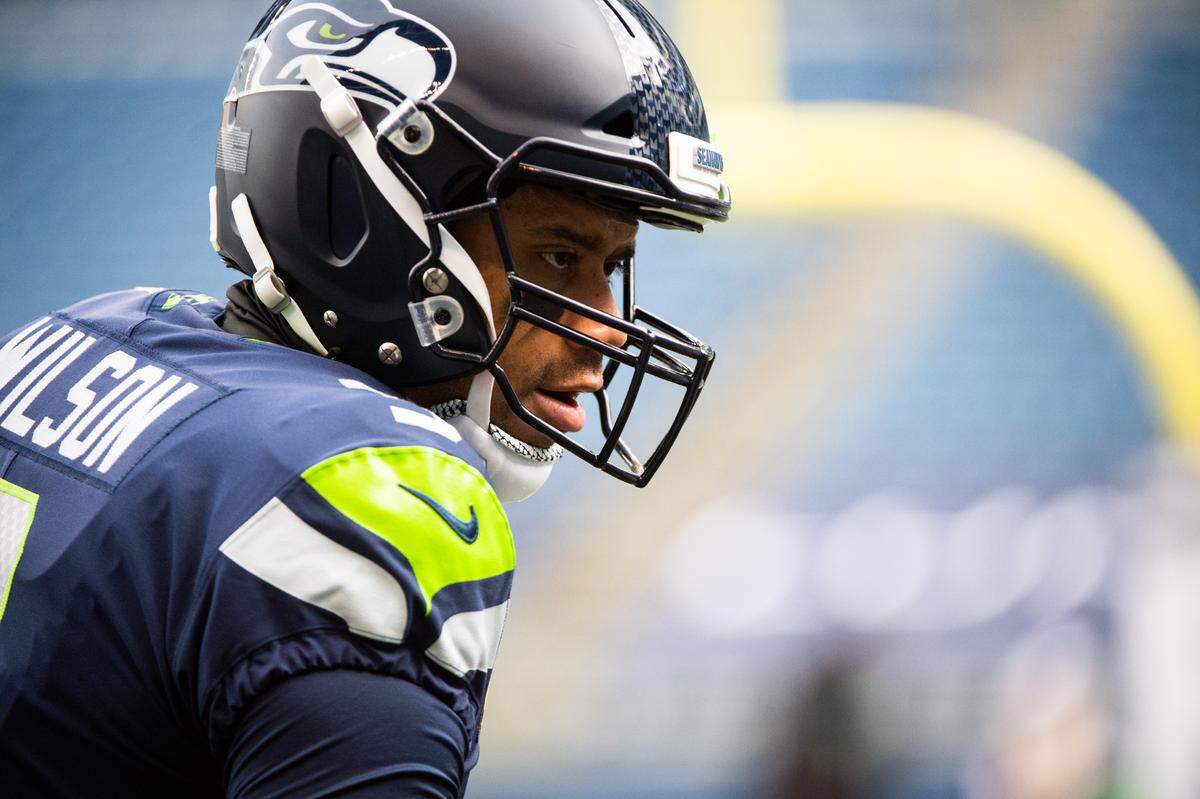
Wilson won the Super Bowl with the Seahawks in February 2014. He very publicly voiced his frustration with his Seahawks offensive line last month, stating “I’m frustrated with getting hit too much.”
Will Wilson agree to restructure his contract, by far the most expensive one on the team, to create more cap space so the Seahawks can shop in the expensive aisles of free agency for offensive linemen?
The team doesn’t have to wait for his approval to do it.
The News Tribune has confirmed from league sources with knowledge of the deals that the last two contract extensions Wilson signed to remain with Seattle, including his current one that made him the richest player in NFL history in April 2019, were done with a provision that allows the Seahawks to restructure Wilson’s contract without his explicit or first approval.
The deal’s language allows the team to convert some of Wilson’s base salary into bonus money for purposes of salary-cap savings without the QB first saying OK.
Wilson, 32, has three seasons and $69 million remaining of his $140 million Seahawks contract.
Now, in the interests of practicality and doing business with their 10-year veteran and most important player, it’s highly likely the team and Wilson would first agree to a restructure before they did it. Especially to show they want to help him by buying better offensive linemen.
The point is: if push really came to shove and the Seahawks needed the cap space, the team could do it anyway.
There is a precedent here.
During the 2017 season, the Seahawks traded with Houston to acquire veteran Pro Bowl left tackle Duane Brown. To complete the deal, Wilson restructured his contract. The Seahawks converted millions of his base pay for that year into bonus money it applied to the next two years of its salary cap. That allowed Seattle to take on Brown’s contract in that October 2017 trade.
Doing that again now, perhaps to sign the star offensive linemen Wilson wants, would (should) quiet the rampant rumors of Wilson getting traded, for multiple reasons.
When a team trades a player with years remaining on his contract, NFL rules allow teams to take on an acceleration of total bonus money left on the deal. Teams prorate bonus money across all years of contracts, out to a maximum of five years, to make the annual salary-cap charges of the deal more manageable. That’s how clubs fit expensive, star player(s) plus all other contracts on the 53-man active roster under each year’s cap.
If the Seahawks were to trade Wilson now,, before June 1, they would realize an accelerated cap hit of $39 million for 2021. That’s untenable for Seattle; such a move would cost the team nearly 25% of its entire salary cap of $182.5 million for this year.
Not to mention it would leave the Seahawks without Russell Wilson.
If they traded him after June 1, their cap acceleration charge would go down to $13 million. However, that late into the summer, teams don’t want to acquire a franchise quarterback and all the costs that go with one. And, again, the Seahawks would still be without Wilson or any other starter at the sport’s most vital position—only then it would be far closer to the start of the regular season.
If Wilson’s base salary gets restructured this spring into bonus money to clear more cap space this year, his cap charges would go up for 2022 and ‘23, by the amount of salary restructured. That means a trade after a restructure would result in a cap acceleration charge for Seattle that’s even more than $39 million.
So one way to look at this is: if the Seahawks restructure Wilson’s deal to gain more buying power in free agency this month, that would further cement that they aren’t trading him.
Where this all started
Wilson saying last month he was frustrated with getting hit too much was remarkable, and for Wilson, an unusual rebuke of his team’s ways. It set off a frenzy of rumors that he wants out of Seattle.
Mark Rodgers, Wilson’s agent, told ESPN the quarterback has not asked the Seahawks to trade him—but if they did, Rodgers gave Seattle’s decision makers four teams which Wilson would accept: the Cowboys, Bears, Saints and Raiders.
Weeks later, on the eve of the NFL league year and free agency beginning Monday, Wilson remains where he’s been for nine years, where he is under contract to be for three more: as Seattle’s franchise quarterback.
The Seahawks need at least two new starting offensive linemen for 2021. Center Ethan Pocic is set to become a free agent when the negotiating period begins Monday and the market officially opens Wednesday. Left guard Mike Iupati told The Spokesman-Review last month he is retiring at age 33.
Shopping needs
The Seahawks went from $4 million to $17.9 million in cap space this week, according to figures posted Friday by overthecap.com. That came from releasing two-time Pro Bowl defensive end Carlos Dunlap.
They have enough cap room to make a bid for, say, All-Pro center Corey Linsley. He is about to become a free agent from the Green Bay Packers.
At the same time Wilson’s agent was telling ESPN last month four teams Wilson would accept being traded to if the Seahawks wanted to trade him (which they don’t), Linsley was telling Sirius XM radio “looks like all signs are pointing towards snapping the ball somewhere else next year.”
Linsley is particularly attractive, and thus is likely to be particularly expensive. He’s been Green Bay’s starting center for the last seven seasons. He’s still in his 20s. This past season was his first All-Pro selection.
Including Linsley, Seattle could have an unusually large market of veteran starters available across the league from which to choose as free agents to replace its departing linemen. The league’s salary cap is dropping from $198.2 million last year to the $182.5 million announced this week. That is going to result in teams cutting many veterans over the next week or two who have what are deemed middle-class salaries in the NFL, in the range of $3-8 million per season, to get under the lower cap limit.
There’s another elite free agent becoming available, at the left guard spot Seattle needs: Some rate Joe Thuney from New England, 28, among the top 25 free agents available next week.
If the Seahawks want to show they have heard Wilson’s very public and loud calls for better pass protection, they now have cap space to make bids for Linsley or Thuney.
But not both. Not without Seattle cutting more veterans.
Or without Wilson’s contract getting restructured again.
This story was originally published March 12, 2021 at 1:13 PM.