How will Peninsula School Board hopefuls handle aging schools, principal swaps?
AI-generated summary reviewed by our newsroom.
- All four proposed more public engagement, frequent check-ins and transparency.
- Funding plans prioritize teacher retention, facility maintenance and equity.
- Some candidates criticized district communication on principal reassignments and timing.
READ MORE
Gig Harbor-area election coverage
These are the races we’re following west of the Narrows for the Nov. 4, 2025 election.
Expand All


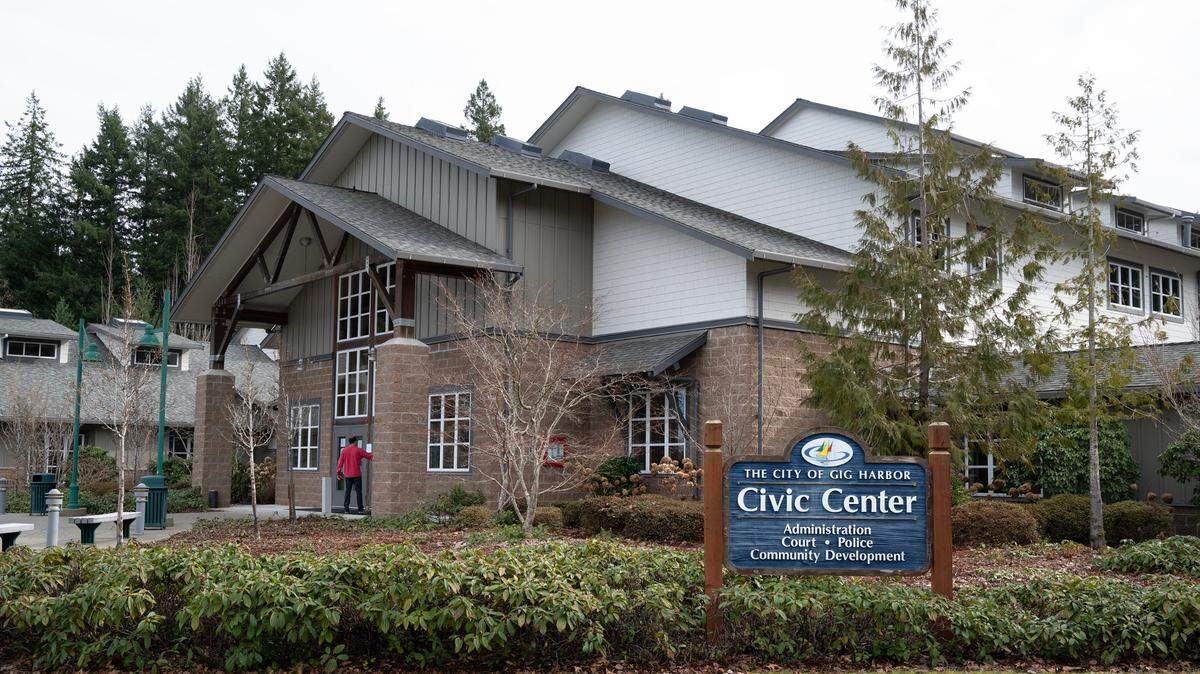
After some parents pushed back on the Peninsula School District’s decision to switch principals across several schools and make other staffing changes this school year, four candidates for school board have ideas for how they would or wouldn’t have done things differently.
This November, voters will choose between two candidates, Matt Bruhn and Emily DuCharme, to replace school board member Jennifer Butler in representing District 2; and between incumbent David Olson and challenger Jonathan Appleton to represent District 5.
The terms for board members Chuck West, Lori Glover and Natalie Wimberley expire in 2027, according to the school district website. Board members serve four-year terms.
District 2 spans the Wauna, Purdy and Canterwood areas, and District 5 covers the Wollochet area on the southern end of the Gig Harbor peninsula, according to a map on the school board webpage.
The News Tribune reached out to the four candidates to hear their views on the principal shake-up, as well as how they’d contribute to efforts to address bullying, allocate resources equitably across schools, improve aging facilities and prioritize funding amid limited state funding for basic education.

District 2: Matt Bruhn and Emily DuCharme
Matt Bruhn, 36, is a senior sales director for Vividly, a startup that offers trade promotion management software. He lives in the Wauna area just across the Purdy Bridge and has two children attending Minter Creek Elementary, one in kindergarten and one in second grade. He is a member of the Minter Creek PTA and his wife serves on the board, he said.
Many Minter Creek Elementary parents raised concerns after the district announced April 10 that it would be moving around principals and rearranging staff, The News Tribune reported. Minter Creek students organized to chant their principal’s name at recess, and students and staff planned a “Day of Action” to wear black on May 8 in protest of the decision.
Specific concerns raised by Minter Creek parents included allegations that the district had acted without transparently communicating with families and that the change would disrupt students’ education and families’ relationships with their principal.
“I don’t want to say that this is the reason that I got into the race, but it might have been the tipping point for me,” Bruhn said.
He would have liked to have seen the district communicate with families earlier in the year about the changes, if they needed to be made, he said.
“Work with people like the PTA, like the community to say, ‘Hey, this is a change. You’re not going to like it, but let’s work together to make the most out of it,’” Bruhn said. “It was sort of a ripped Band-Aid scenario that seemed like they tried to throw it in right before spring break that I think caused all of these issues. And I think it was unfair to all the educators involved as well.”
Bruhn spoke in favor of the school board’s recent decision to begin holding town hall-style chats with the public before some of their meetings, and holding some meetings at schools other than Swift Water Elementary. That should be maintained, he said. The school board meeting calendar lists the locations for past and future study sessions, including Key Peninsula Middle School, Kopachuck Middle School, Harbor Ridge Middle School and Goodman Middle School.
Bruhn also expressed dissatisfaction with the current timing of public comment at board meetings. The board’s current policy is to hear public comment on items they’re taking action on near the beginning of the meeting, and on items they’re not taking action on near the end, board president Natalie Wimberley explained at a recent meeting.
“There’s thousands of parents in this district and they don’t need to sit and listen to every update on everything to be able to have their voices heard,” Bruhn said.
He would also explore alternate revenue sources before deciding to pursue any new facilities such as a new football stadium, he said. For example, a new stadium could be rented out to other leagues and used for events, he said. It’s important to him that the district doesn’t invest in things that aren’t “absolutely necessary,” he explained.
“If it’s not needed for our district and we can get by without it, I’m not going to ask the taxpayers for more money, the community for more money, or squeeze that out of our budget and have to take something away from a school,” he said.
He also said he’d like to be part of the solution for uneven resource allocation between Gig Harbor and Key Peninsula schools. His son no longer has a full-time STEM teacher for his grade at Minter Creek, and two of his son’s friends moved to Pioneer Elementary for the programs offered there, he said.
“I do think that the people on the (Key) Peninsula need to continue to advocate for themselves and speak up,” he said.
Bruhn is endorsed by the Peninsula Education Association, the union that represents the district’s teachers and staff. As of Tuesday, his campaign had raised $4,339, including a $1,200 donation from the Washington Education Association political action committee.
Emily DuCharme, 42, is a stay-at-home mom and lives in Gig Harbor North. She has two children in the Peninsula School District: an eighth grader at Harbor Ridge Middle School and a junior at Peninsula High School.
Her eighth-grade son has been receiving special education services since he was in kindergarten, and DuCharme said she’d like to bring the perspective she’s gained as a parent to the board.
She said she supports the idea of moving administrators around for a fresh perspective, but disagrees with how the district handled it.
“I just think it could have been a proactive thing with families of ‘Hey, this is something we’re considering doing,” DuCharme said. “What are some strengths you see in your current administration team? Where are some areas of improvement? What does this look like? ... just some more general feedback because I do think what families see on a daily basis versus what the district administration sees are different.”
She also spoke in favor of the school board’s introduction of town-hall style chats, describing that as “a big step in the right direction.”
“I would just offer my perspective as a parent and someone who’s been through several different boards and several different superintendents and administrators in this district,” she said. “ ... I would just bring that to the table and freely offer that.”
DuCharme said that she applauds the district’s efforts to address harassment, intimidation and bullying.
“ ... I do think we’re on the right path, but it really just comes from how do we continue to just hold firm with our expectations and continue to further just that professional development with our staff and also educating our families,” DuCharme said.
Family education nights hosted by the district’s Special Education Parent Advisory Council, of which she’s a member, are a “great model” for the district to apply in other areas, she said. At these education nights, families learned about topics ranging from Individualized Education Plans to student advocacy and mental health, according to a presentation in September 2025.
Asked what her funding priorities would be, DuCharme drew attention to the special education budget and emphasized that it’s not enough from what the district receives under the state funding model for education.
“We have to look at what do we need to do, where do we need to be, do we need to be advocating in Olympia,” DuCharme said. “How can we maximize what we have but also where are these additional sources for funding? What else is out there? Are there grants, are there different program options that we can look at implementing?”
DuCharme has opted for mini reporting and as such is not required to file regular campaign finance reports to the Washington State Public Disclosure Commission. Mini reporting is an option for candidates who intend to raise and spend a maximum of $7,000 and receive individual donations of no more than $500.
District 5: Jonathan Appleton and David Olson
Jonathan Appleton, 45, works for a consumer finance lending company as a district manager overseeing a team of 31 employees throughout the state. He lives in the Uptown area of Gig Harbor and has two children who just started fifth grade at Pioneer Elementary.
Appleton said he sees himself as someone who can bring new ideas to the table and emphasized that he has kids actively enrolled in the district, unlike his opponent.
A “big reason” he decided to run was concern over harassment, intimidation and bullying in the district, he said.
As a board member, he’d prioritize visiting different schools, hearing firsthand from the principals and educators about their schools’ needs and being present at the board’s listening sessions with the public, he said. He also said he’s “open to the idea” of moving the public comment portion earlier in board meetings to make it easier for people who can’t stay later in the evening to engage with the board.
He also said he thinks the board should have more frequent checkpoints on the progress of the district’s anti-bullying efforts. Progress reports from the district and superintendent should “be part of regular board meetings,” he told The News Tribune.
Like Bruhn and DuCharme, Appleton identified the timing of district’s communication with families as the main issue with the principal and staffing changes. His experience and training in change management has taught him the importance of communicating months before a change happens, he said.
“We needed to know that this was a possibility in September and October and November and December and January and all the months leading up to the time when it happened,” Appleton said. “That’s what’s owed if you say, and you’re going with, this was the plan all along.”
His funding priorities include supporting and retaining the district’s educators, and considering how budgetary decisions will impact the equity of all 17 of the district’s schools. The district can do a better job of communicating how they make funding decisions, he said.
He went on to describe how he’s heard from parents on the Key Peninsula who express confusion about why their child lacks an art program while the high schools have a drone show team. While he understands the funding mechanisms for those different programs, that perception of inequity is real to those families, he said.
“I understand it could be apples to oranges, but it’s a real concern,” Appleton said. “And so I think the leadership of the district has a real obligation to make sure they communicate to the families and the students that like, ‘Hey, cutting a program, like an art program or a music program, should be the absolute last thing that we ever want to do.’”
In his campaign, Appleton has promoted what he calls the “Peninsula Promise,” which would involve partnering “with Gig Harbor and other local governments to guarantee two years free at Tacoma Community College for every graduate of Peninsula School District, starting with the class of 2027,” he writes on his campaign website. He told The News Tribune that similar programs have been established in Renton and Tukwila.
A new state law provides guidance for local governments to establish such programs.
Appleton had raised $26,737 for his campaign as of Thursday according to the Public Disclosure Commission. That total includes combined donations of $6,700 from the 26th Legislative District Democrats and a $1,200 donation from the Washington Education Association political action committee. His endorsements include the Peninsula Education Association, which is the district’s staff and teachers’ union; and elected officials including Pierce County Council member Robyn Denson and state Rep. Adison Richards.
Olson, 66, has served on the school board for 12 years. After a 28-year career in the U.S. Navy working as an electrician, underwater welder and other roles, he moved to a career in banking. His background in public finance banking has helped him ask the right questions when it comes to the school’s budget, he said. He and his wife, a long-time school teacher, raised three kids in the Peninsula School District, and his youngest son now teaches as well.
“I’ve been part of multiple capital bonds, multiple levies, multiple superintendent hires,” he said. “I have a lot of background that will keep stability in our school district.”
Asked how he feels about the district’s efforts to address harassment, intimidation and bullying, Olson explained how school board members including himself asked the district to reevaluate their program. That led to updated policies and a more streamlined process for complaints that were appealed up to the board level, he said. He believes those changes are working and said he would support a “one-year look back” in another six months to discuss how the district is doing.
Regarding the district’s decision to reassign principals and make staff adjustments, Olson stood by the superintendent’s decision. The board’s role is to keep the superintendent accountable, not tell her how to do her job, he said. He compared the staff transitions to what happens commonly in business settings where staff are rotated to get a fresh perspective.
“Could it have been communicated a little better? Possibly,” he said. “But the board supported the superintendent’s move. She met with us. And when you’re talking about district employees, you discuss that in executive sessions, you don’t discuss that publicly when you’re talking about public employees. So, she outlined what her reason was and let us know where they were moving and the board fully supported her decision, and we still support her decision.”
He emphasized the district’s transparency by posting materials like school curriculum and district financials online, introducing more study sessions and meetings out on the Key Peninsula. He also said the community has shown their trust in the school district by passing past levies and bonds.
As for his funding priorities, Olson said he’s intent on advocating for the state Legislature to fully fund education. He knows all three of the area’s state legislators, he said: state Sen. Deb Krishnadasan, who previously served alongside him for six years on the Peninsula School District board; and state Reps. Michelle Caldier and Adison Richards.
Asked about equity across the district’s schools, Olson said it’s something he was aware of 12 years ago when he first ran for school board. His campaign slogan then was “bridging the gap,” responding to Key Peninsula families who “felt like they were left in the dark, that we weren’t doing enough for them,” he said.
He highlighted what the board has done since then, including constructing Evergreen Elementary, renovating Key Peninsula Middle School, and introducing programs such as an outdoor learning program called Eagle Quest for students on the Key Peninsula. The school district is doing a good job of providing for each school based on its unique needs, said Olson. For example, a school that has a higher number of students who are English language learners, or a higher number of students experiencing homelessness and supported by the McKinney-Vento Act, may need additional resources that a different school doesn’t, he explained.
Olson had raised $18,064 for his campaign as of Wednesday, mostly from individuals. He is endorsed by Laborers’ Local 252, a labor union representing construction craft laborers in western Washington.
This story was originally published October 17, 2025 at 11:05 AM.