What do Gig Harbor mayor and city council candidates think about development?
AI-generated summary reviewed by our newsroom.
- Gig Harbor voters will elect five council members and a mayor this November.
- Candidates discuss mixed-use development, residential density and affordable housing.
- City must work toward required housing targets or risk losing infrastructure funding.
READ MORE
Gig Harbor-area election coverage
These are the races we’re following west of the Narrows for the Nov. 4, 2025 election.
Expand All

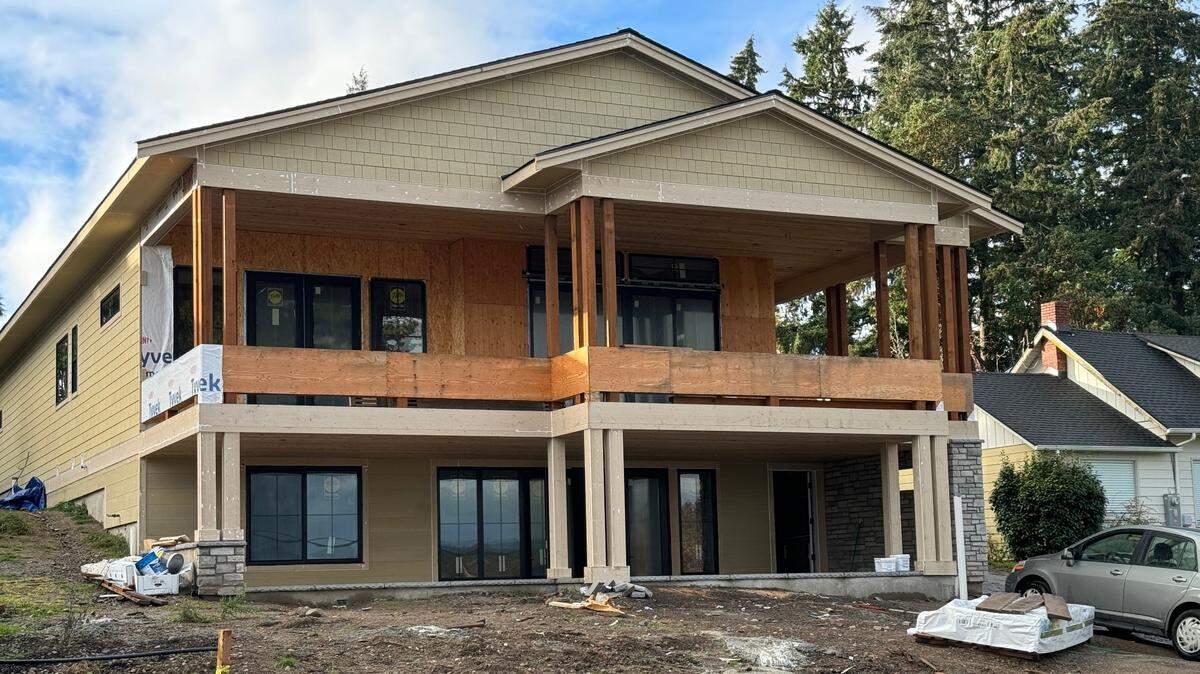
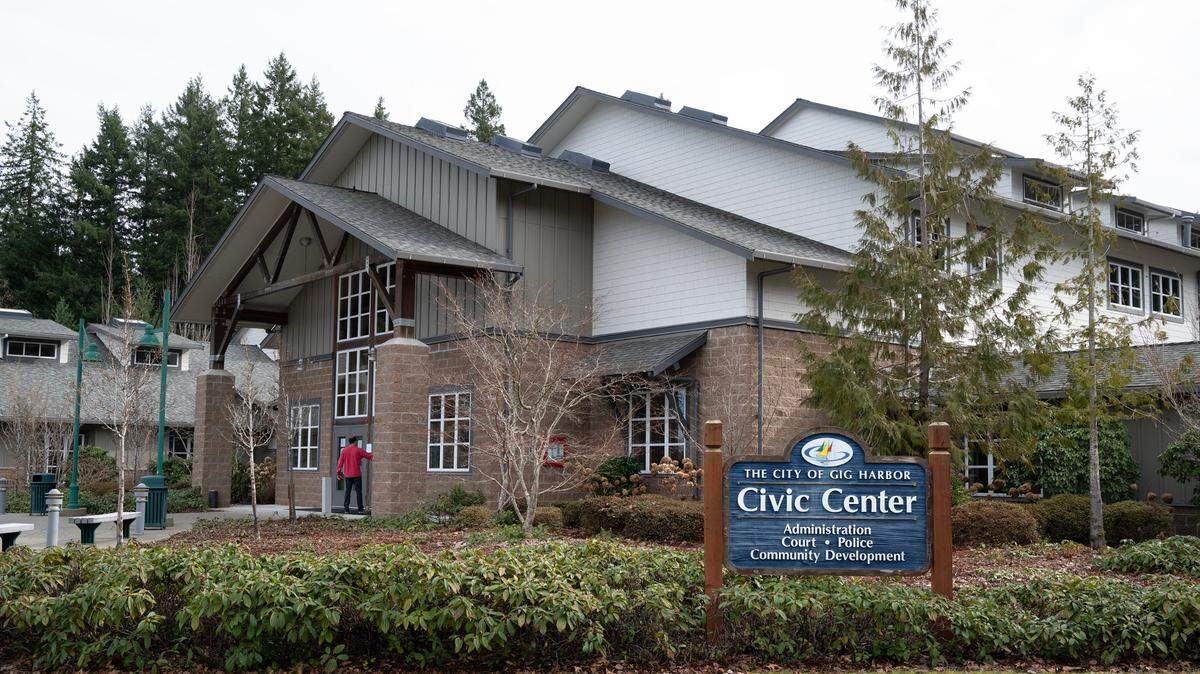
This November, Gig Harbor voters will choose some of the decision makers who will steer the city — and its development — over the next four years.
The departures of two city council members, Roger Henderson and Seth Storset, and other recent shifts, mean that five of the seven seats will be filled by someone different after the election.
Three candidates are currently unopposed: Loreto Tessicini for Position 1, Julie Martin for Position 4 and Reid Ekberg for Position 7. Many candidates in the running for the other two seats are familiar faces: Emily Stone is running to keep Position 3, the seat she was appointed to. Her opponent is Jeni Woock, who currently holds Position 1. Stephen McDuffie is running against Patrick MacLeod Ammann for Position 2.
Mayor Mary Barber is running against challenger Chris Haywood to serve the next four years in the city’s top leadership position.
Two council members, Ben Coronado and Le Rodenberg, will remain in their current seats, Positions 5 and 6. Elections for council members are staggered so that not all are up for election at the same time. Rodenberg serves as mayor pro tempore, per the city’s website.
The city council is tasked with “enacting all legislation and making general policy decisions governing the city,” the website notes. Part of that role involves shaping the regulatory environment for development.
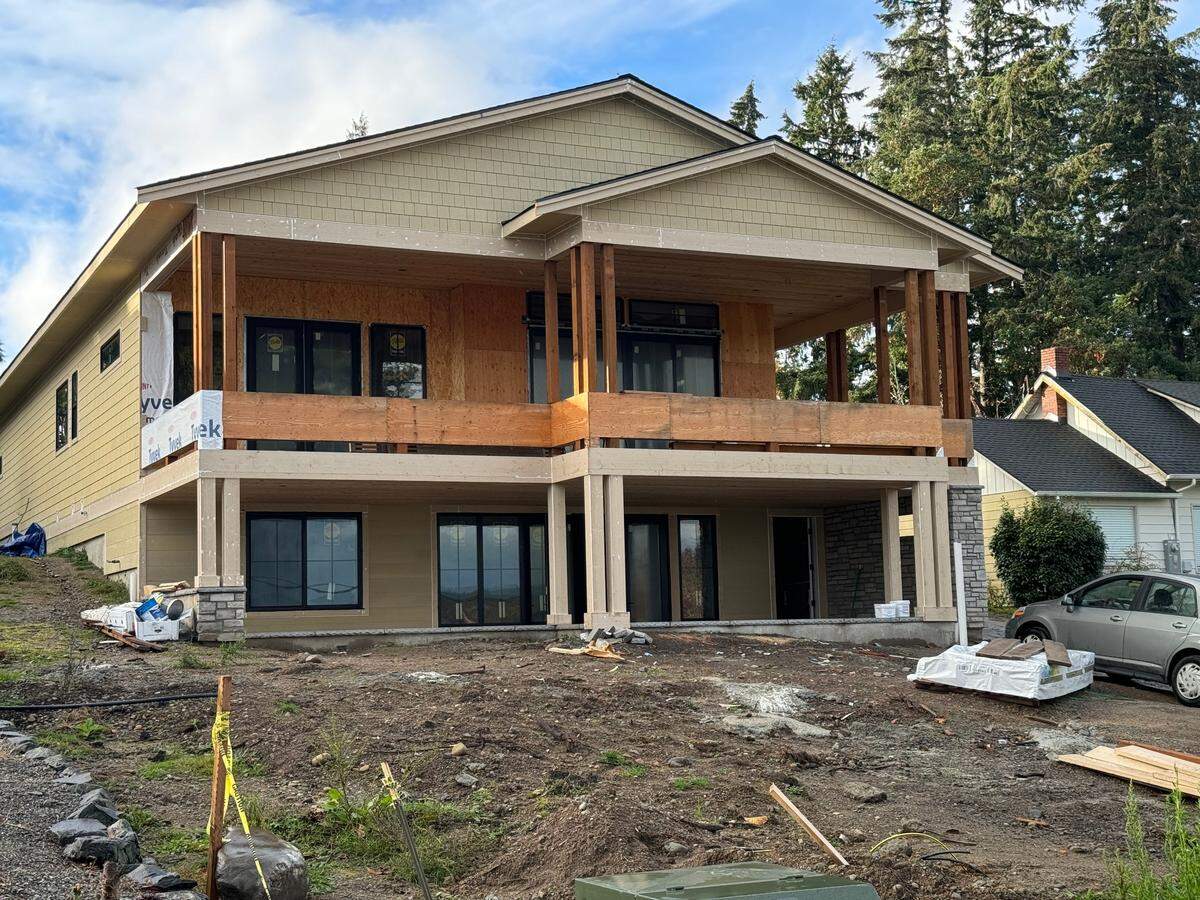
Like other cities across the state, Gig Harbor is obligated under state law to add a certain amount of housing, including affordable units, in alignment with their expected population growth over the next 20 years. Cities that fail to meet the state’s housing requirements can lose their eligibility for state funding for infrastructure.
Local governments can’t force developers to build affordable housing, but can offer incentives such as density bonuses and expedited permitting, under another state law.
Candidates were also asked their homeowner or renter status.
Here’s what they think Gig Harbor’s development landscape should look like. Candidates are listed alphabetically by last name for each race.
Position 2: Patrick MacLeod Ammann and Stephen McDuffie

Patrick MacLeod Ammann, 24, lives near the southern end of Gig Harbor on the western side of state Route 16. The recent graduate from the University of Washington is an independent mixed media designer and has worked for the Port of Tacoma, AmeriCorps and an event planning company. He said he brings an “environmental voice” to the council as well as a younger perspective as the only Gen Z candidate running.
Asked his homeowner or renter status, he said he lives with family.
“There’s not a lot of options here, affordability-wise, in Gig Harbor, so that is what many people my age are doing,” he said.
Ammann said he became more involved in civic life after he became concerned about a project near his neighborhood that he felt hadn’t considered impacts to trees as well as traffic.
One of his ideas for increasing the amount of housing in Gig Harbor is identifying underutilized plots of land for redevelopment, such as large parking lots next to shopping areas, and speaking with property owners who have unused vacant land. He’d like to see that redevelopment occur in areas close to the highway and existing businesses to minimize extra traffic, and see new homes built near existing city hookups for utilities, he said.
“It’s a matter of how we grow from now into the future,” Ammann said. “And looking inward rather than expanding outward is the better way to control some of the expenses that the city will have to make.”
He identified the Peninsula Shopping Center and overflow lots in Point Fosdick as areas for potential redevelopment.
Ammann opted for mini reporting and as such is not required to file regular campaign finance reports available on the Washington State Public Disclosure Commission website. Mini reporting is an option for candidates who intend to raise and spend a maximum of $7,000 and receive individual donations of no more than $500. He told The News Tribune in an email Thursday that he has raised close to $3,500 from individual contributions.
His endorsements include those of current city council members Roger Henderson and Le Rodenberg, as well as former council members Brenda Lykins and Julie Martin.
The Village at Harbor Hill and the possibility of putting residential on top of commercial is a “fantastic idea because it maximizes the use of land that’s already within the city limits,” he said.
He noted that he has some concerns with how a multi-family tax exemption program would work in Gig Harbor. A multi-family tax exemption (MFTE) program is a program that gives developers a property tax break for a number of years in exchange for the construction of multifamily and affordable housing, according to the state Department of Commerce.
“I’m not 100% sold on that method of affordable housing yet, because I do have concerns about the cost to residents in the area and ... I would prefer a more permanent solution when it comes to affordable housing,” he said.
Stephen McDuffie, 36, lives in the North Creek area of Gig Harbor near Gig Harbor High School. He serves as a captain and logistics management specialist in the U.S. Army Reserve, and served on the Gig Harbor Parks Commission from March 2024 to March 2025.
It’s not the first time McDuffie has sought a seat on the council. He was one of four finalists interviewed to fill former council member Mary Barber’s seat after she was appointed as mayor, and he was also considered for Brenda Lykins’ seat when she resigned due to her move out of the city.
“I wanted to have a say in the town that I’ve decided to call home and raise my family here,” McDuffie, a father of two and a homeowner, said.
McDuffie said he sees mixed-use development as key to helping Gig Harbor achieve its state mandated housing levels.
“I’d like to see something like that across the harbor,” he said. “Just depends on where it’s at, one, and then two, does it make sense economically and environmentally. And can the infrastructure handle such a thing.”
While he said the city will have to approve some building projects in order to comply with the state, he emphasized the importance of working with all the stakeholders in those decisions. Each project will need to be decided on a case-by-case basis, he said. He emphasized the need to get out into the community and “go to where the people are,” and said he’d like to host coffee talks and meet with residents to learn their views before forming a position on the city’s zoning.
“I’d have to know more from the city staff perspective, from my fellow council members, and see where those are, and I’d probably do several, multiple listening sessions with residents on the different sides of the town before I can make a clear decision on zoning,” he said.
He also said he’s “still up in the air” about a multi-family tax exemption program in Gig Harbor, noting that he’s concerned about how that program would increase property taxes for businesses, older adults on fixed incomes and younger families moving into the area.
“I do think it would possibly be effective after speaking with city staff, but I’d really need it to make sense,” McDuffie said. “Where’s the bang for the buck? What kind of project is it going to, and things like that. It has really got to make sense before I were to, (for) lack of a better phrase, press the green button.”
McDuffie had raised about $11,259 as of Oct. 20. His endorsements include current council member Seth Storset, former council members Tim Payne and Casey Arbenz, and Teamsters Local Union 117, which represents Gig Harbor city staff and police officers.
Position 3: Emily Stone and Jeni Woock

Emily Stone, 32, is a renter and lives in Uptown Gig Harbor. She currently serves in Position 3 and was appointed to serve the remainder of former council member Brenda Lykins’ term following Lykins’ resignation.
Her day job is serving as senior policy advisor for the state Department of Commerce, and her resume indicates that she formerly served as public policy director for the Washington State Coalition Against Domestic Violence, as a staffer in the state Legislature and as a caseworker managing cases related to domestic violence, mental health needs and other crises.
“I’m the youngest member of council, the only LGBTQ member of council currently serving, and I think it’s just really important to have different perspectives and voices on council,” Stone said. “Being a young professional in Gig Harbor renting an apartment is a very different lens than what we’ve seen sitting up there on the dais.”
Stone said her background in public policy will allow her to point the city toward potential funding mechanisms they’ve underutilized up until now. Asked for examples of funding sources she’s suggested or would suggest, she said the city has recently discussed the Connecting Housing to Infrastructure Program (CHIP). CHIP grants provide funding for local jurisdictions and developers to connect affordable housing projects to water, sewer and stormwater utility services, according to the state Department of Commerce website, which notes that applications are now closed for 2025-2027.
With regard to Gig Harbor’s housing needs and the state mandates, Stone said her priority is giving people more “options” — whether that’s cottage-style homes, facilities for older adults, townhomes, duplexes or accessory dwelling units (also called mother-in-law units).
“I am a single person living alone,” Stone said. “I don’t need a giant house, right. Would love a townhouse, would love a duplex, would love something that meets my needs.”
She’d also like to see more options for senior housing, she said, “that’s ADA-accessible, that’s one story ... smaller lot sizes, where people don’t want to take care of a big yard, but having a variety of options for people,” she said. “And we can make that fit the look and feel of Gig Harbor.”
The challenge for the city will be balancing the new housing with the infrastructure and cost of infrastructure to support it, she said. She said she supports the comprehensive plan the city council voted to adopt earlier this year and the work the city has already done to determine where the city can accommodate future growth.
Stone’s campaign had raised about $20,811 as of Oct. 20, according to the Public Disclosure Commission.
Stone has the endorsement of Mayor Mary Barber, U.S. Rep. Emily Randall, state Rep. Adison Richards and Pierce County Executive Ryan Mello, among several other former and current council members. She’s also been endorsed by the Washington Housing Alliance Action Fund, an affordable housing advocacy group, and the Pierce County Affordable Housing Council, which is the Political Action Committee of the Master Builders Association of Pierce County.
Jeni Woock, 75, lives off Pioneer Way near downtown Gig Harbor. She is a homeowner, and is retired after running an art business with her husband for 34 years.
Woock was first elected to serve on the city council in 2018. After serving two terms, she initially decided not to run again but changed her mind due to what she described as a “concern that citizens were going to have to pay for development fees that the builders didn’t want to do” as part of potential incentives for development in Gig Harbor.
In March, the city council listened to a staff presentation on what a multi-family tax exemption program could look like in Gig Harbor. They heard a first reading of a proposed MFTE ordinance in April. Council members requested changes to the ordinance and did not vote on the program at that time.
Woock said she doesn’t support some of the higher residential density targets in the city’s comprehensive plan update, adopted by the city council in April. The city council reviewed an ordinance that would update the city code with these targets at its regular meeting Monday.
“So the Comp Plan has already passed and the land use numbers are there,” Woock said. “I didn’t support them. I didn’t vote for them, because I don’t think the infrastructure is in place to handle that.”
She raised specific concerns about areas where the city’s comprehensive plan allows residential density to at least quadruple. These areas include the multiple-family residential (R-3) zone and the residential and business district (RB-2) where the plan increases the allowable density from 8 units per acre to 12-32 units per acre, according to a presentation from the city’s principal planner at the city council meeting Monday.
Areas zoned RB-2 currently include areas along Wollochet Drive near Tacoma Community College and state Route 16; and areas near the Uptown Gig Harbor shopping center. Areas zoned R-3 also hang close to the highway and include land in the Kimball area, according to the city’s zoning map.
Woock’s ideas for addressing the city’s affordable housing need include creating an “in lieu of” program where developers who don’t want to build affordable housing can pay into a fund to pay for affordable housing elsewhere; and charging developers an impact fee specifically to fund affordable housing. These affordable housing impact fees have been implemented in cities across the country, including Santa Monica and Boston, per a policy brief by the Grounded Solutions Network.
She’s also interested in exploring cluster housing. Cluster developments concentrate housing density in one part of a property while preserving open space elsewhere, according to a guide from the Puget Sound Regional Council.
Woock’s campaign had raised about $4,852 as of Oct. 20.
Mayor: Mary Barber and Chris Haywood

Gig Harbor has a mayor-council structure of local government, where the mayor acts as the city’s chief executive officer and the council acts as the city’s legislative body. The mayor does not vote, except in the case of a tie; but does have veto power and can propose policies, according to the Municipal Research and Services Center.
Mary Barber, 69, was serving as a council member when she was appointed to serve as mayor of Gig Harbor following the resignation of former Mayor Tracie Markley. Markley resigned in November 2024 with a little over a year left in her term to focus on her family, The News Tribune reported.
Barber retired from a career of about 40 years in strategic communications and public relations. She is also a homeowner and lives close to downtown Gig Harbor and the Gig Harbor Civic Center, she told The News Tribune.
“I want to continue serving as mayor because I love this community, and I believe that together, we can keep the small-town charm that we love, but also make this town an even more vibrant community than it already is,” she said.
Barber acknowledged the need for affordable housing in Gig Harbor, adding that it’s an issue people are facing nationwide. Asked for her perspective on a possible multi-family tax exemption program to incentivize developers to build more affordable housing in Gig Harbor, she said she sees it as “one tool in the toolbox to possibly help a developer pencil out how those developments might work,” among other solutions.
She sees the city working with affordable housing developers to “figure out the best way” to pencil out their project after they submit a proposal, she said.
“Our planning department is full of subject-matter experts who know a lot more about doing that kind of thing than I do,” Barber said. “So I’m looking forward to those proposals coming to them, for them to be able to look at that and figure out how that’ll work in Gig Harbor.”
According to Barber, Gig Harbor is on the right track with its Comprehensive Plan, which identified select areas of the city as “centers of local importance” that can accommodate high- and medium-density growth. These areas are Gig Harbor North, Finholm, downtown, Kimball and Westside, The News Tribune reported.
“I think that that is where we should be looking at the bulk of the density, is in those areas,” Barber said. She said she also values the historic downtown and preserving it as much as possible.
“Having said that, I also think that there are ways that you can make a house a duplex without it showing on the outside,” she continued. “There are ways that you can increase density without damaging the character of the waterfront itself.”
Barber is endorsed by all seven city council members currently serving, as well as an array of other current and former elected officials. She is also endorsed by the Tacoma-Pierce County Association of Realtors and Teamsters Local 117, the union representing Gig Harbor city staff and police. She had raised about $8,790 for her campaign as of Oct. 20. Her opponent has opted for mini reporting and is not required to file regular campaign finance reports, according to the Public Disclosure Commission.
Chris Haywood declined an interview with The News Tribune. His professional experience includes operating a small HVAC business for over 25 years, according to his statement in the Pierce County Voters’ Pamphlet.
“In consideration of this new world and what is to come, Gig Harbor needs a firmly grounded Mayor able to maintain intellectual and psychological stability under pressure; who is constitutionally informed, and proven skillful at defending and wielding the power of Truth,” Haywood wrote in his statement in the Voters’ Pamphlet.
He also explains his positions on issues such as affordable housing, economic development and sustainability on his website, gigharbormayor.com. Ballots are mailed Oct. 17 and must be postmarked by Nov. 4 or returned to a drop box by 8 p.m. that night.
Editor’s note: A previous version of this story failed to note which candidates had opted for mini reporting, which means they don’t need to file regular campaign finance reports to the Public Disclosure Commission. It has also been updated to clarify the housing goals of candidate Emily Stone’s family, and include loans in the total amount of campaign funds each candidate has raised.
This story was originally published October 16, 2025 at 5:00 AM.