New sales tax before voters in this Pierce Co. city. Here’s what it would fund
AI-generated summary reviewed by our newsroom.
- Gig Harbor voters will decide on 0.1% sales tax hike to fund arts, sciences.
- Tax would raise $1.2 million annually for public schools and nonprofits.
- Council will determine program oversight and funding if measure passes.
READ MORE
Gig Harbor-area election coverage
These are the races we’re following west of the Narrows for the Nov. 4, 2025 election.
Expand All

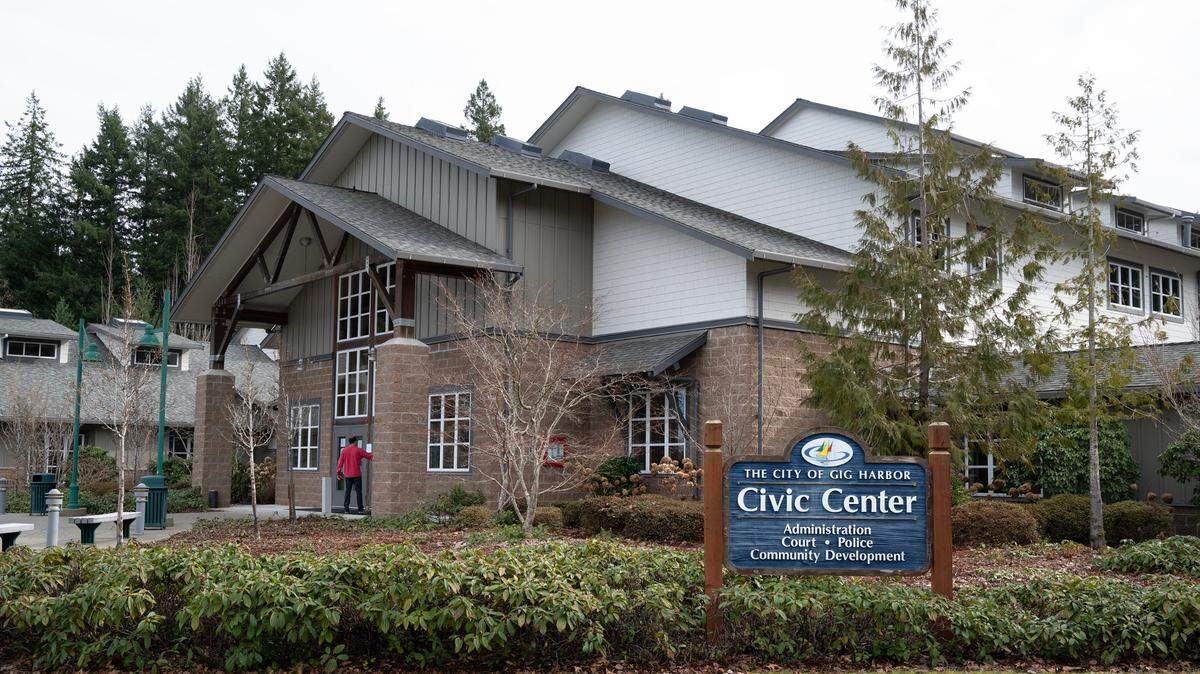
Gig Harbor voters will decide whether to approve a 0.1% sales tax increase that would fund science, arts and culture programming in their city this November.
The cultural access program sales tax would generate about $1.2 million annually to invest in public schools and nonprofits providing access to this programming, according to the city’s website. The tax would go into effect April 1, 2026 with funds available to recipient organizations starting in 2027. Voters would need to renew the tax in seven years.
Taxpayers would pay 10 cents for every $100 spent on items subject to sales taxes, which in Washington state excludes prescription drugs and groceries (besides alcohol, prepared food and other exceptions). A household that spent $25,000 on taxable items in a year would pay $25 toward the cultural access program.
The city is authorized to initiate such a tax under a state law first passed in 2015. Nonprofits eligible for this funding are those whose primary purpose is “the advancement and preservation of science or technology, the visual or performing arts, zoology, botany, anthropology, heritage, or natural history,” and “must directly provide programming or experiences available to the general public,” per the state law.
Local jurisdictions that have established Cultural Access Programs include Tacoma and Olympia. The Tacoma Creates program will fund 80 nonprofits with approximately $6.4 million for the 2025-2026 cycle, with recipients ranging from the Museum of Glass to Tacoma Porchfest.
If voters pass the measure, Gig Harbor’s sales tax rate would increase from 9.1% to 9.2%. In 2019, voters approved a 0.2% increase to fund specific transportation improvement projects and in 2024, a 0.1% increase to fund public safety. The city council also approved a 0.1% sales tax increase last year to fund pavement maintenance.
That’s lower than the sales tax rate in other Pierce County cities including Tacoma at 10.3%, Puyallup at 10.2% and Lakewood at 10.1%, according to the state Department of Revenue.
The measure requires a simple majority to pass.
The city council had the option of setting up the sales tax councilmanically without going to a vote of the people, but decided against that during their March 10 meeting. Several residents and people involved with local nonprofits spoke during public comment at the meeting in support of the tax.
Lindsey Stover, executive director of Harbor WildWatch, told the city council that the tax would allow them to resume STEM educational offerings that they had brought to local schools prior to the COVID-19 pandemic.
“Unfortunately, due to funding constraints and shifts, that funding is no longer available, which means that thousands of local students are not receiving that supplemental science education,” Stover said at the March 10 meeting.
A statement against the measure included in the Pierce County voters’ pamphlet argues that while the arts should be supported, a sales tax isn’t the right strategy.
“Sales taxes are regressive, meaning they hit working families and those on fixed incomes the hardest,” the statement reads. “At a time when many households are already struggling with rising costs, adding yet another tax – no matter how small – creates an unnecessary burden.”
It also notes that organizations have other avenues for funding in “state and local programs, grants, and private partnerships.”
“Instead of layering on a new tax, we should focus on using existing resources more efficiently and prioritizing arts funding within current budgets,” the statement continues.
The News Tribune reached out to the “no” campaign, but did not receive a response.
Stephanie Lile, executive director of the Harbor History Museum, has helped spearhead the “yes” committee and website to gather support for the measure. She said in an interview Sept. 23 that the funding from the tax would support nonprofits such as the museum that have been impacted by federal funding cuts, describing the funding as “a game changer.”
Three federal grants they were planning to apply for this year, such as a collections digitizing grant from the National Endowment for the Humanities, are no longer available, she said.
The museum in downtown Gig Harbor features various galleries and exhibits showcasing the region’s history, including a historic 65-foot fishing vessel The Shenandoah and a one-room schoolhouse from 1893.
The cultural access program will also support the local economy, the committee in favor of the measure wrote in their statement in the Pierce County voters’ pamphlet.
“Visitors to the History Museum, Marine Life Center, and BoatShop bring over $1.5 million to our local economy,” the statement reads. “Add the programs and performances of art groups, and that number doubles. If these places and programs go away, local businesses will lose customers and money.”
The city currently offers grants to organizations that support tourism from their Lodging Tax Fund, which collects revenue from sales taxes charged on overnight stays within city limits. The city’s Creative Endeavors Grant also supports arts organizations and projects that “provide artistic, cultural, and creative experiences for the Gig Harbor community,” per the city website.
Many organizations that receive funding through those grants would also be eligible for Cultural Access funding, which would not replace those grants, the city’s website says.
The city approved Lodging Tax Fund awards for seven organizations for 2025, according to a city resolution passed in October 2024. The top grant recipient was the Gig Harbor Waterfront Alliance, which received $67,500; followed by the Harbor History Museum at $63,000 and the Permission to Start Dreaming Foundation at $36,000.
Gig Harbor City Clerk Josh Stecker wrote in an email Friday that the city hasn’t yet determined how the revenue would be distributed from the cultural access program tax.
“This includes determining who will manage the program and what processes will be used to award funding,” he wrote. “The city council will need to make these decisions fairly soon after the election results are received if the ballot measure should pass.
“Initial discussions might occur in study session before the end of the year, but final determination on these decisions would likely come after the new city council is in place on January 1.”
The election is Nov. 4. Ballots are mailed Oct. 17 and must by postmarked by Nov. 4 or taken to a drop box by 8 p.m. that night.
This story was originally published September 30, 2025 at 2:20 PM.