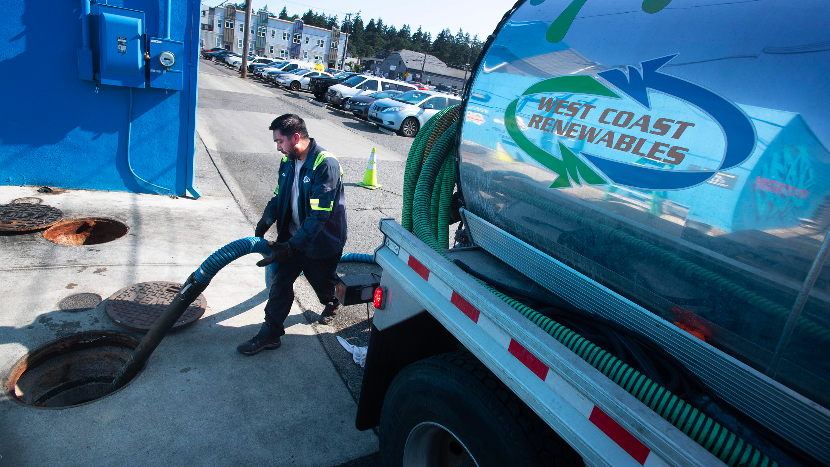
Tacoma contends restaurant grease traps are vital. Is its oversight of them lacking?
READ MORE
Grease trap rules vex Tacoma restaurant owners
Tacoma’s strict, expensive approach to a little-known environmental issue has led many in the local restaurant industry to wonder who the city really supports.
Expand All
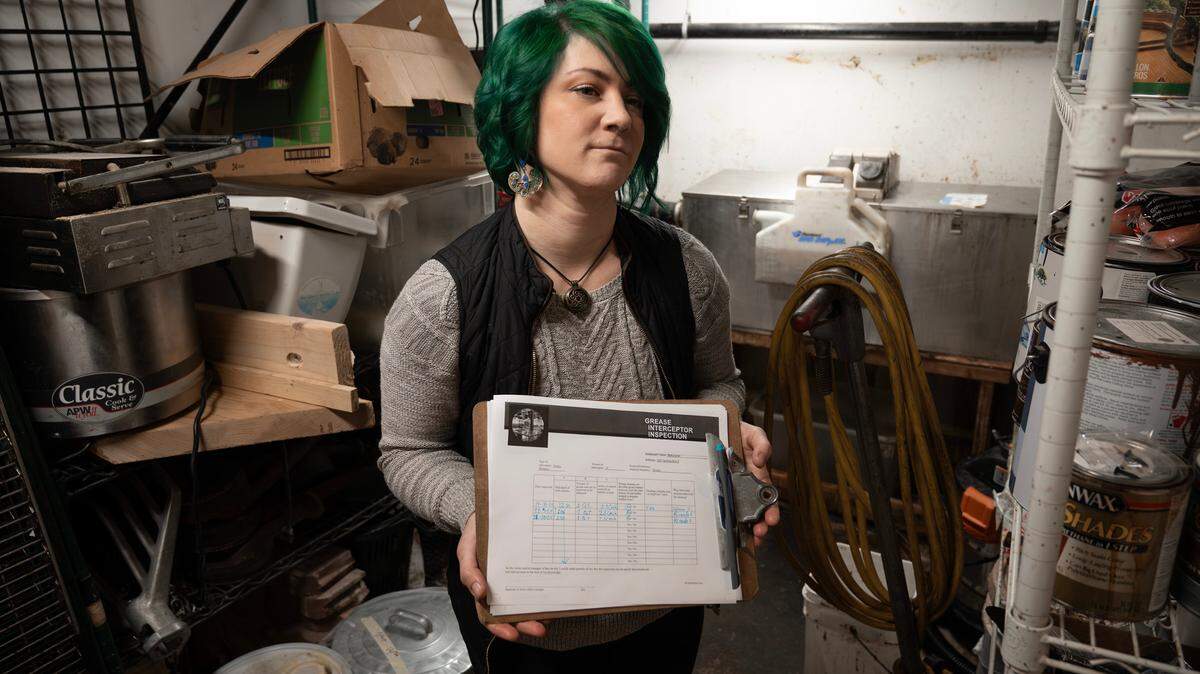
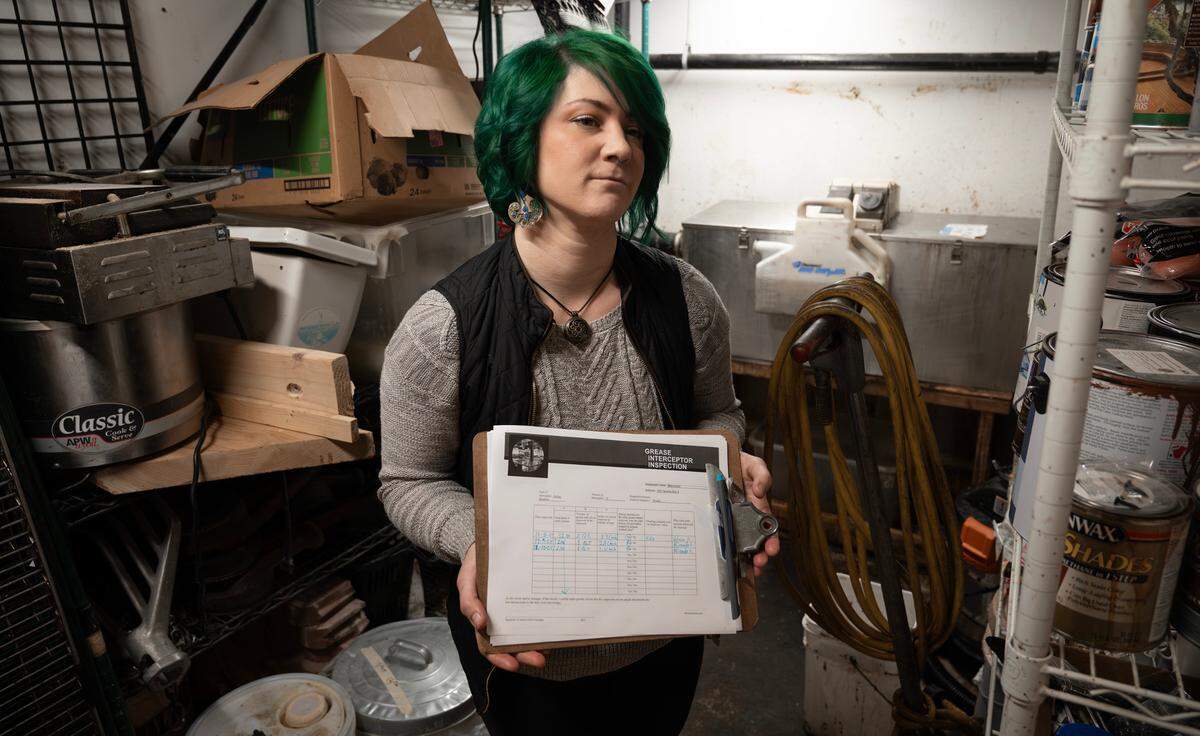
Every night, an employee at Eda Johnson’s new restaurant in the Stadium District dons a mask and heads downstairs to a storage room with a clipboard and a pen. The mission is to scrape the gunk out of a grease interceptor, which captures standard cooking byproducts like droplets of olive oil and meat juice that sneak down the drain. Johnson also pays a professional grease-pumping company almost $400 every month for a full clean-out.
She didn’t create the cleaning regimen. Shawn Madison, the sole Environmental Services employee dedicated to the City of Tacoma’s fats, oil and grease (FOG) program, told her it was the only way Manuscript and Dialogue could open, she said.
Either that or embark on a massive infrastructure project whose total bill can reach six-figure sums.
Madison said he would follow up after 90 days. Ten months later, he has never visited, never called, never emailed. Not once, Johnson said.
Other restaurant owners, who asked not to be named for fear of what it might mean for their businesses, have shared similar experiences with The News Tribune. They say Tacoma’s FOG-prevention strategy emphasizes expensive demands at the outset but lacks meaningful enforcement and leaves little room for data-supported adjustments. An analysis by The News Tribune found that the city inspects grease traps only as required by federal regulations and rarely hands out violations.
The News Tribune’s requests for this story were funneled through city spokesperson Maria Lee. Madison was not made available for an interview. The department director, Geoffrey Smyth, would have to approve citations and exceptions. A request for more information about his role in grease-trap decision-making was met with a one-sentence answer from Lee: “The Environmental Services Director divides time evenly across the three utilities under his purview, ensuring dedicated attention to each.”
There are about 1,000 foodservice businesses in Tacoma. The News Tribune found that city inspectors checked an average of 199 grease traps each year since 2013. Small business owners say they have been threatened with fines of up to $10,000 per day for running afoul of the city’s FOG mandates, yet citations almost never happen.
Requiring foodservice businesses to use grease interceptors is one of several steps to prevent FOG-related sewer blockages, which accounted for less than 15% of Tacoma’s sanitary sewer overflows in the past five years, The News Tribune previously reported. It’s also important that restaurant staff be trained to minimize FOG in the first place and that the machines are well-tended.
“It’s not a zero-sum game — you do have to worry about it,” said Joel Ducoste, an engineering professor at North Carolina State University and leading FOG researcher. Inspectors and municipal workers “will always have to go out in the sewer lines” to check for issues and determine their causes, he explained. “What we’re trying to do is slow that process down and make sure their maintenance cost is reasonable.”
‘I COULD ABSOLUTELY USE MORE STAFF’
“I don’t know the last time we wrote a notice of violation for FOG,” Cassandra Moore, manager of compliance teams in the Environmental Services department, said in a September interview.
It was in January 2018, staff later confirmed, against the Taco Bell on Sixth Avenue and the Taco Bell on North Pearl Street.
The city has issued two other FOG violations in the past decade: in 2016 and 2017 at what was then Adriatic Grill at 4201 S. Steele St. near Tacoma Mall. In the two years prior, a city inspector visited the site unannounced, and both times the interceptor “passed.”
Moore works with a team of 16 people, including six inspectors who are often in the field, but “foodservice is a small part of the broader suite of work they do,” she noted. They also evaluate stormwater pollution and visit businesses ranging from school cafeterias and event venues to auto-repair shops and gas stations.
“I could absolutely use more staff,” she said, adding that they are “open to suggestions” and regularly discuss ways to improve processes and communication with businesses and residents.
Moore estimates that having two or three more employees would ease the city’s FOG workload, which extends to Ruston, Fife and Fircrest through contracts approved by Tacoma City Council. She said her team tries to “get everything touched within five years … but that inventory is constantly shifting” as businesses open and close or change hands.
For restaurants playing by the rules, the lack of follow-through has left little room for growth.

“It’s prevented me from being able to do other things with my business,” said Johnson, who would like to fill in the gaps of brunch and dinner service with a few delivery orders, for instance, or open up her kitchen to a small, upstart food business when Manuscript is closed.
“There should be someone who is looking at these numbers and say, ‘Yep, this person is operating well within the boundaries. They can stop spending money unnecessarily,’ and maybe even further, ‘Yes, they are proving that they are being good stewards of the environment, and they can expand and do more within their business,” Johnson added.
CLEANING IS NECESSARY, BUT WHO’S CHECKING?
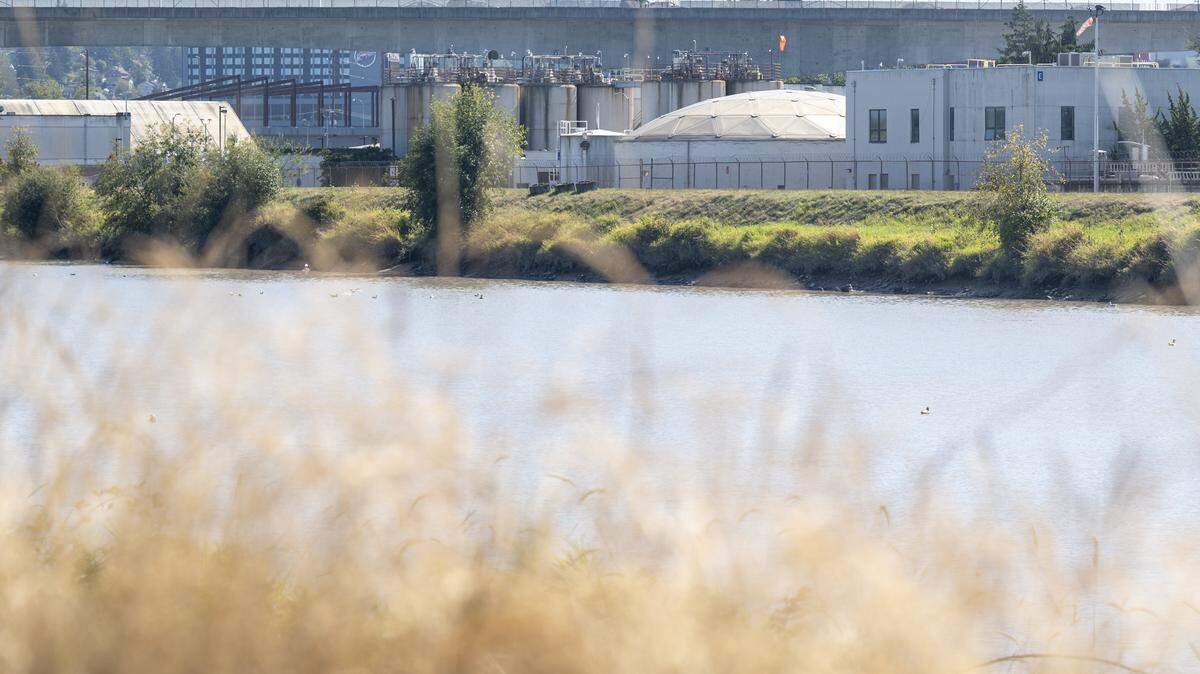
Grease interceptors fall under Environmental Services’ pre-treatment program for wastewater — a journey through more than 700 miles of pipe, treatment facilities and finally into Commencement Bay.
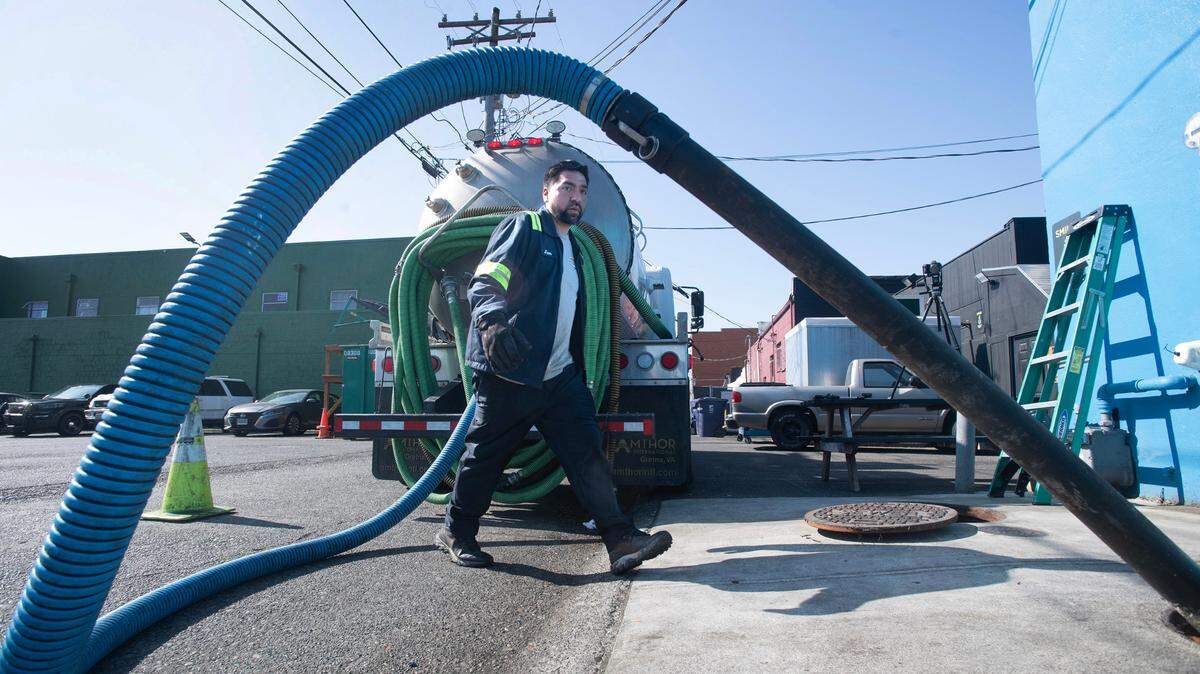
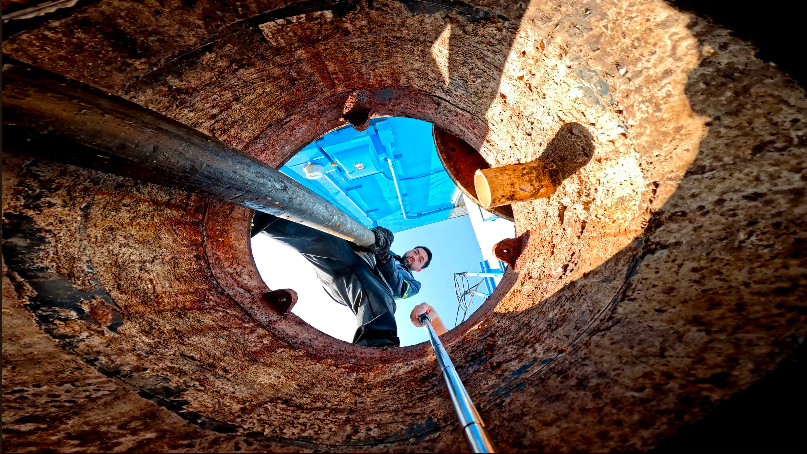
The machines, which can be as big as a Volkswagen Beetle or as small as a cooler, separate kitchen sinks from sewer mains. They are important tools in any city’s struggle to keep FOG and other debris from clogging delicate, aging pipes hidden under sidewalks and streets. In Tacoma, as in municipalities across the country and around the world, restaurants and other foodservice, such as concession stands at event venues and supermarket delis, are generally required to have one.
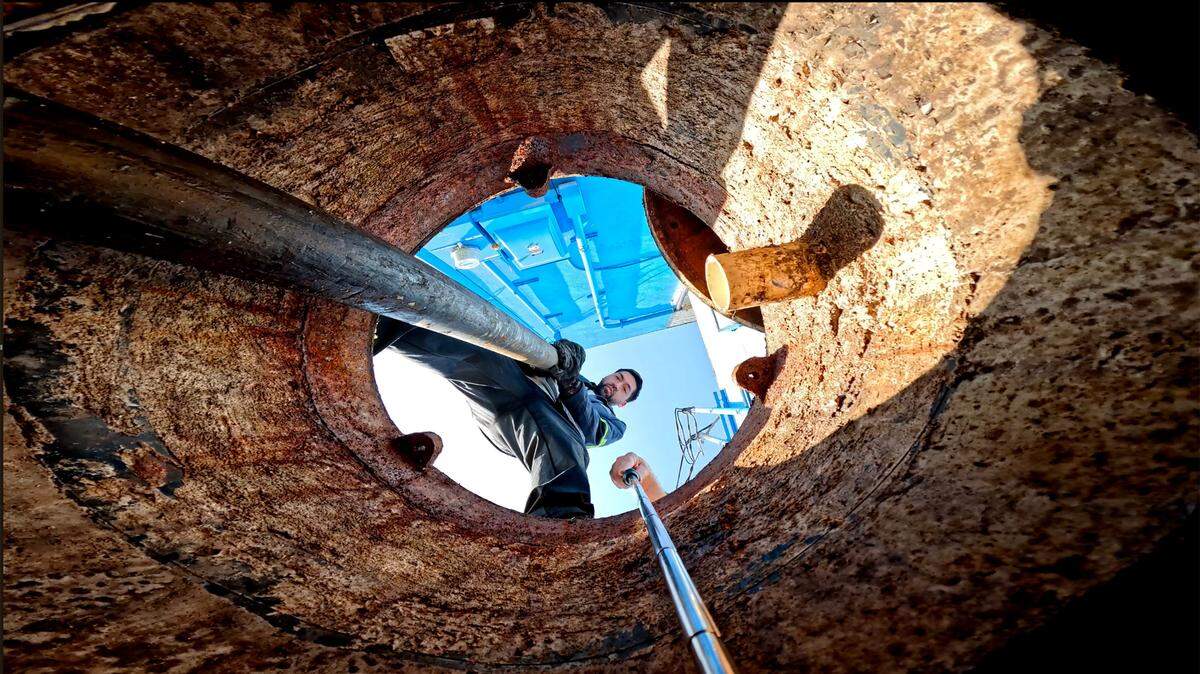
A recent News Tribune investigation revealed that, since around 2021, many Tacoma restaurants have been delayed from opening, almost didn’t open at all and, in some cases, are struggling to survive because the city insisted they needed a Beetle-sized gravity grease interceptor. The tanks, usually made of concrete, can cost $30,000 to $50,000. With labor, permitting and installation fees, the total bill to trench them into the ground can run as high as $120,000.
That’s how much Sandy Jang was quoted for the work at his casual Korean restaurant in the South End. The neighborhood could use more local dining options, but Rolls House might soon close. Foot traffic and pickup sales are not bringing in enough customers, but without the grease-trap upgrade, Madison has refused to let the restaurant use commonplace delivery services like DoorDash, Jang said.
Jang considered defying the city and hoping no one noticed but decided against it. A July email to his councilman, Joe Bushnell, went unanswered until October, after a reporter’s inquiry.
Lee said Jang is “welcome to apply for an exception,” something that he said was never offered. In Bushnell’s email, the councilman explicitly said that exceptions are available only when installing the tank is physically impossible, not financially or practically difficult.
Rolls House is one of the 8 in 10 Tacoma restaurants, according to a city estimate, that uses the smaller, cheaper and less intrusive alternative interceptor. Hydromechanical and other non-trenched interceptors can easily fit under kitchen sinks and, if needed or preferred, can be placed below-grade in the floor. Installing one doesn’t require fussing with sewer pipes — just those within the restaurant’s walls — and all-told usually costs a business owner $10,000 upfront.
As The News Tribune reported in August, experts say those machines can be just as effective as the old-school, in-ground ones, so long as they are properly maintained.
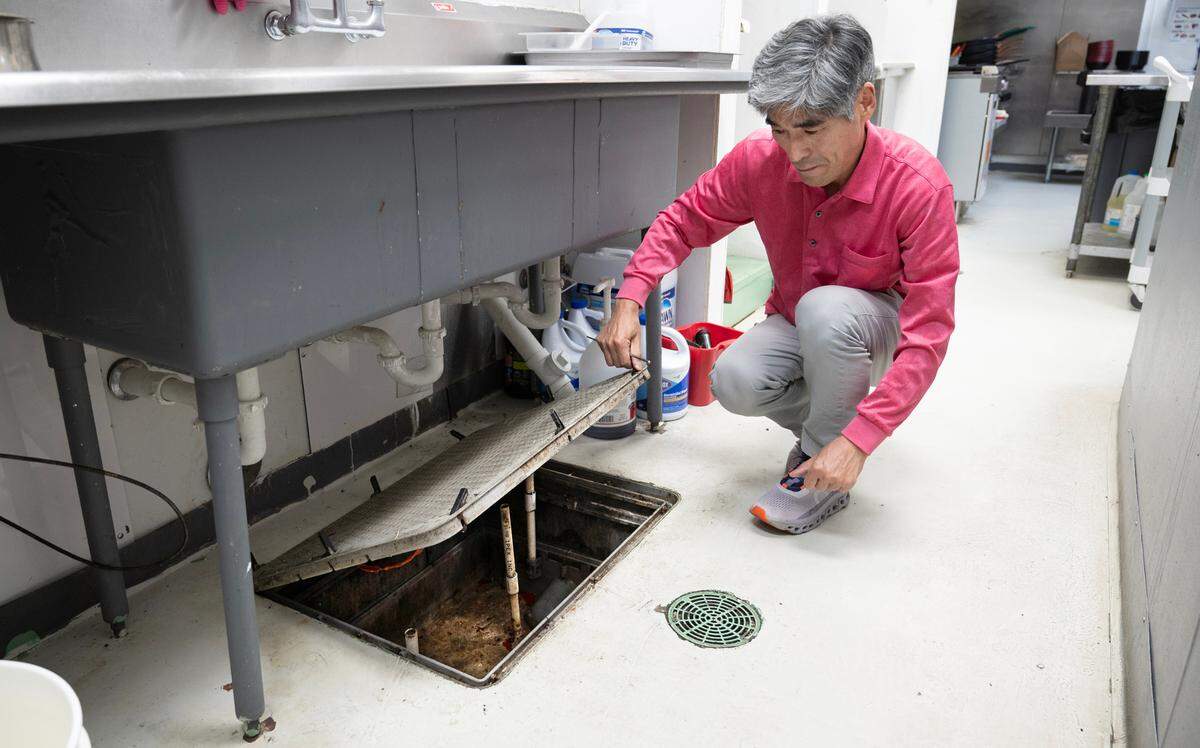
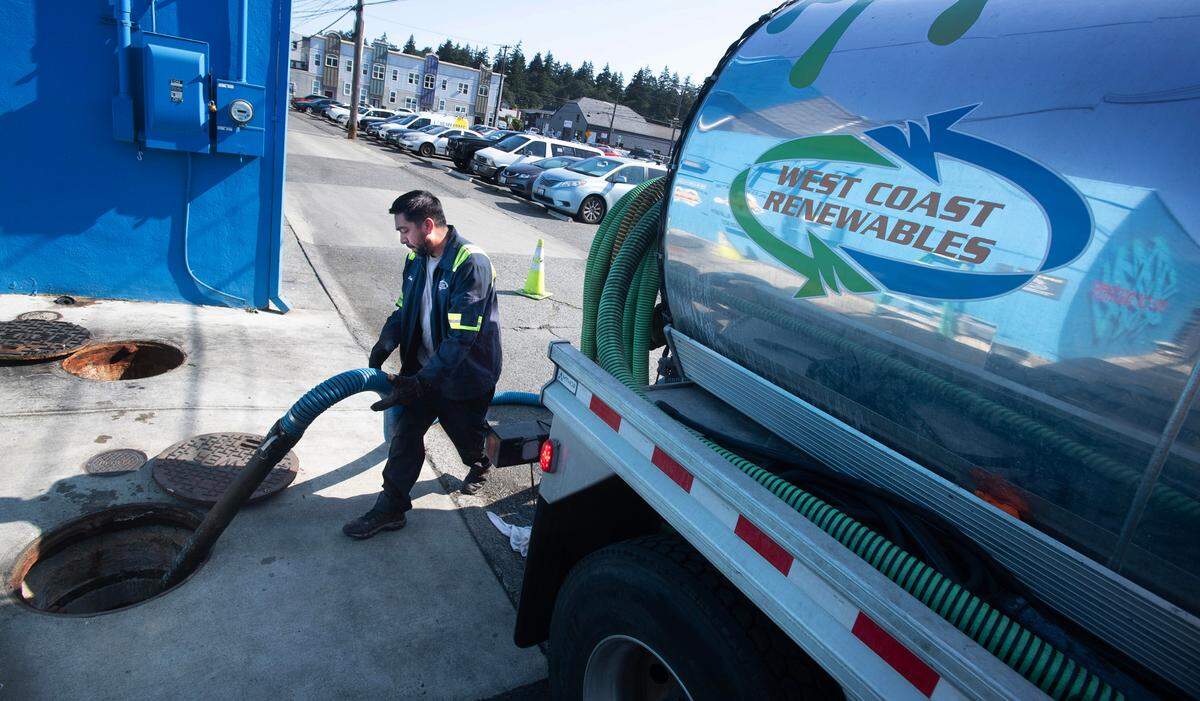
According to city code, the Beetle-sized gravity interceptors should be professionally cleaned at least every 90 days. The in-kitchen ones should also be professionally cleaned on that quarterly cycle, but restaurants can — on paper, anyway — self-clean them as needed to maintain a grease level no higher than 25%.
Johnson at Manuscript agrees that consistent self-cleanings plus a quarterly professional pump feels reasonable. Despite the silence from the city, she has kept up the daily-plus-monthly routine.
“I’m not looking to be irresponsible,” she told The News Tribune in October. “I care a lot about the environment myself. That’s why we have metal ramekins instead of plastic, and metal straws. At the same time, I could be saving money. It’s already hard enough to make money in this industry.”
CITY SPORADICALLY USES REPORTING TOOLS
Restaurants that self-clean at any interval are expected to maintain a log for at least three years. Madison provided Johnson with a simple worksheet that he has never reviewed, she said.
In response to specific questions about the situation at Manuscript, city spokesperson Lee wrote that the restaurant’s device “has a unique mechanical skimmer” that needs frequent attention. The machine has a heating element that skims grease into an attached container, which Johnson said they empty nightly. Madison’s promise to follow up “is a generalized statement made to all new/reopening restaurants,” said Lee, as a reminder that they “should be prepared for an inspection and records review by Environmental Compliance staff.”
The pumping companies are supposed to report the results — which flag anything over that 25% measurement as “deficient” — in a digital reporting tool called OnlineRME.
Moore confirmed that Madison is the only person in her department with ready access to the system, which the city pays around $15,000 annually to use. Anyone can go to the public interface, type in an address and view basic information — the date of service, pass or fail — and view the brief report. The portal does not show an overview of all reports and their results.
The city initially denied The News Tribune’s public-records request for that data, claiming it was not the city’s to give. The Silverdale-based OnlineRME told the paper that, in fact, the data “belongs to the individual jurisdictions.” Environmental Services eventually shared a spreadsheet with a summary of every report filed through the online portal since it first contracted with the company in 2014.
Just under 1,200 reports on average were submitted each year from January 2015 to December 2023, according to a News Tribune analysis. That number accounts for 255 unique addresses, meaning around 1 in 5 reports were from the same business.
Of those, more than two-thirds passed the under-25% test.
That preventative metric, while commonly embraced, masks the fact that an interceptor could be 33% full or higher and still do its job. Ducoste, the FOG expert, said it also can let large interceptors sit for prolonged periods with large amounts of grease, which can complicate the clean-out and increase costs. The city considers machines recording levels above 25% as prone to “structural damage.”
Moore said she could not recall an instance where OnlineRME data was used for enforcement. She described it as “supplemental” to the city’s inspection process. Lee confirmed that the data is not imported to an internal city system.
When Madison does interact with OnlineRME, he types in a specific address, similar to the public portal. He can also run “a summary of all open pumping reports that have not yet been desk audited,” according to Lee.
Asked if that step was a regular part of Madison’s routine, Moore said, “I wouldn’t classify it as routine per se, but in an ideal world he’s looking at it multiple times a month.”
That “triage review,” as the city calls it, essentially flags a business for inspectors to add to their list. Whether an inspection actually happens depends on “the inspector’s existing workload and review timeline,” said Lee.
The city also must comply with Environmental Protection Agency regulations, created as part of the Clean Water Act of 1972, that make it illegal to discharge pollutants without a permit. The National Pretreatment Program requires that state and local governments develop and enforce programs to control contaminants — especially FOG — that, if left unchecked, could “cause obstruction” in public sewer systems. Wastewater devices must be inspected at least every five years to meet EPA requirements, while stormwater inspections are expected annually.
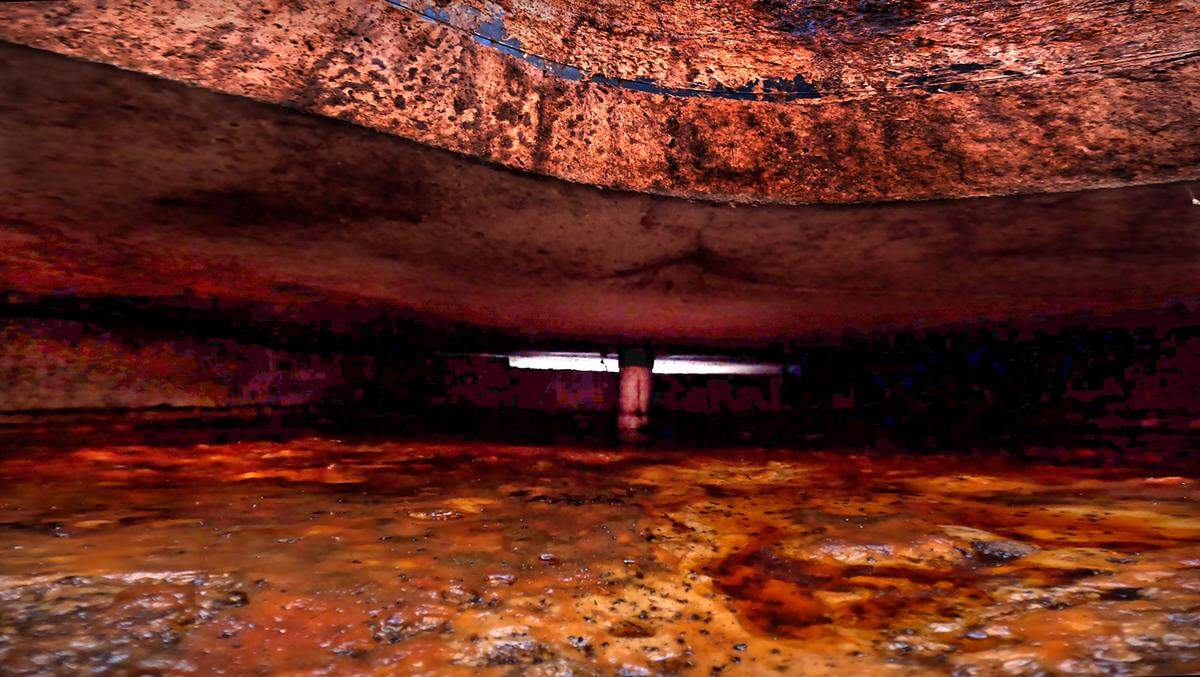
EPA-REQUIRED INSPECTIONS SHOW MOST ARE OK
Since around 2013, city staff has maintained inspection information in a dataset it refers to as Tacoma Surface Water Inventory Database, or TSWI. The city provided a summary of FOG-specific inspections to The News Tribune.
Staff inspected fewer than 200 businesses with grease interceptors in all but three of the past 11 years. From 2014 to 2016, staff inspected more than 300 annually.
The city attributed that increase in part to general staffing levels. It also said that from around 2007 to 2019, inspectors generally checked wastewater devices, including grease interceptors, during annual stormwater infrastructure inspections at sites that have both. Since 2020, they only check wastewater devices every five years (unless triggered by an outstanding event), the minimum to align with EPA pollutant permits.
Every year since 2014, around three-quarters of inspected interceptors passed, according to a News Tribune analysis. The percentage was even higher — above 80% — in 2019, 2020 and 2023. Last year, for instance, 145 of 181 businesses got the OK.
The data also revealed that the same businesses are often visited repeatedly, even those that passed the first time.
Asado, the Argentinian steakhouse on Sixth Avenue, was visited in 2014, 2015 and 2017, passing each time. Inspectors visited Baker Middle School seven years in a row and Blix Elementary School six years in a row, despite the interceptor passing every test.
The data also showed that, sometimes, failed inspections triggered a fast follow-up. Duke’s Seafood House on Ruston Way failed its July 2022 inspection, for instance, but it passed a follow-up that September.
Chains are not immune: A McDonald’s that passed its May 2014 inspection was visited again that September, when it failed, so staff returned in November. It failed again. The next inspection didn’t happen for another year.
From 2013 to 2023, the city performed 2,287 inspections of 679 different interceptors, The News Tribune found.
Moore said her team is “definitely not out looking” for problems or bad actors.
“The key driver is if we get a sewer overflow or knowledge of some blockage,” she said. “That’s maybe when OnlineRME would be used. We don’t have the staffing to go hunting for this.”
Asked why the city has focused on a fraction of foodservice businesses, Lee emphasized the city’s focus on voluntary compliance.
“That’s the simplest, plainest way of putting it,” she said. “ Our inspectors are not issuing violations right and left … We consider ourselves education and outreach first. It can’t not be there.”
At Manuscript, Johnson was wary to participate in this story. She hoped her perspective might lead the city to seriously re-evaluate its policies. But she also worried that it might lead to an even more cumbersome situation for her restaurant and others.
“I recognize the value in the spirit of what they’re trying to do, and I care about it, too. But what is actually happening seems very different from the spirit of that,” she said in November. “It seemed very important initially when we were opening, and then now, it’s like, it just feels a little bit like a power-tripping game.”
This story was originally published November 25, 2024 at 5:00 AM.