Vehicle homelessness ‘exploded.’ A Hilltop man’s story reveals a cruel, broken system
READ MORE
RV Homelessness in Pierce County
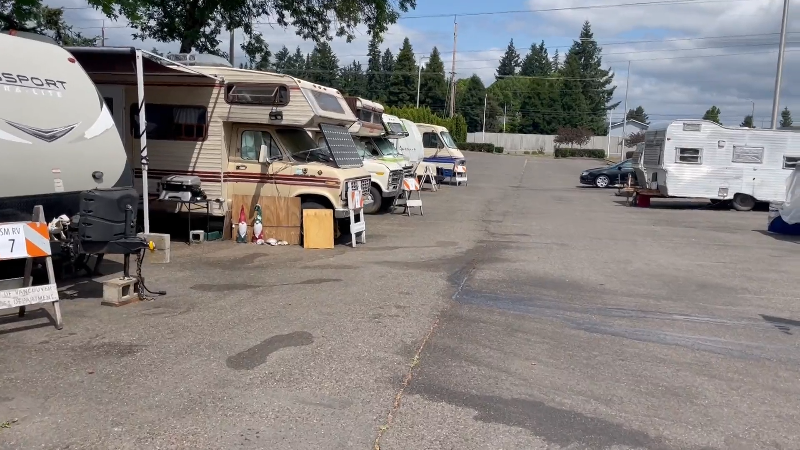
After Ivory Kelly’s RV was towed from its spot in Tacoma’s Hilltop in April, his life unraveled. In the process, he’s become part of a distinct population of vehicle-dwelling unhoused that’s increasing locally and nationally. The growth is straining government resources, businesses and neighborhoods.
Expand All
The first time I met Ivory Kelly, late one afternoon in early May, it was raining, like it had been for days.
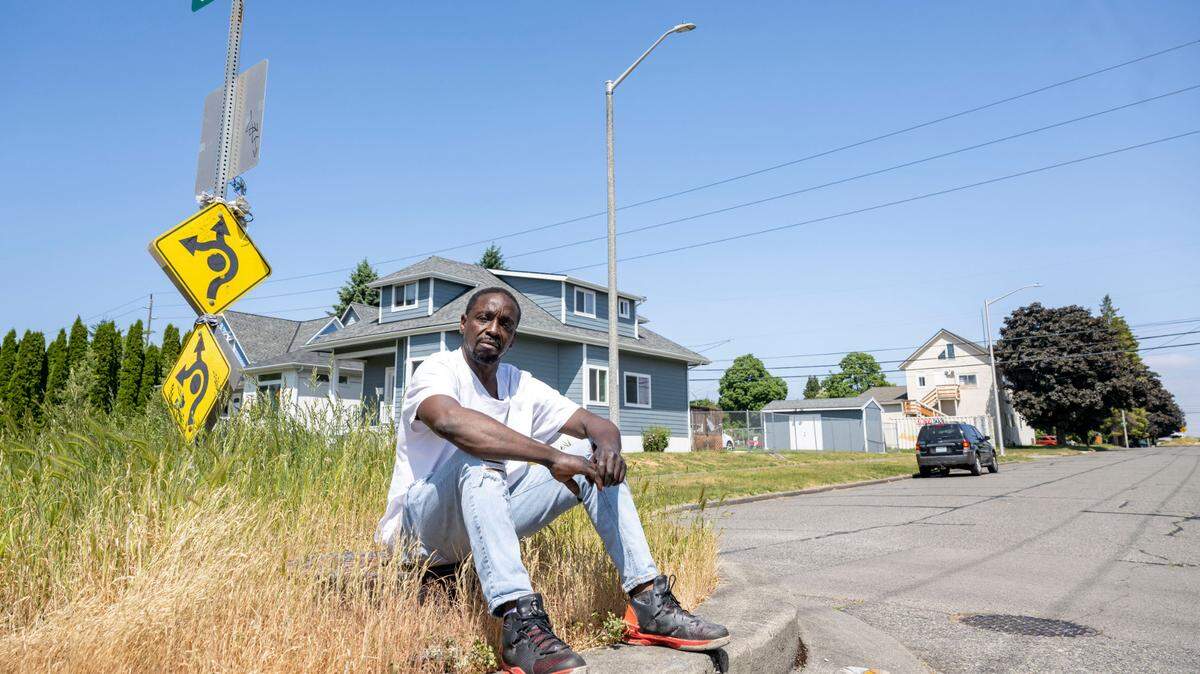
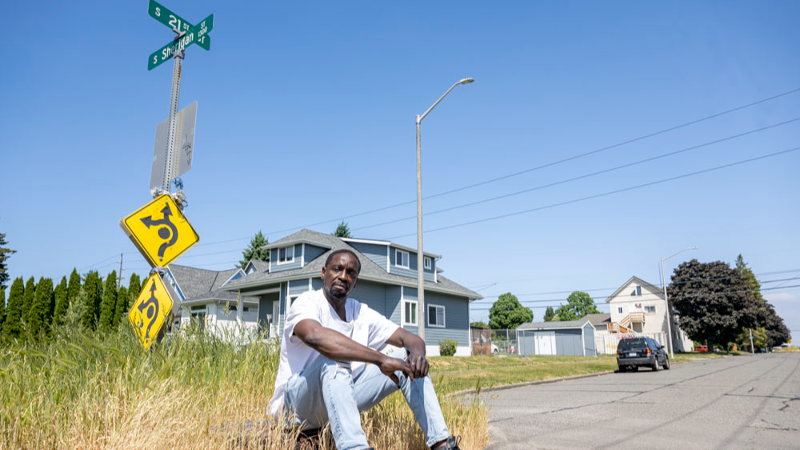
He was standing in a scraped-up and rutted patch of grass between the sidewalk and South 21st in Tacoma, just like he said he would be.
It’s a spot the 59-year old knows well, I would soon learn. Off and on since 2016, the planting strip, on city land maintained by the homeowner, is the closest thing Kelly has had to a consistent home.
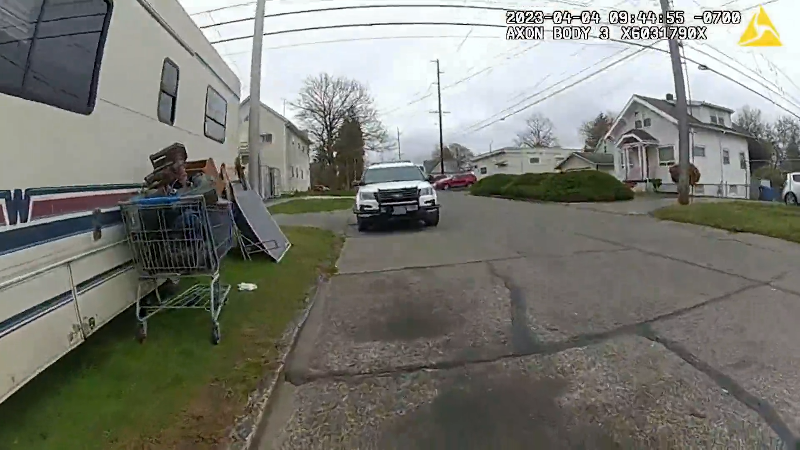
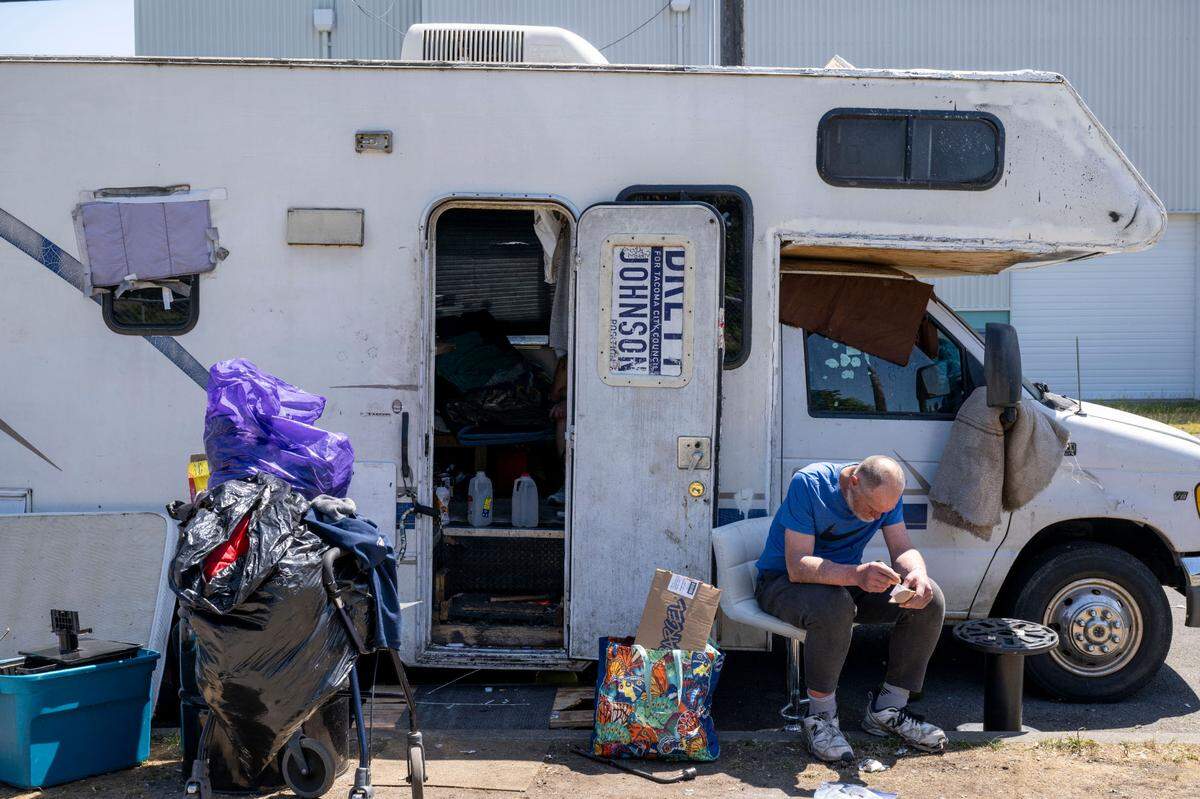
Until recently, Kelly’s 27-foot, 1991 Winnebago had been parked there, he told me, but it was towed April 4. According to the police report, it was tagged roughly a week prior in response to complaints received through the Tacoma 311 system that characterized the vehicle as a nuisance. The 30-year-old RV also had expired tabs. For more than six years now, Kelly has relied on various vehicles for shelter, including his RV. In the process, he’s become part of a distinct population of the unhoused that has increased locally and nationally, according to many experts, advocates and law enforcement officials.
That quiet Hilltop corner also has a larger significance in Kelly’s life: It’s where he grew up.
Not far from the grass where we stood, there’s a modest two-story house with white trim. Kelly moved there as a boy, the youngest of six children, with his single mom in the early 1970s. Today, two of Kelly’s sisters, Mary and Antonette, are on the deed to the property, following the 2016 death of their mother, who left the home to her children.
As Kelly and I spoke, Mary, who currently lives in the home, peeked her head out the backdoor. We exchanged waves over a chain-link fence, hers with notable skepticism.
She would later tell me her brother had permission to park outside the home.
Antonette Kelly would later tell Ivory wasn’t allowed to live inside of the house, because of the company he’s tended to keep.
At the time, it was a situation I struggled to wrap my head around — a brother, surviving on the street just outside the home where he was raised, the home where his sister still slept at night.
“I parked here all the time,” Kelly told me that afternoon, gesturing to the damp grass behind him.
“Now look at me. I’m homeless.”
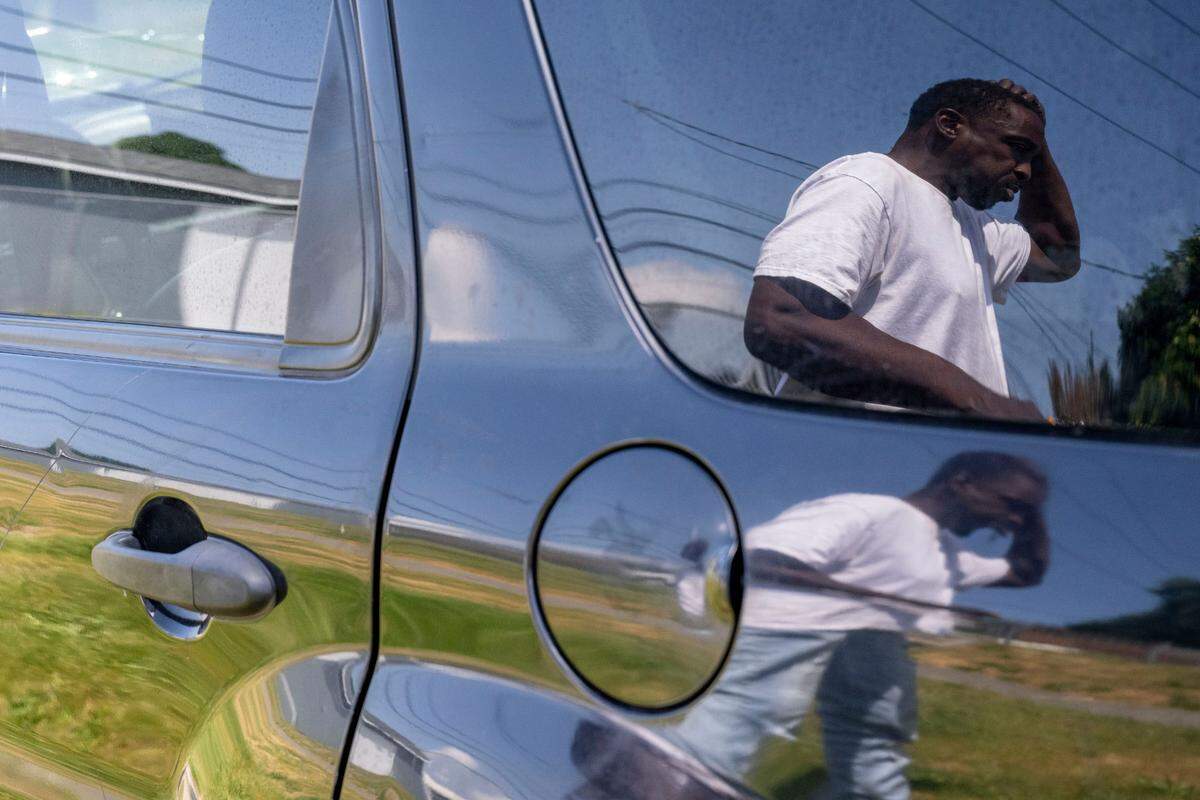
Since May, I’ve been a guest in Kelly’s world. We met through a shared acquaintance — in my case, a source from many years ago, in his, a neighbor across the street — who sent me an email out of the blue. She said Kelly, who is Black, had been a long-time presence in her Hilltop neighborhood. But the area is gentrifying, she explained, a transformation she admitted contributing to when she moved to the area in 2018.
The mutual acquaintance is Lisa Daugaard, the co-executive director of Purpose Dignity Action, a nonprofit formerly known as the King County’s Public Defender Association. Daugaard said Kelly’s RV had recently been towed, apparently at the instruction of Tacoma police, to the surprise of many, including her own.
Daugaard suspected that complaints leading to the impound came from neighborhood newcomers who didn’t know the history, and she questioned the legality of the tow, specifically the notice Kelly received.
Daugaard also said what happened to Kelly was cruel and counterproductive. She was angry.
“For the last couple of years, (Kelly) has been living on our street in an RV. He keeps it running, he moves it occasionally; more important, he’s a great neighborhood citizen,” Daugaard explained.
Daugaard then described the disturbing string of events she watched unfold, full of what she called “interlocking” issues.
There was homelessness. There was alienation. There was the impact of soaring housing costs and punitive policies.
Ultimately, all of it collided, resulting in the displacement of a Black man from a changing neighborhood he’d long called home.
As it turns out, Daugaard was right.
The dispute
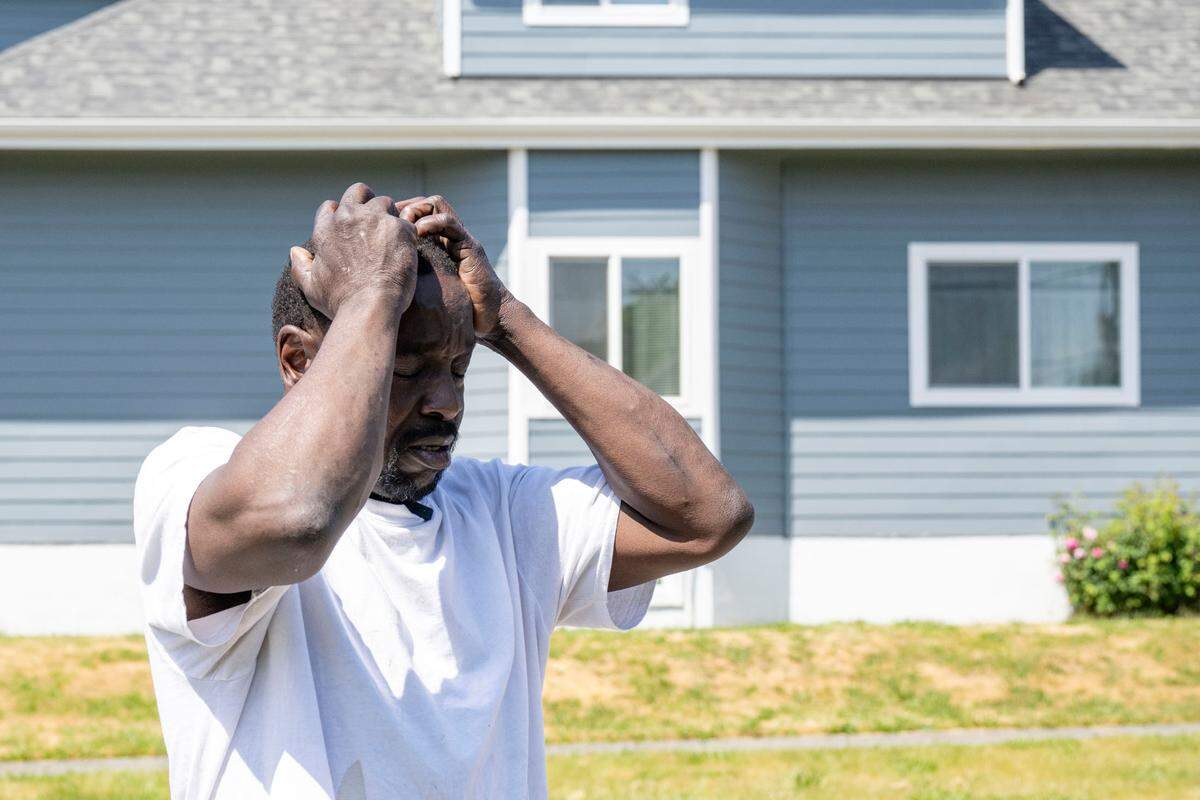
This much is certain: Nearly five months after Kelly’s RV was towed, his life, by most metrics, is worse than it was before. Legally disabled after years spent battering his body working on fishing boats in Alaska, he lives on supplemental security income and lost his only shelter over the course of a morning, sending him into an extended spiral that has only recently shown signs of letting up.
Public records show that Kelly’s RV was towed and impounded by Bill’s Towing, a local business with a decades-long history contracting with the City of Tacoma to provide towing and storage services. Under its current contract, Bill’s and two other local towers will be paid a total of $500,000 over the next five years in city funds to continue performing that work.
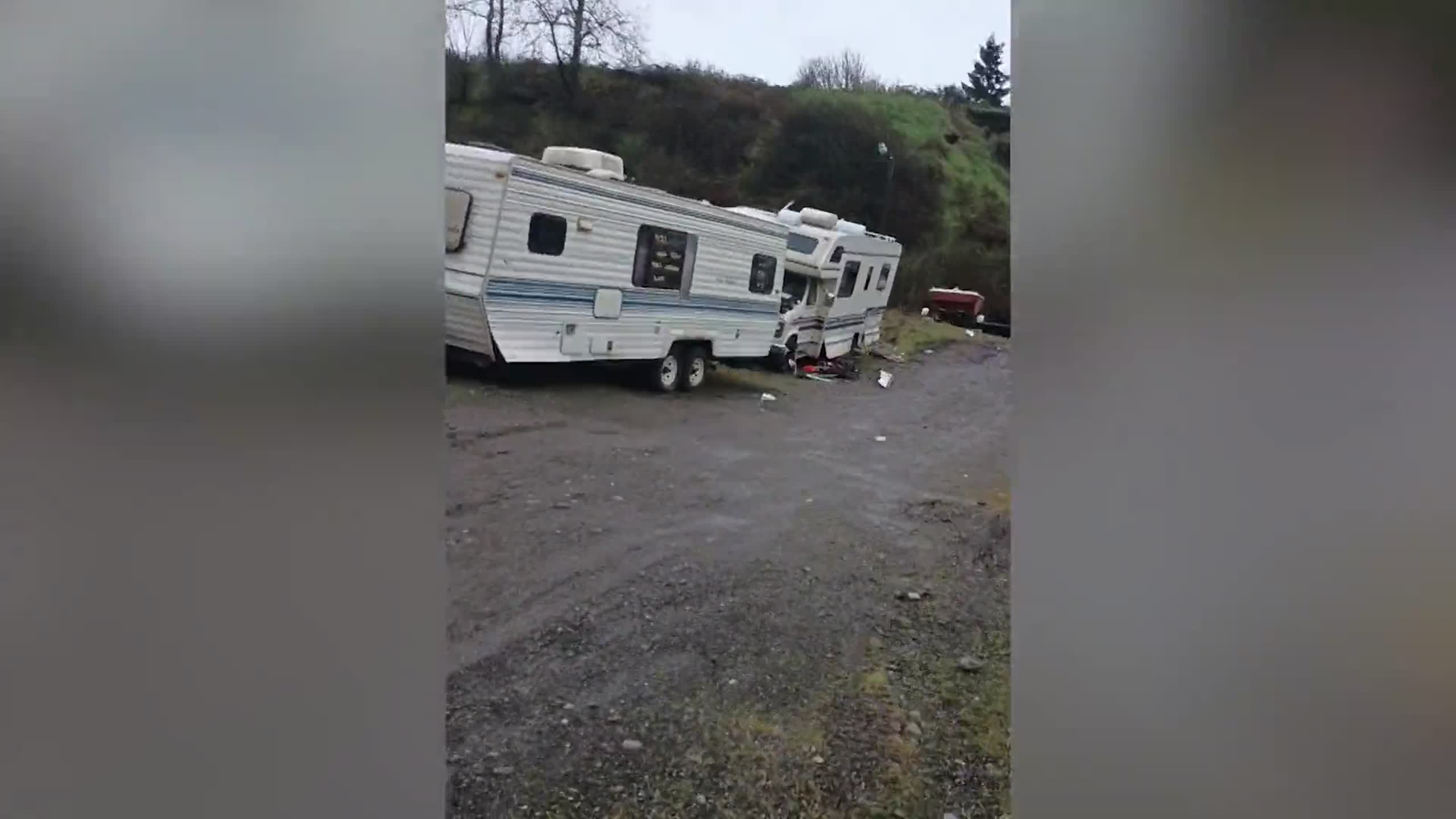
After discovering his RV had been impounded, Kelly said he visited the Bill’s Towing main office on South Sprague Street, where he hoped to pay to have it released, with help from his sister, Antonette. Initially, Kelly said, staff at Bill’s were unable to tell him which lot his RV had been taken to after it was towed. The day of the impound, Kelly said, he eventually signed paperwork indicating he wanted to retrieve his personal belongings, but he didn’t see the vehicle until the next day, when a member of Bill’s staff directed him to an unsecured, unfenced lot in the Nalley Valley.
When he arrived, the RV had been damaged beyond recognition, likely by someone who took advantage of the easy access the lot provided, rendering it a total loss, Kelly claims.
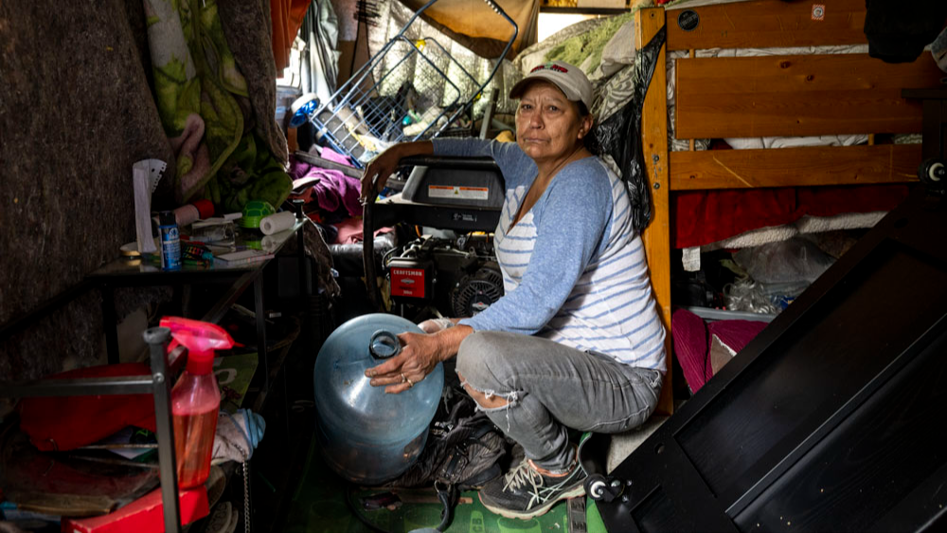
All of his belongings — including a generator, his collection of Nike Air Jordans and, most importantly, the ashes of his late wife, Rhonda Lynn — were gone, he said.
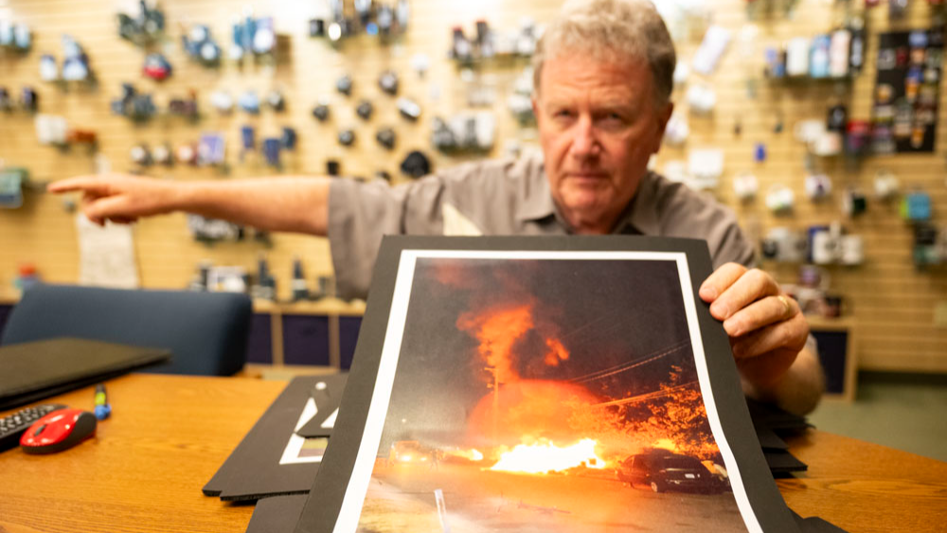
It’s a version of events that the longtime owner of Bill’s Towing, Tom Lomis, strongly disputes. Lomis admitted that Kelly’s RV was inadvertently held on an unfenced piece of property near the company’s Nalley Valley overflow lot. He also acknowledged that state law requires registered tow companies to securely store impounded vehicles. But when it comes to Kelly’s assertions that the RV was vandalized and burglarized while in the company’s possession or that Kelly discovered damage the first time he saw it after it was towed, he said Kelly is mistaken — or, he suggested, lying.
Lomis told me he’s skeptical of Kelly’s complaint. The way he describes it, there was no delay in locating the RV, and Kelly returned to the vehicle in the vacant, unsecured lot at least twice before reporting anything missing.
Regardless, in June Lomis told me the situation had been turned over to insurance.
“I assure you that we did not survive almost 70 years by being irresponsible or insensitive to our customers,” Lomis said at the time, via e-mail, in response to Kelly’s allegations.
“How this world has changed is crazy.”
By mid-July, Kelly told me he’d been contacted by an insurance representative who indicated he’d be reimbursed for the loss of the RV, for approximately the same price he paid for it: roughly $3,000.
There was still no word on the compensation related to the loss of his belongings, Kelly said.
“I’m surprised that the insurance company offered that,” Lomis wrote via email in response to the news.
The local landscape
Lomis also said that transporting and storing vehicles identified as abandoned by local police has always been difficult for registered tow companies, but RVs — particularly with the recent influx the industry has seen related to homelessness — present unique challenges. They require bigger trucks. They take up more space. Often, they’re barely operable if they run at all. They can be filled with garbage or drug paraphernalia, making them unsafe to enter. In the end, it can cost roughly $2,000 to dispose of an otherwise worthless 25-foot RV, if not more.
That’s why, in 2018, Washington lawmakers created a fund to help registered tow truck companies cover some of these costs, paid for through a $6 fee assessed to recreational vehicle owners when they renew their tabs. To date, according to data provided by the state Department of Licensing, the fund has paid for the disposal of more than 1,600 vehicles. It’s expected to have doled out more than $340,000 through the end of the fiscal year, which concludes in September. So far in fiscal year 2023, the state has already paid for the disposal of more recreational vehicles than any previous year — nearly 600 of them.
More recently, the state legislature tasked a work group with providing recommendations for ways state towing laws can be improved, to better protect people living in vehicles and the tow companies they often come in contact with. According to Emily Wade, the administrative director for the Towing and Recovery Association of Washington, most of those recommendations fell on deaf ears last session. Wade was part of the work group.
There’s a reason tow companies are encountering more RVs, according to policymakers and experts, even beyond the sheer number of old RVs currently in circulation.
As COVID-era health and safety restrictions on the clearing of homeless camps have come to an end, many jurisdictions, including Tacoma and the state Department of Transportation, have ramped up efforts to clear makeshift communities that have sprung up in the shadows — which sometimes include vehicles and RVs used as shelter. The encampments, according to local authorities, can be a magnet for legitimate community complaints. There are issues with trash and sanitation. The encampments often attract criminal behavior. There are fire risks. And for nearby residents and businesses, the toll can be staggering.
Tacoma’s recent law enforcement approach to vehicle residency dates to 2017, when the City Council updated the city’s “Human Habitation of Vehicle Ordinance.” The update cut the amount of time that a car or RV that’s serving as someone’s home can be parked in a particular location from a week to 72 hours. Once a citation warning is issued, those living in vehicles must move them at least a mile away to avoid towing and impound.
According to Tacoma Municipal Code, human habitation of a vehicle includes “sleeping, setting up sleeping materials in a manner as to be used for sleeping, engaging in housekeeping or cooking activities, storing personal possessions in a manner that obscures the vehicle’s windows, and using sanitation, plumbing or electrical equipment in a manner inconsistent” with local code. Violations of the ordinance can result in fines ranging from $50 to $250, depending on the number of citations received. City law also prohibits any vehicle from parking longer than seven calendar days on any public street.
Tacoma also recently banned “public camping” — or the act of living on public property — within a mile radius of Tacoma’s existing emergency homeless shelters. The ordinance is designed to focus on public camping near the city’s emergency shelters in an effort to make the facilities safer and more effective for the people living in them, but Tacoma City Council member John Hines, who championed the targeted ban, noted that certain elements of the ordinance can apply to people living in vehicles — if they’re storing belongings on public property.
Hines acknowledged the number of people living in vehicles in Tacoma is a problem, even if he doesn’t hear about it from residents as often as he hears about encampment-related issues.
Particularly with limited resources, Hines said, the city is trying to navigate the need to provide services and new options for people experiencing homelessness of all kinds while also addressing the health and human safety concerns that the rise in encampments and vehicle residency has created.
“A lot of our homeless infrastructure is set up so you can move a person from a tent into a tiny home and then into an apartment. How do we get someone who’s maybe in an RV into a tiny home or into a concrete shelter, and do they want to make that step away from their vehicle?” Hines said.
“I think that’s the question we need to answer as a city.”
Where Ivory Kelly fits in
Kelly’s life story, like most, is full of contradictions, circumstance and, at times, incongruous details.
He’s a man of deep faith prone to reciting scripture. He used to perform in the church choir; on YouTube there’s a 12-year-old recording of him singing a reworked, gospel version of the pop hit, “Let ‘Em In,” originally released by Wings in 1976. He’s a skilled ping-pong player, known to set up his table and provide instruction to neighborhood kids. He’s also someone who’s long battled addiction, by his own telling dating back to the crack epidemic of the 1980s, and more recently the rise of methamphetamine.
Kelly’s past is checkered with low-level, drug-related criminal offenses and brushes with the law, including a host of domestic-violence arrests that ultimately resulted in no charges being filed. Public records reveal that many involved his on-again, off-again girlfriend in recent years, Amanda, who has also been arrested in connection to their volatile disagreements. She stood by his side when we first met.
More broadly, for all his history on Hilltop, his good deeds in the community and his many mistakes and regrets — some of which I’ve come to know intimately since our first encounter on that soggy late afternoon — Kelly is emblematic of the growing number of people in the United States whose only shelter is a car, RV or other forms of transportation. According to experts, it’s a trend that has blurred the lines between what we traditionally think of as homelessness and the long history of trailer parks and other forms of mobile shelter providing refuge to lower-income people. It’s also an outcome that underscores growing economic desperation across the country, they say, fueled by a crisis-level shortage of affordable housing and the market-driven disappearance of cheap places for struggling people to stay.
One estimate in recent years suggests there are up to 1 million people in the United States living in a vehicle in a public space, including national parks and forests — a figure that, even if it’s close to accurate, would dwarf the number of people identified as homeless across the country in 2022. Some are retirees or those seduced by the “vanlife” movement, which has been popularized in film and on social media, attracting newcomers and aspiring influencers to a nomadic lifestyle. Most are simply people with few other options.
Locally, those who report sleeping in a vehicle — a condition local and federal homeless policy defines as unfit for human habitation — are a subset that increased roughly 23% in 2023, seven percentage points more than the growth of Pierce County’s overall homeless population, according to the annual Point In Time Count, which attempts to count the number of people experiencing homelessness during one day in January. Still, in recent years people living in vehicles have generally accounted for anywhere between 6% and 10% of Pierce County’s homeless population, according to a review of recent and archived data.
The true total is impossible to know, and year-to-year comparisons are fraught. The counting is difficult and imprecise; experts acknowledge the results consistently capture only a slice of an area’s actual homeless populations, resulting in undercounts. Methods change. And for most who experience it, vehicle homelessness is something to keep hidden.
One man’s story
When I met Ivory Kelly, he was out in the open.
His story is one of family resilience, trauma and lingering questions.
He’s an example of what happens when outdated and arcane parking laws intersect with rampant housing insecurity, often resulting in punishments far greater than any infraction committed.
He’s a child of Hilltop at risk of being pushed out. The way he’s managed to hang on — sleeping by the side of the road while making sure to move just often enough to avoid detection — shines a light on a hidden epidemic Tacoma and Pierce County have so far failed to address.
Most of all, Kelly is just a guy who suddenly found himself with nowhere to go.
What he’s experienced reveals a dysfunctional system — and a system seemingly designed to make him go away.
A childhood home
I met with Kelly a number of times over the months. One morning in May, he was happy. The sun was shining, and he had plans later in the day to do odd jobs around the neighborhood.
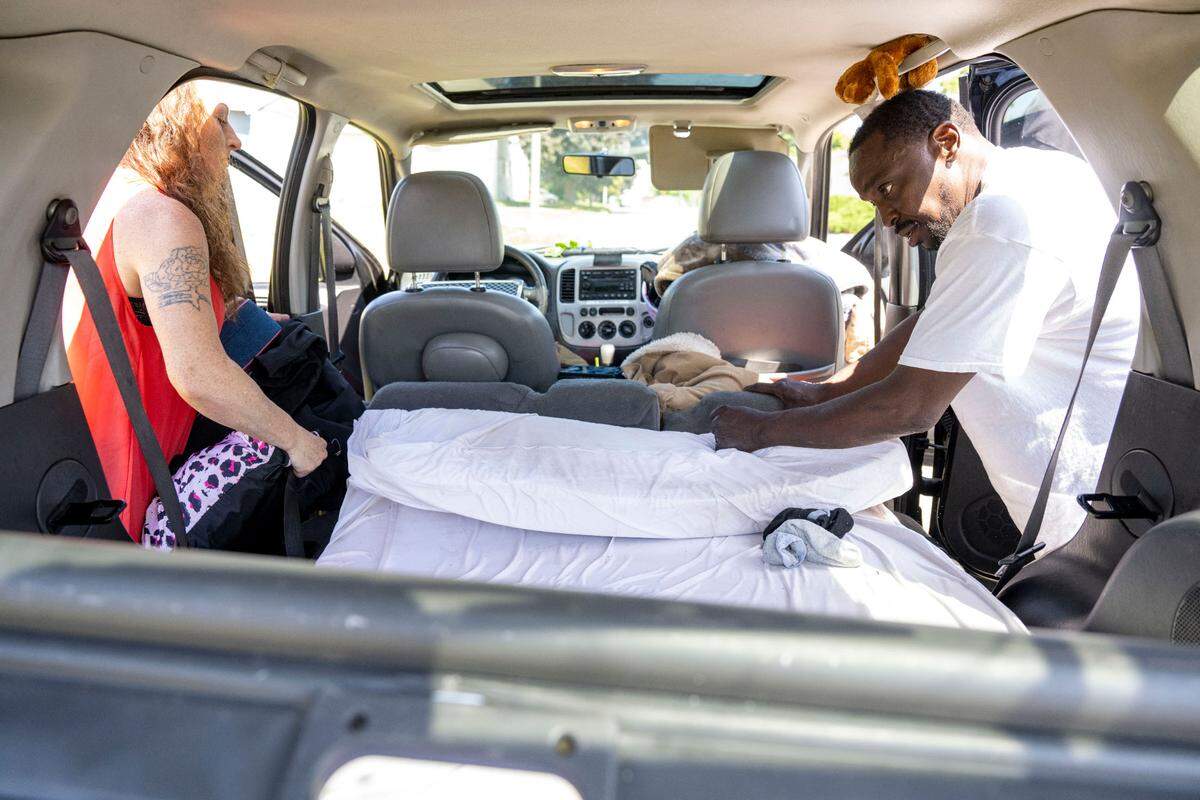
He made breakfast on his propane cooker, he told me: stir-fried spinach and string peas with fried bratwurst. Lately, he’d been sleeping in a 2006 Kia Rio, packed with stuff and parked in his sister’s backyard.
All around him, Hilltop was springing to life. The smell of cut grass was in the air. In the distance, a weed whacker hummed.
It had been just over a month since Kelly’s RV was towed. Life without it was taking its toll, but he was trying to adapt, he said.
“It was hard when I first had to do it,” Kelly told me, describing his nightly routine, including his struggle to get comfortable in the small vehicle.
“I used the car for storage. I would throw something in here just to get it out of the way in the camper, and I wasn’t too organized about it,” Kelly said. “I had to straighten this thing out. It’s getting better now, but it’s still pretty tight.”
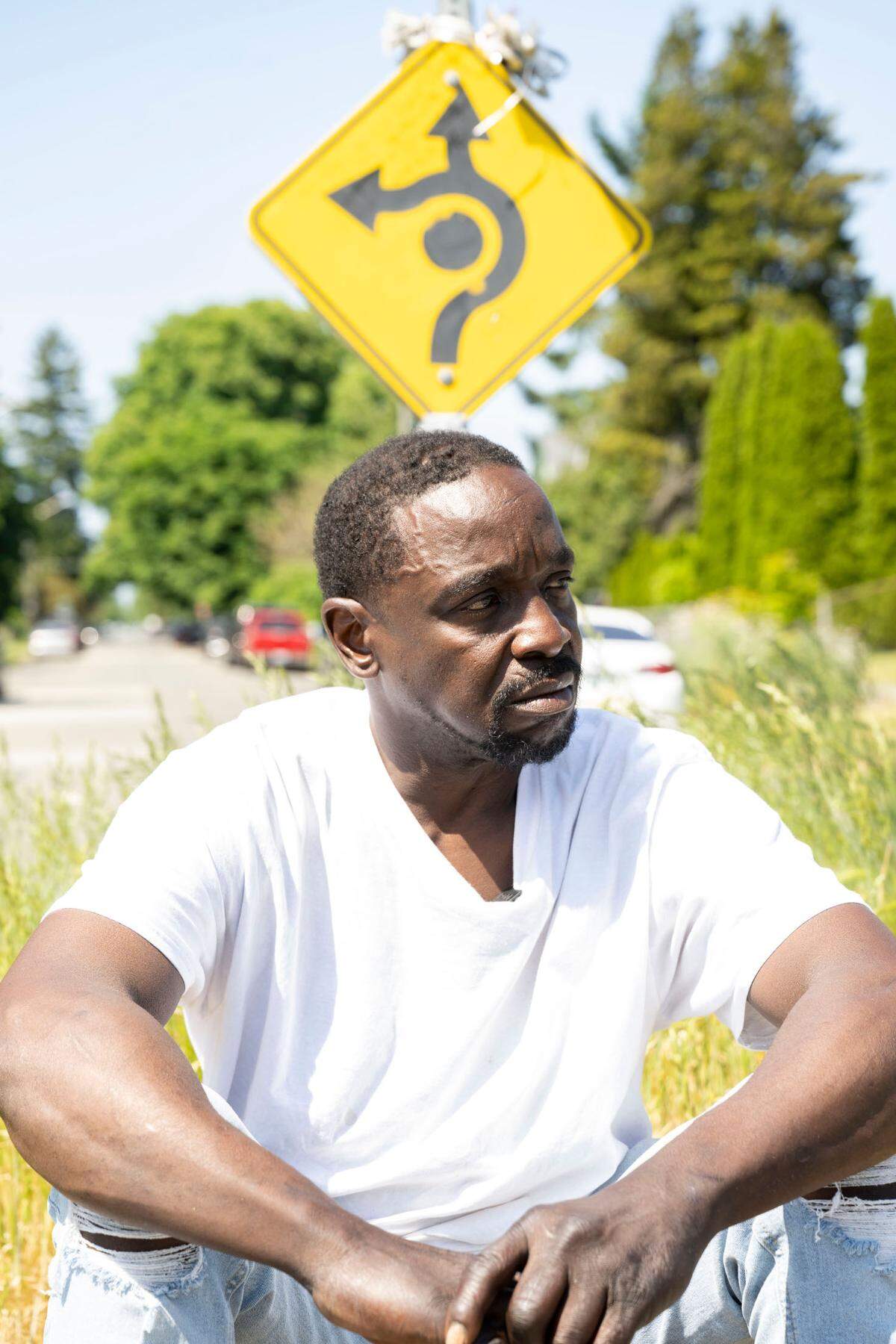
The irony of it all wasn’t lost on Kelly. Our conversation turned to the neighborhood around him: the place he grew up, the house where he once lived.
He recalled his formative years and his family’s move to Hilltop from the Salishan on the Eastside when he was 8. He told me about his mother, Beulah Kelly, a neighborhood matriarch who kept a close eye on her children.
He recalled playing football in the street, with each block of Hilltop fielding its own team.
“I remember I was in fourth grade, going to McCarver. I had friends that lived around the corner, and friends that lived next door, and we just walked to school,” Kelly said. “Hilltop was a lot different back then. It was more family-oriented. It wasn’t really bad around here yet.”
Kelly’s sister, Antonette, has fond recollections of her brother as a child, and their mother, who she said was known as “the neighborhood mom.”
Separated in age by only a year, the two siblings are the youngest in the Kelly paternal family; Antonette described Ivory as “the baby.”
“He never really got into trouble,” Antonette Kelly said of her brother.
“He was a momma’s boy.”
A changing neighborhood
The Hilltop where Beulah Kelly settled with her children in the 1970s is largely a distant memory, not that long-time residents need reminding.
Thanks to redlining and a host of other racist housing policies that dated back decades when the Kelly family took up residence in the area, it had largely become home to Tacoma’s Black community. In recent years, the demographic and socio-economic shifts have been impossible to ignore.
In the 1970s, according to mapping and research compiled by the University of Washington’s Civil Rights and Labor History Consortium, the percentage of Black residents living in Hilltop census tracts ranged from 25.5% closest to downtown to 60.6% in areas closest to Interstate 5. By 2020, the highest percentage of Black residents in any of the three census tracts was 21.5%.
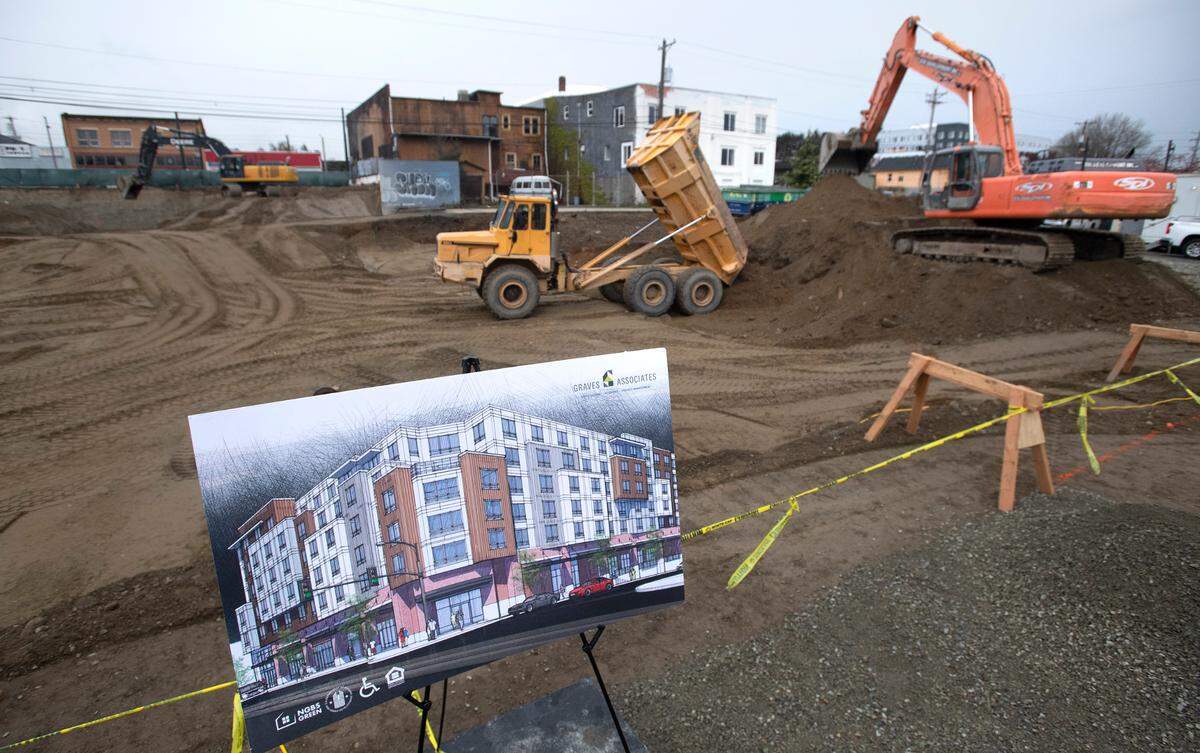
In 2016, Tacoma Housing Authority dug into neighborhood demographic shifts in preparation for the agency’s Housing Hilltop development, which is under construction and will include roughly 230 units of affordable housing when it’s completed. According to THA’s Housing Hilltop Discovery Report, between 2010 and 2015, the percentage of Black residents living in areas most often considered to be Hilltop decreased by 4%, arriving at a total that was less than half of Hilltop’s white population.
The report described Hilltop as particularly vulnerable to gentrification, a phenomenon generally defined as the displacement of longtime residents in historically minority communities by more affluent and often white newcomers due to development, rising housing costs and other market forces. It cited the neighborhood’s “high proportion of renters; easy access to downtown and The Port of Tacoma via freeways or public transportation; increasing levels of metropolitan congestion; and low housing values.”
“In particular,” the report noted, “low housing values make the area attractive to speculative developer investments.”
Today, of course, home values and average rents have skyrocketed, putting a financial crunch on many Hilltop residents and forcing an untold number to relocate. The recent average market rate rent in Hilltop of $1,229 a month is lower than Tacoma’s citywide average of $1,488. But the household area median income in Census block groups that generally make up Hilltop varies wildly, often painting a complicated picture of hardship.
In much of the neighborhood, including areas near Sprague and the Hilltop Safeway, recent household AMI hovers between $65,000 and $70,000 annually, similar to the citywide AMI of $69,956 but well below the countywide median of roughly $82,000 a year, according to available census data. In designated Census areas closer to downtown and surrounding St. Joseph Medical Center — a stretch that includes Catholic Community Service’s Nativity House homeless shelter and apartments and the Tacoma Housing Authority’s Rise at 19th development — the AMI ranges from roughly $28,000 to $38,000 annually. In these parts of the city, approximately 30% are living in poverty, more than double the overall rate in Tacoma.
Meanwhile, homes that sold for far less than $100,000 25 years ago are now routinely priced at $500,000 or more, according to a historical review of local real estate listings. Wages have stagnated across the country, analysis suggests, and local property taxes have jumped, according to the Pierce County Assessor Treasurer’s Office.
Over the last five years in the three Census tracts that comprise the area commonly known as Hilltop, from South Sprague to Tacoma Avenue between South 7th and South 25th streets, there were roughly 207 residential sales where the grantee was a limited liability company or limited liability partnership. When a home is bought by an LLC or LLP, there is a good chance that the purchaser is a real estate investor, according to housing data experts.
Out of a total of 1,318 residential sales during the five-year period on Hilltop, homes bought by LLCs or LLPs accounted for roughly 16%, according to a News Tribune analysis of data provided by the Pierce County Assessor Treasurer’s office.
Over the same time period, only 10% of residential sales citywide were recorded by LLCs and LLPs, according to the data.
‘Parked here forever’
Emmett Linton Sr., the famed Tacoma Boxing Club instructor, has seen the transition firsthand, including the drug- and gang-fueled violence that engulfed Hilltop in the 1980s and ‘90s. He’s been working with kids from the neighborhood for more than 40 years, in the ring and as a youth football coach. Kelly was one of them. He’s also related to Kelly by marriage.
Linton, now 77, said he remembers Kelly as a good kid with decent athletic ability. He also recalled Kelly’s family and the important role Beulah Kelly played in a community accustomed to scraping by.
Kelly was like a lot of young people he’s worked with over the years, Linton said, particularly during an era when addiction ravaged a disproportionate number of Black lives — more than he’d care to recall. While Kelly avoided gangs and crime, at least in part because he was a grown man by the time the worst hit Hilltop — already working on fishing boats in Alaska for much of the year — Linton said it hasn’t been difficult to see his struggles with substance-use disorder from afar. Sometimes, Kelly seemed to be doing well, holding down steady work and singing in the church choir. Other times, Linton said, you could tell he was using.
“He was a pretty good kid. You know, there have been a lot of them,” Linton said. “His mother was a good person, well-known in the community. Like a lot of kids, (Ivory) just got caught up in the moment and touched the drugs.”
Bishop Lawrence White also has seen the evolution and gentrification of Hilltop up close. He was called to Church of the Living God at 19th and South M Street in 1996, not long after Hilltop had earned a national reputation for being one of the most dangerous neighborhoods in the country. The church is located two blocks from the Kelly family home.
Over the years, White said, he’s watched the neighborhood change while also forging a relationship with Kelly. He described Kelly as a valued community member, even after he took up residence in his RV.
On Tacoma police body cam footage recorded the day Kelly’s RV was towed, White can be heard identifying himself as a local pastor and advising one of the responding officers that Kelly’s sister lives in the home. The vehicle is Kelly’s place of residence, he tried to make clear, parked there with the family’s blessing.
The response from the officer, who can be seen from the front seat of his police cruiser handing White a business card, is cordial but succinct:
“It’s just getting impounded today,” the officer said. “Because it’s been parked here forever.”
It’s true: Kelly had been parked in front of his childhood home forever — or, at the very least, for the better part of six years, a stretch that has seen him use a handful of vehicles for shelter.
White told me he can’t help but see a connection between the forced removal of Kelly’s RV and the larger headwinds that have remade Hilltop in recent years.
To some, White assumes, the neighborhood is a little bit cleaner now — there’s a little less visible blight.
But according to whom, and at what cost, he wonders?
“(Kelly has) never been a negative presence. He’s never participated in or been the perpetrator of any heinous acts. He’s just lived according to his ability to live, and was living on their family property,” White said.
“I feel pretty confident that whoever considered him a nuisance was someone who does not know him,” White continued.
“And I can almost assure you it was someone who does not look like him.”
This story was originally published July 27, 2023 at 5:00 AM.