Businesses are buckling under the weight of vehicle homelessness. Who’s helping them?
READ MORE
RV Homelessness in Pierce County
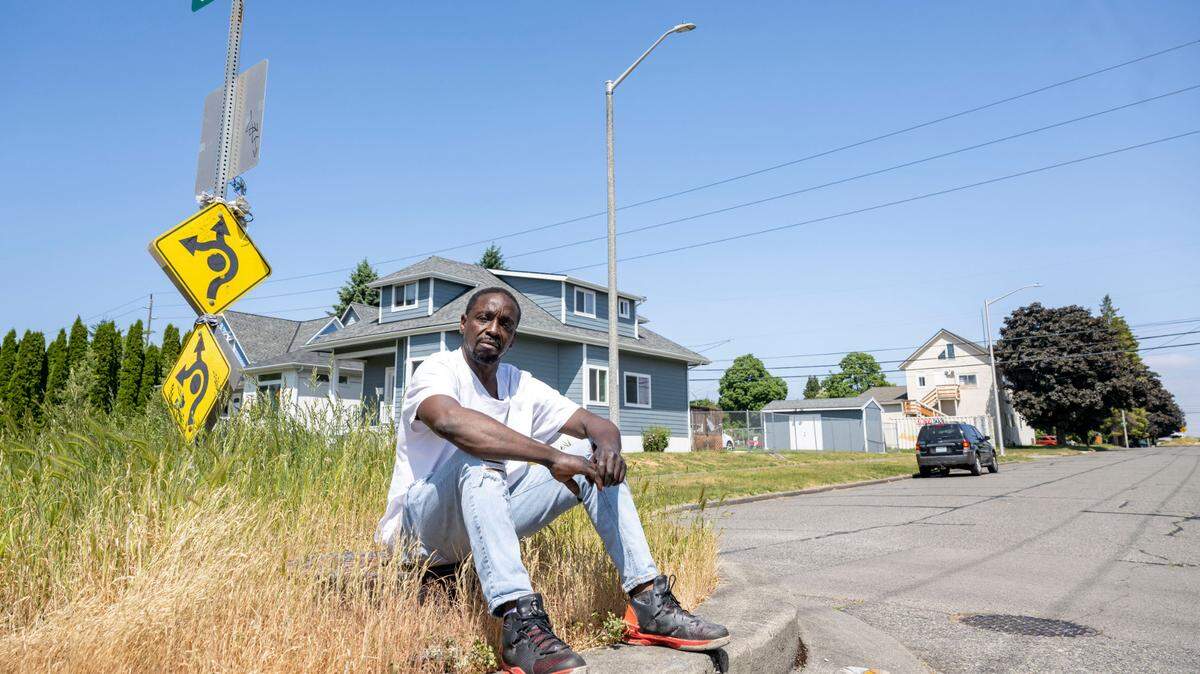
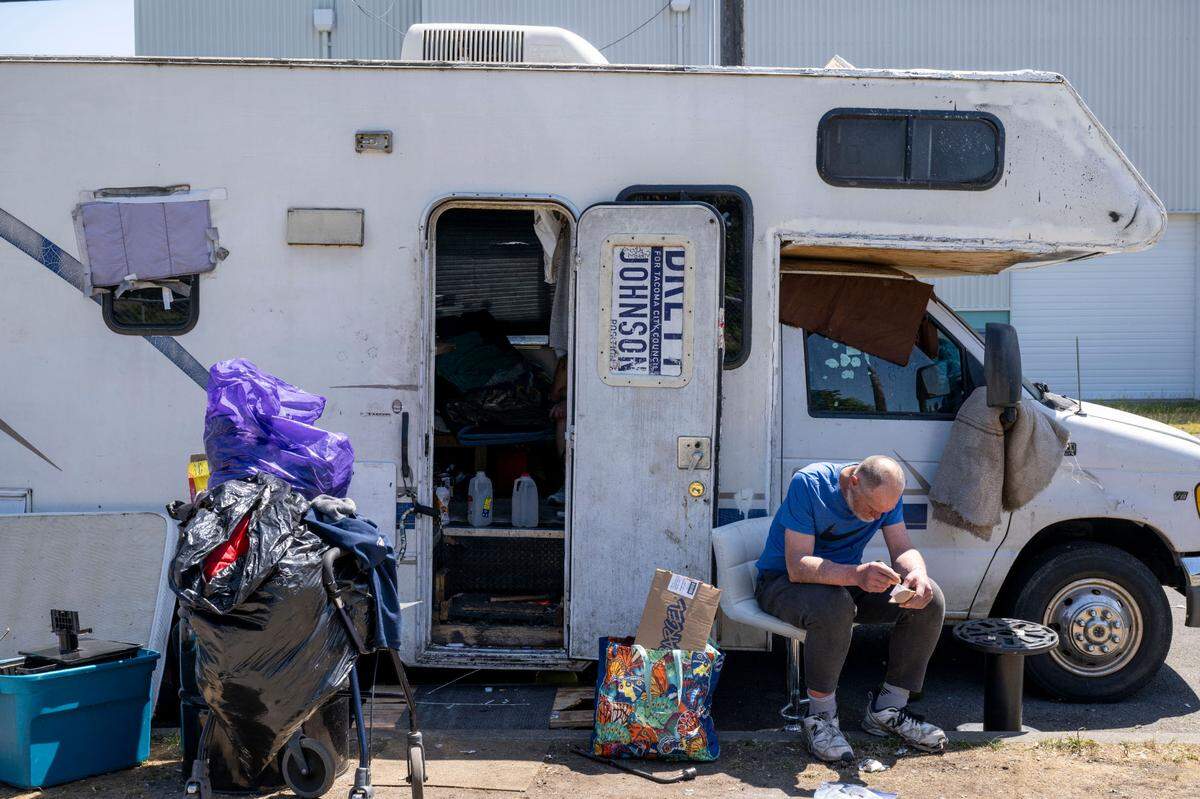
After Ivory Kelly’s RV was towed from its spot in Tacoma’s Hilltop in April, his life unraveled. In the process, he’s become part of a distinct population of vehicle-dwelling unhoused that’s increasing locally and nationally. The growth is straining government resources, businesses and neighborhoods.
Expand All
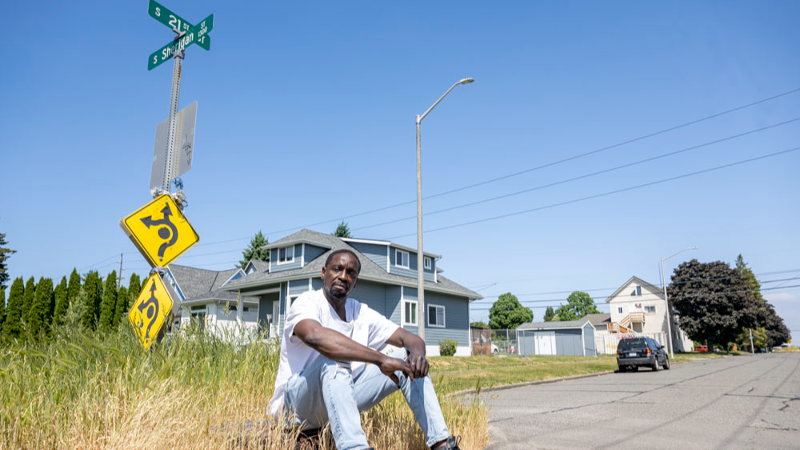
The first time Ivory Kelly parked outside his childhood home and settled in for the night was nearly seven years ago.
Since then, he’s slept in a number of vehicles, rarely straying very far, he told me one morning. He was calling from the Federal Way rest stop along Interstate 5, where he had slept the night before.
His old neighborhood is familiar, Kelly explained. It makes him feel safe.
Kelly, 59, is the subject of The News Tribune’s series on vehicle residency, and the increase in people living in cars and RVs, locally and across the nation. Kelly’s RV was towed on April 4 from just outside his childhood home, where it had long been parked. He’s been homeless since 2017. This story is part three of the series.
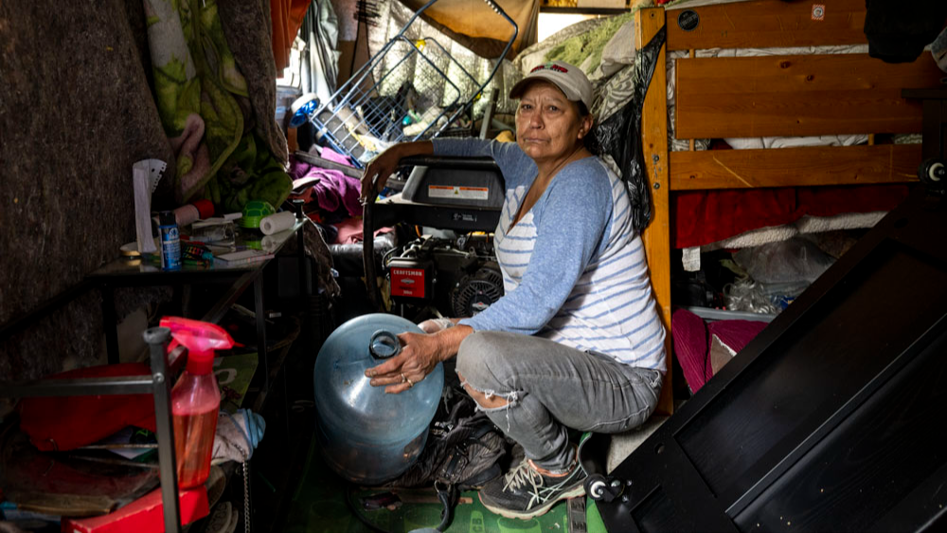
Some, like Ashley Zimmerman, who moved to Hilltop with her young son following the death of her husband while serving overseas in the military, see Kelly as a friendly face and a long-standing member of the community.
In May, Zimmerman, who has lived across the street since 2021, described the block of South Sheridan as “welcoming,” and Kelly as “a neighbor.”
“We just always say, ‘Hi,’ and he’s always very friendly,” Zimmerman said. “He spends a lot of time cleaning up in the area, and always he’s nice to my son.”
Others have a different perspective.
Since January, Kelly’s RV has been the source of at least five separate Tacoma 311 complaints, according to records obtained by The News Tribune. Since June 2022, Tacoma police have attempted to make contact with Kelly on at least six occasions, repeatedly tagging his RV for violations of the city’s extended parking laws and nuisance vehicle codes and providing him with notice to move.
In total, records provided by Tacoma police indicate Kelly was successfully contacted in person at least once — in June 2022. At the time, Kelly was offered resources and a warning about the city’s extended parking code, according to the police report. He’s also had a vehicle towed at least once before.
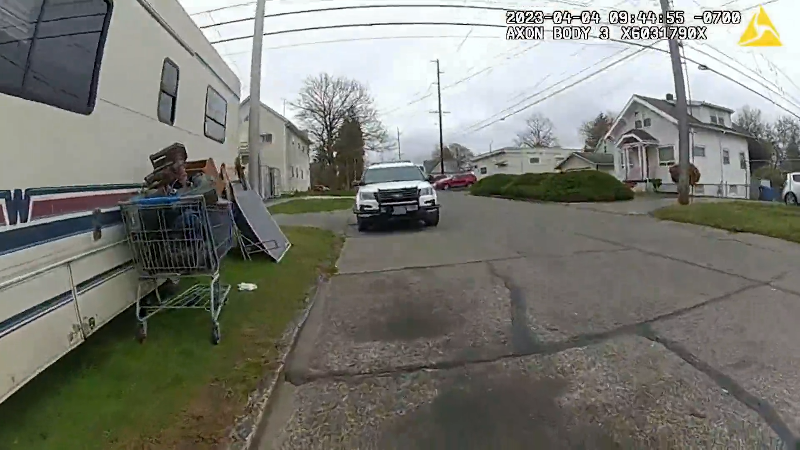
Kelly most recently received notice of a reported violation of Tacoma parking code on March 27, eight days before his RV was impounded, according to the police report. Kelly said he had no idea his RV had been tagged; he either didn’t see it, or it didn’t happen, he told me. Police body cam footage from the day of the tow shows a bright yellow sticker affixed to the RVs driver’s side back corner, a location, Kelly suggests, he might have missed, since in recent weeks he took to entering the vehicle from the passenger side along the sidewalk.
The RV’s transmission had recently gone out, Kelly explained. He was near Tower Lanes on Sixth Avenue when it happened and had to drive home in reverse.
Kelly also said a Tacoma police officer hasn’t approached him about living in his vehicle for roughly a year, an assertion that Capt. Corey Darlington, who was recently appointed to lead the agency’s community policing division, couldn’t contradict.
Darlington said the police report associated with the March 27 tagging of Kelly’s RV doesn’t show whether police were able to make contact with him that day or in the days prior.
Somewhere, Kelly fell through the cracks.
After reviewing the available documentation, Darlington told The News Tribune he instructed his officers to provide more detailed accounts of their outreach efforts in future police reports.
‘Complaint-based enforcement’
At least two anonymously submitted 311 complaints were received in the days prior to Kelly’s RV being towed, records show.
The complaints are what triggered the towing of Kelly’s RV, as they do in the vast majority of abandoned and nuisance vehicle impounds, according to police and city officials.
Under city law, a nuisance vehicle must meet three of four requirements: be extensively damaged; appear to be inoperable; be three years old or older; or, have “an approximate fair market value equal to the scrap value.”
According to city spokesperson Stacy Ellifritt, Tacoma’s procedure for towing abandoned and nuisance vehicles is well established.
Once a complaint is received through the Tacoma 311 system or a related city channel, like a call received directly by the road use compliance team, it’s entered into a city tracking system. Enforcement is complaint-based, Ellifritt said, due to limited resources.
After a complaint is logged, what Ellifritt described as a “field verification” might occur, conducted either by a Tacoma police officer or a member of the city’s road use compliance team. If it confirms the presence of an abandoned car or RV, the vehicle is tagged with a notice notifying its owner that it must be moved within seven days, Ellifritt said.
A week later, someone follows up, Ellifritt told me. At that point, “conditions are reassessed to determine if there have been any efforts to remedy the situation,” she said. Depending on the outcome, the vehicle could be towed, or towing could be delayed if there are “active efforts” to address the problem.
If at any point in the process the vehicle is identified as someone’s home, the complaint is forwarded to Tacoma Police Department, and often a member of the agency’s community policing division.
The handoff allows TPD “to initiate their processes,” Ellifritt said, providing a third possible path toward intervention or resolution.
Since January 2017, according to records obtained by The News Tribune, Tacoma has authorized the towing and impound of more than 7,700 vehicles deemed to be abandoned. It’s unclear from the data how many served as someone’s shelter.
Outside of 2020, when COVID-19 safety measures temporarily reduced the number of impounds to roughly 850, records show the city towed an average of nearly 1,300 abandoned vehicles each year during the five-year period.
Through April of 2023, the city was on pace to match that mark, records indicate.
‘No law requiring outreach’
In May, Tacoma police spokesperson Wendy Haddow, who has since retired, described the approach the team takes when dealing with a reported abandoned or nuisance vehicle that is believed to serve as someone’s home.
Generally, Haddow said, a community liaison officer attempts to contact the inhabitants in hopes of coordinating outreach efforts with Tacoma’s Neighborhood and Community Services department, which oversees the city’s non-law enforcement homelessness response.
In Kelly’s case, there’s no record that law enforcement or city outreach workers were able to contact Kelly in person prior to his RV being towed.
“There is no law requiring this outreach piece, but our goal is to provide services to those who need them,” Haddow said.
Asked specifically about the agency’s response to vehicle residency, Darlington said addressing neighborhood complaints often requires officers to “strike a balance” between trying to help people living in cars and RVs and navigating the larger issues that the increase in vehicle residency has contributed to. He also said that making contact with individuals can be difficult.
Darlington provided the rationale behind Tacoma’s laws related to extended parking, the human habitation of vehicles and public camping.
“There are impacts on quality of life for all citizens, whether it’s a neighborhood or business district. It can have — and usually does have — a negative impact, and that’s why people are concerned. That’s why they call the Police Department, and that’s why it’s frustrating because we’re trying to make life better for everyone,” Darlington said.
“When we have the human habitation of vehicles, not all the time, but often there’s spin-off activity. Some of the activity, on occasion, is low-level criminal activity. Sometimes it could be even violent crime associated with homeless activity. There are also blight issues, litter, and possible environmental situations, such as dumping of sewage on the street,” Darlington continued.
“It’s super difficult, because obviously being homeless is not a crime … and police are caught in the middle, trying to mediate the situation with very limited resources and limited authority,” he said.
Dating back to January, the complaints Kelly’s RV has racked up illuminate the delicate balancing act Darlington described. The complaints portray Kelly’s RV as a problem, and his lifestyle — including his visitors — as a source of regular neighborhood disruption.
One, received on March 2, references the Martin v. Boise federal court precedent, which in 2018 declared the criminalization of homelessness unconstitutional when there’s nowhere else for someone to go.
“Homeless individuals in green van and Winnebago RV have been living on this residential street in front of people’s homes for WELL over a year. Lady in green van yells, and has been spoken to numerous times about waking neighbors up,” the anonymous complaint reads.
“I am aware ‘homeless individuals cannot be criminalized for sleeping outdoors, on public property’ (but) … there are laws about parking for extended period of time, laws against human habitation of vehicles, sanitation, and storm drains (sic),” it continues.
“As a taxpayer, I would be fined for all of these. … Please reach out to these individuals for services.”
Another Tacoma 311 complaint, this one filed Jan. 11, describes similar concerns.
“There is a motorhome and blue van parked on the block of 1900 and Sheridan Ave. It is currently in the middle of the block parked. … People are living in both the van and the motorhome. Something needs to be done before an encampment starts.”
Attempts by The News Tribune to identify neighbors who filed complaints related to Kelly and his RV were unsuccessful.
One person, who Kelly’s family believes has complained in the past, declined to comment.
Zimmerman said the situation — and particularly the wildly differing views on Kelly’s place on the block and the company he keeps — leaves her “disappointed.”
She thinks he was misjudged and unfairly stereotyped, and that the competing characterizations of Kelly and the life he leads reveal a deeper tension simmering in the neighborhood.
“I know what’s going on in Tacoma. I moved here. People are living out of their cars or living out of RVs because they have nowhere else to go,” Zimmerman said.
“This is Ivory’s neighborhood. He just stayed in the area. I know, for some people that’s something they don’t want to see … which is really unfortunate,” she added.
“Just because we don’t see something doesn’t mean it’s not happening, and everybody deserves a place to live.”
Local businesses hit hard
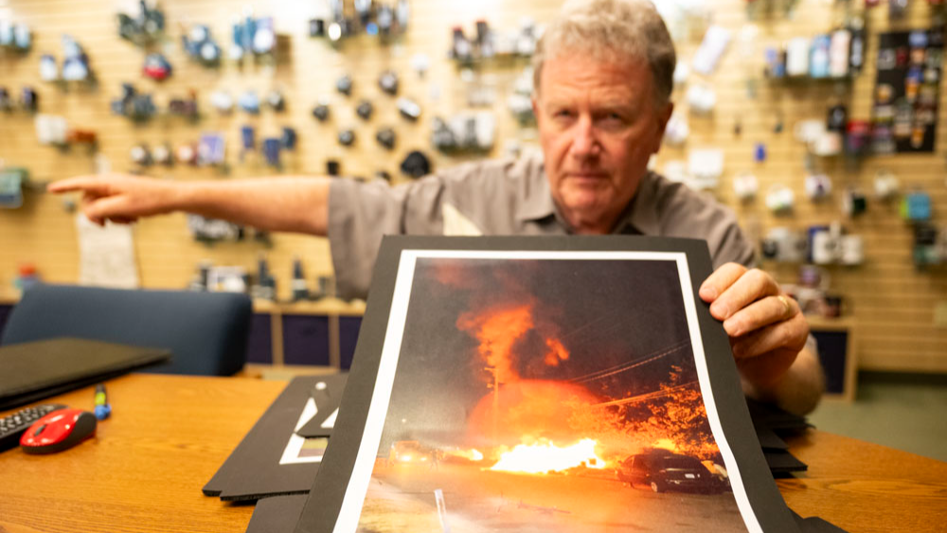
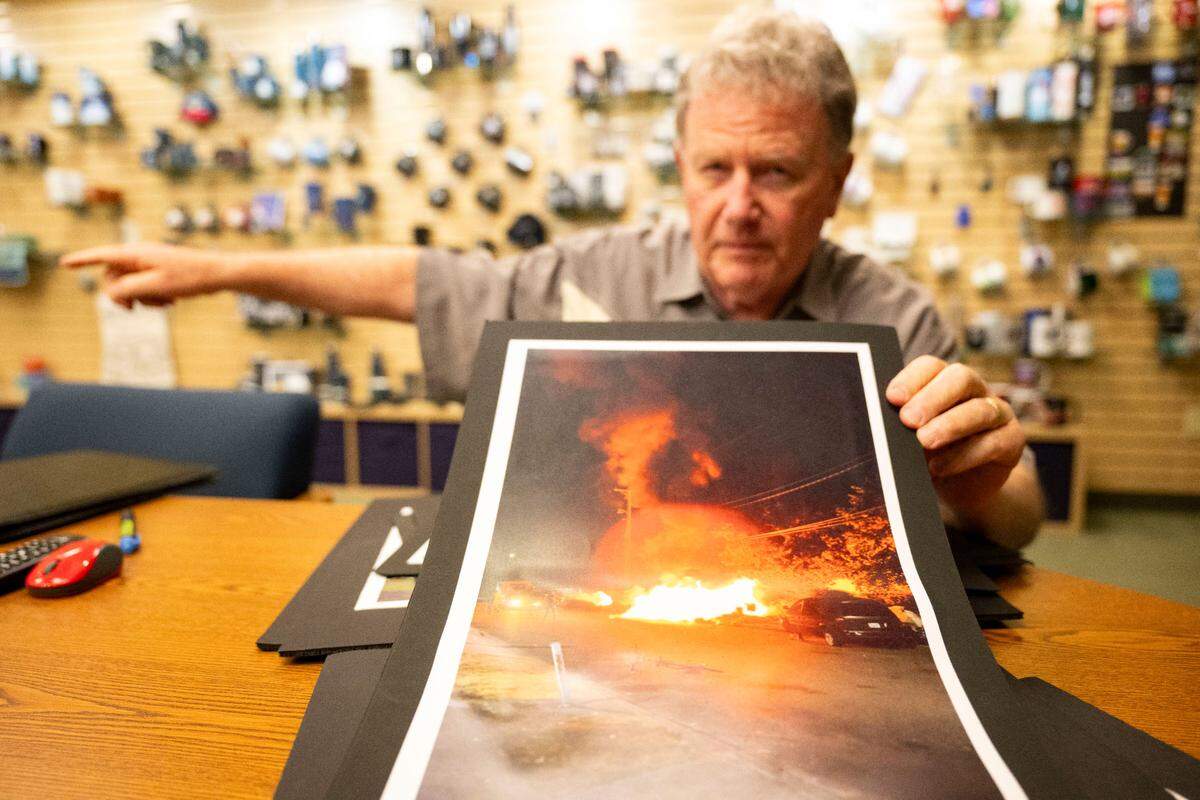
Skip Smith is the owner and president of Smith Western Company, a family operation that’s been in Tacoma since 1947.
Smith said he can’t hide from problems associated with vehicle homelessness, even if he wanted to.
Just outside the front doors of his business — which moved from downtown to South 80th Street near the freeway in 2001— the issues confronts him every day, he told me.
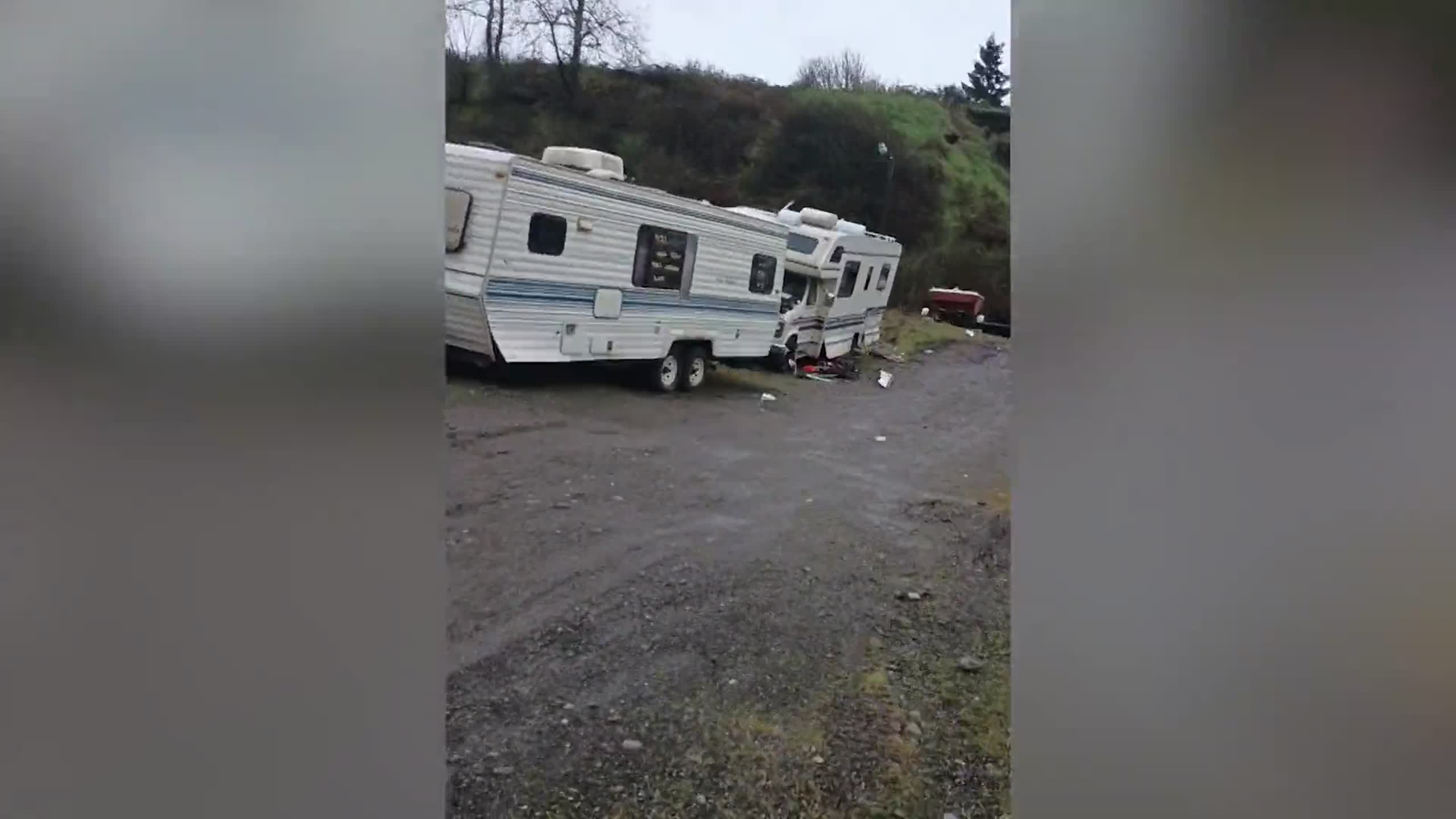
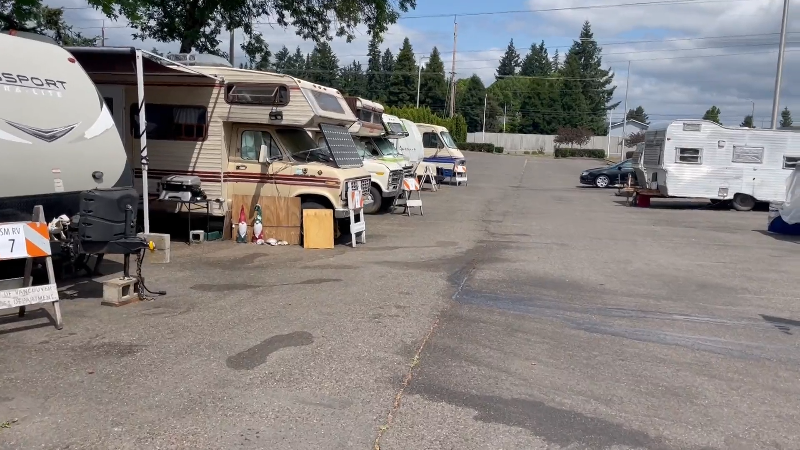
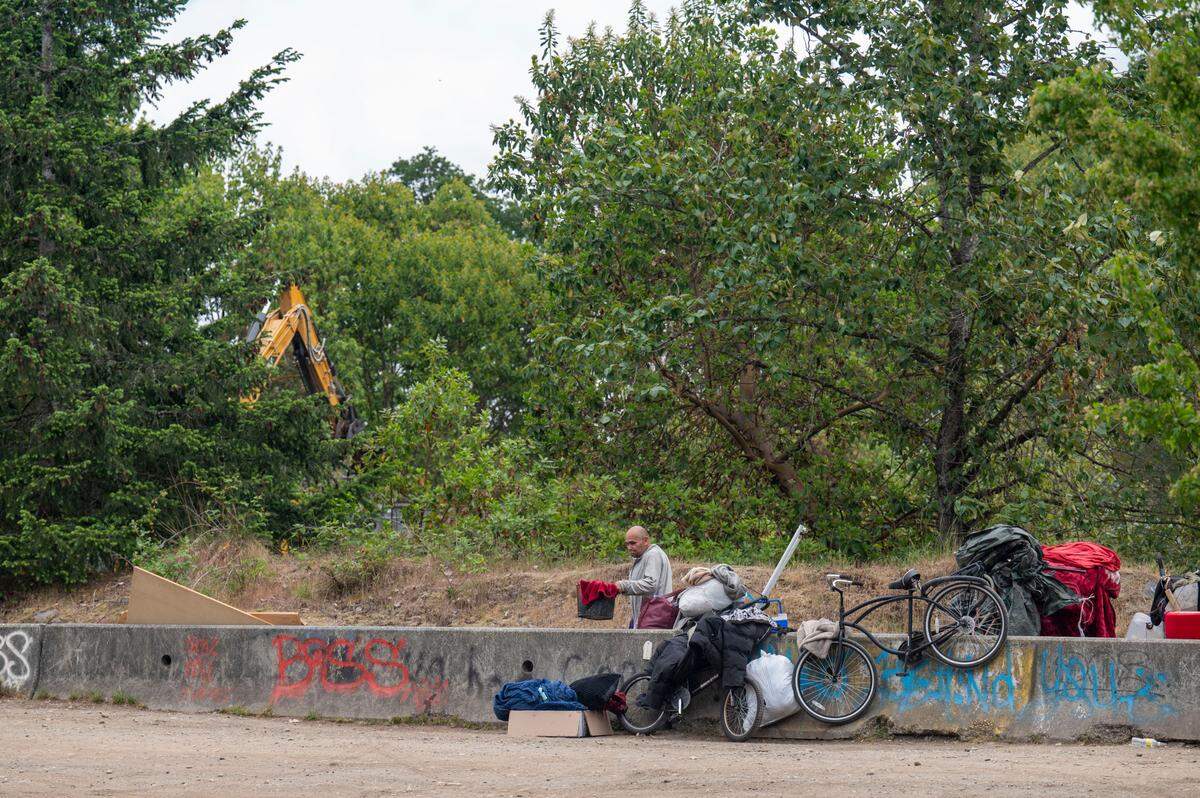
It started innocently enough, a few years ago, with a handful of tents and haphazard shelters erected in a pocket of the city otherwise known largely for industry. Soon, the vehicles and RVs moved in. Now, Smith regularly looks out his windows at more than 20 of them, he said.
The impact on his business has been tremendous, Smith said. There are small inconveniences: The company, which designs and produces souvenirs for clients ranging from National Parks to the Space Needle, no longer hosts out-of-town clients, he said. And there are major concerns: most notably, the safety of his employees, he told me.
Over the last two years Smith has become a vocal, if hesitant, critic of Tacoma’s response to homelessness and vehicle habitation. One of his daughters has struggled with behavioral health issues and homelessness, so he knows how complicated these situations can be, he told me. He doesn’t lack compassion, he insisted. With his wife, he’s raising his daughter’s four young sons, which the couple legally adopted a few years ago. Smith and his wife are both in their seventies.
Still, what Smith’s business and employees have had to endure over the last two years has compelled him to speak up. He’s regularly participated in meetings and discussions with city leaders in recent years, and he’s spoken to TV news reporters eager to capture the frustrations he gives voice to.
Speaking to The News Tribune, Smith provided a long list of harrowing tales. There have been fires. There have been guys wielding blowtorches. There have been fights, near altercations and plenty of close calls, he said.
In February, there was a machete attack. The same month, a 26-year-old man and a dog were shot and killed at a nearby encampment. When police arrested a suspect a short time later, he was in an RV next door to Smith Western Company.
The murder and violence prompted the city to authorize a clearing of the area, but people and their vehicles quickly returned, Smith said, just like they have in the past.
Like many homelessness experts and local law enforcement officials who spoke to The News Tribune, Smith said that not everyone living in a car or RV battles addiction — an assertion available data supports. But he also told me it can be difficult to separate the two things, particularly from his vantage point.
“The homeless aren’t bad. The crime and the safety issues are bad. Our employees are subjected to it, we are subjected to it, and our customers are subjected to it,” Smith said. “The criminals and the drug dealers prey on the vulnerable.”
“I drive by every day, and there were 28 RVs in here this morning,” Smith continued. “The city has spent millions of dollars on all of this low-income housing and buying hotels, and those are good things if the people will want to avail themselves of that. But the people that we’ve talked to out here don’t want anything to do with it, because then they would have to abide by the rules.”
“It’s just drug culture. It’s all about the drugs,” Smith added.
Just down the street, Robert Kaufman owns and operates Tacoma Twin Rinks, which also calls South 80th Street home. Originally from Ohio, it’s a business he got into by chance roughly 30 years ago, largely so his three sons would have somewhere to play hockey, a sport he grew up with and still loves.
By some measures, the business — which relocated from the Tacoma Tideflats roughly six years ago and now features two rinks — is primed for success. Local interest in hockey is exploding, Kaufman told me, thanks to the emergence of the Seattle Kraken. Today, Twin Rinks caters mostly to practicing hockey teams and tournaments, Kaufman said, though the facility also hosts figure skating, lessons and curling.
The trouble, in Kaufman’s estimation, is the large community of homeless people and vehicle dwellers who insist on using the areas around his business as a place to stay. On one occasion, Kaufman said he attempted to approach a man stealing catalytic converters in the parking lot. The situation quickly escalated, he told me, and the man pulled a gun. The terrifying ordeal inspired Kaufman to purchase a firearm and get a concealed weapon permit, he said.
“Over the last two years, it’s just out of control,” Kaufman told me. “Unfortunately, it’s like their little encampment community, and it gets really, really sketchy.”
Michael Nesland is the chief financial officer at Burkhart Dental Supply, another nearby business. In June, he shared similar homelessness and vehicle residency-related complaints, telling The News Tribune that the company is considering relocating to another city because its executives have lost faith in Tacoma’s ability to handle the problem.
The available data backs up some of these assertions. Between the three addresses and a fourth nearby business, Summit Veterinary Referral Center at 2505 S. 80th St., there have been more than 500 complaints made to the Tacoma 311 system since early 2021, records obtained by The News Tribune show. The vast majority involved issues related to homelessness.
Attempts to reach the owner of Summit Veterinary Referral Center were unsuccessful, but during the same two-year time period, the business has filed more than 300, the data indicates.
According to city spokesperson Maria Lee, the volume of complaints received makes the area “one of the higher-demand locations for the city.” Summit Veterinary Referral Center is “consistently among the top 10 addresses for calls for service related to homelessness,” Lee added.
Nesland said filing 311 complaints, as local officials and Tacoma police officers have urged him to do when he encounters a problem, feels like a lost cause.
“We’ve had community policing officers in our facility, talking to them, and they explained we need to contact 311 and report everything, and if there’s a safety concern, call 911,” Nesland said. “The police officers have been good at being engaged on that side, but the problem, from our perspective, is that the police have been basically non-empowered, and they will tell you, ‘We cannot do anything about this problem.’ ”
Kaufman, meanwhile, told me that filing 311 complaints — even when he knows there won’t be a response — feels like the only way to make his voice heard.
Alone, his business has been responsible for roughly 60 complaints since 2021, according to city records. Almost all of them have been related to homelessness.
“Unfortunately, I tell my employees to just call 311 and make another report,” Kaufman said of the instruction he provides to staff for when they encounter a potentially dangerous situation of someone in distress.
“You don’t want to confront them because you don’t know where their heads are, and you just don’t know how violent they’re going to be,” he said.
An ‘eviscerated’ social contract
Tacoma’s response to homelessness, vehicle residency, crime and public safety issues is why Kristen Wynne made the decision to run for an at-large spot on the Tacoma City Council this year.
Wynne, whose previous career involved a stint working as a deputy prosecutor in King County, has owned and operated the Historic 1625 event space on South Tacoma Way since 2011. More recently, she helped to found the Tacoma Business Council, a group that has made finding a more business-friendly approach to public safety and homelessness its primary concern.
In June, Wynne told me the situation has reached a breaking point, particularly for Tacoma business owners. She believes in offering ample services to people on the street and said the city must continue to develop more affordable housing. She also said the city shouldn’t stand by and allow people to live and park in our public spaces, arguing that existing laws against things like open-air drug sales, prostitution and property crimes should be strictly enforced.
Wynne said she understands that people using their vehicles and RVs as housing often prefer them to traditional shelter models. But it’s a dangerous lifestyle that takes a heavy toll on the surrounding community, she suggested, and the city shouldn’t passively condone it.
“As a community, we have an obligation to help people when they find themselves in a terrible situation or when they’re down on their luck,” Wynne said. “For people experiencing homelessness, the best place for them to get help and get the services they need is to get into shelter.”
“We also have a social contract. We do what’s expected, and we follow the rules and everybody will do the same. That’s how it works,” she continued.
“We are allowing that social contract to be eviscerated, and it’s not safe for the community.”
Darlington, who leads TPD’s community policing division, said there’s a lot to consider as the city plots and refines its approach to vehicle homelessness. He also acknowledged the significant community frustration surrounding what police can and can’t do to help. He underscored, repeatedly, that being homeless isn’t a crime in itself. Oftentimes, the unhoused are victims, he stressed.
Still, Darlington remained resolute in his contention that unsanctioned encampments have contributed to recent increases in crime — including areas where car and RV inhabitants congregate in large numbers.
Darlington’s job involves regularly reviewing the data, and he told me the numbers can be striking.
“We have a violent crime initiative … and we’re focused on three categories: aggravated assault, robbery and murder. In my analysis each week, anywhere from 10 to 30% of those violent crimes have a connection or nexus to homelessness, whether it’s the victim, the suspect or the location,” Darlington said.
“You can quote me on that,” he added.
“We’re just trying to do the best we can, with the resources we have.”
This story was originally published July 27, 2023 at 5:00 AM.