Pierce County has no response to RV homelessness yet. Other cities offer ideas
READ MORE
RV Homelessness in Pierce County
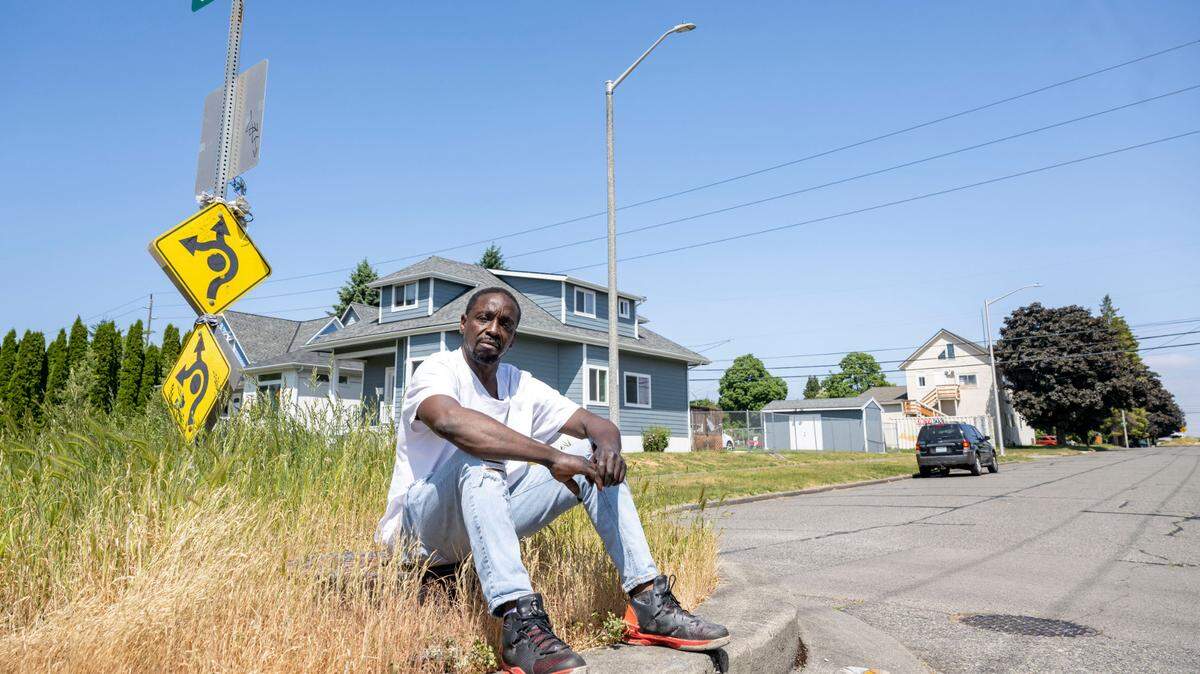
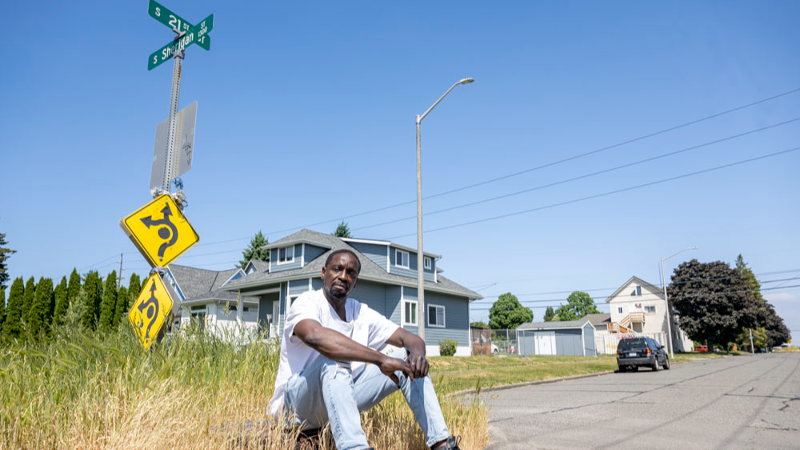
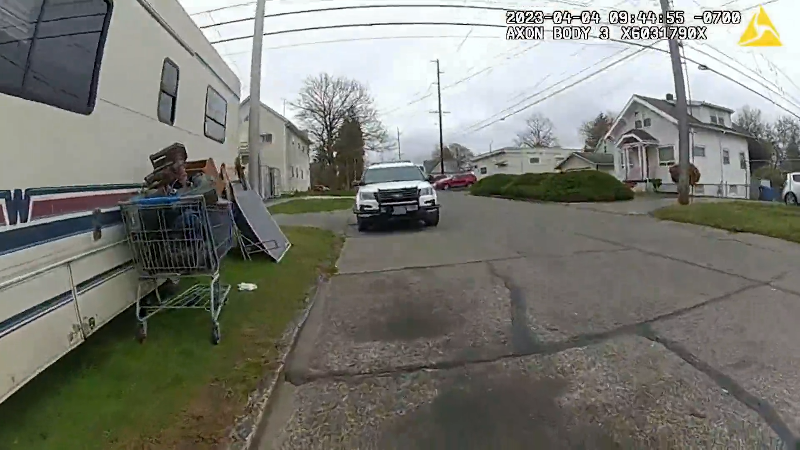
After Ivory Kelly’s RV was towed from its spot in Tacoma’s Hilltop in April, his life unraveled. In the process, he’s become part of a distinct population of vehicle-dwelling unhoused that’s increasing locally and nationally. The growth is straining government resources, businesses and neighborhoods.
Expand All
It’s a problem that, to varying degrees, has vexed local leaders in Tacoma and Pierce County in recent years:
What to do about the number of people living in cars and RVs along area roadways, one of the visible reminders that, for many, underscores the severity of the local homelessness crisis.
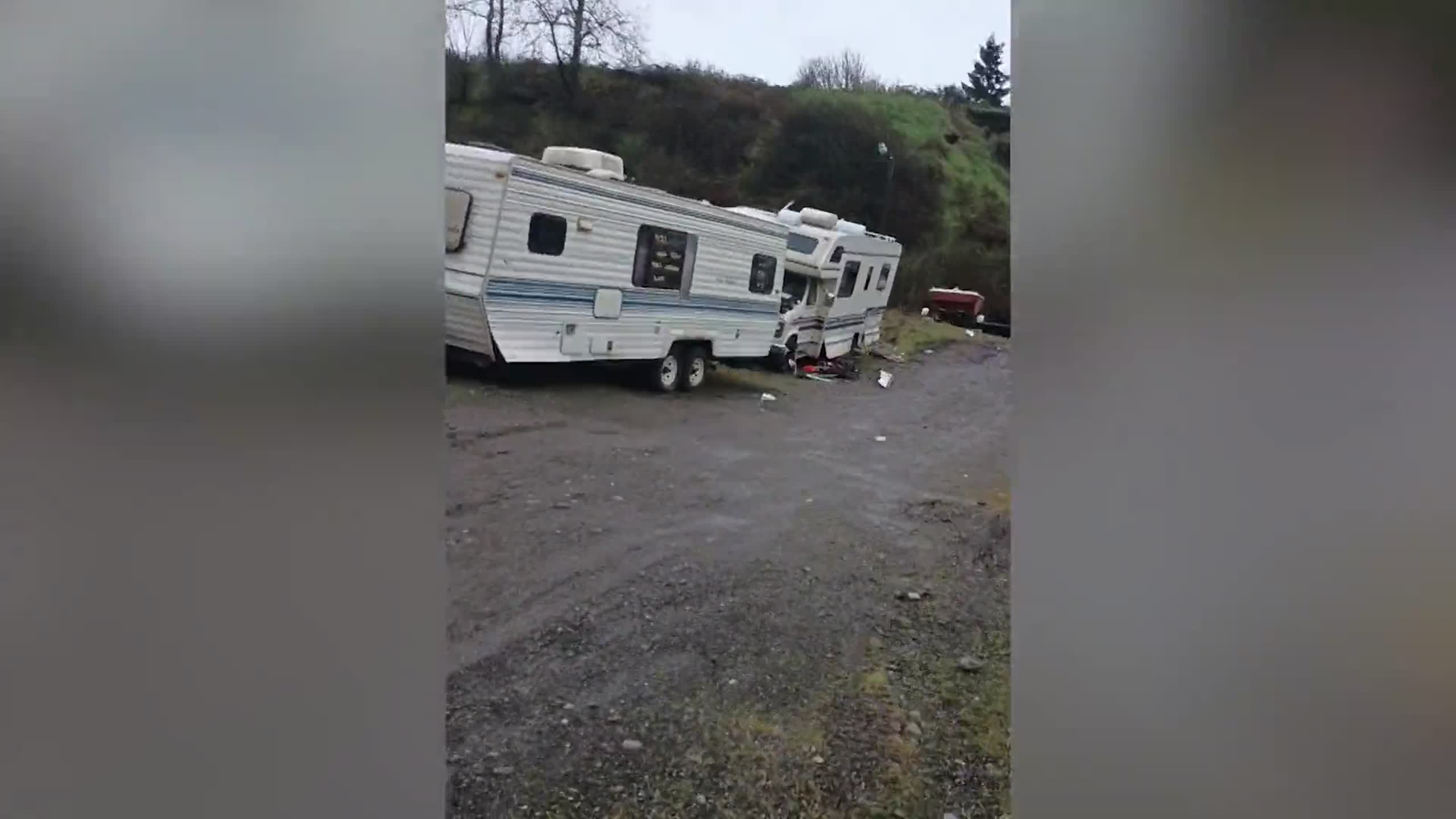
Sometimes, the vehicles are hidden, tucked in the corners and shadows. Other times, they’re out in the open — a visceral, human example of the cracks in our systems and the suffering they spawn.
One thing most local elected leaders, outreach workers and law enforcement officials seem to agree on is that vehicular homelessness is on the rise, as it seems to be across much of the nation, fueled by a critical lack of affordable housing.
How should we respond?
That’s another question entirely.
As part of The News Tribune’s series on the increase in vehicular homelessness, which tells the story of a Hilltop man’s spiral after his RV was towed and impounded earlier this year, I looked elsewhere for answers and potential solutions — even small ones, beyond the obvious need for more housing. At the very least, I was hoping to find fresh ideas and signs of hope. This story is part five of the series.
It’s a journey that took me 135 miles south, to Clark County, which has roughly half as many people as Pierce County but plenty of the same problems.
More specifically, it took me to Vancouver, and an old transit center with a new purpose.
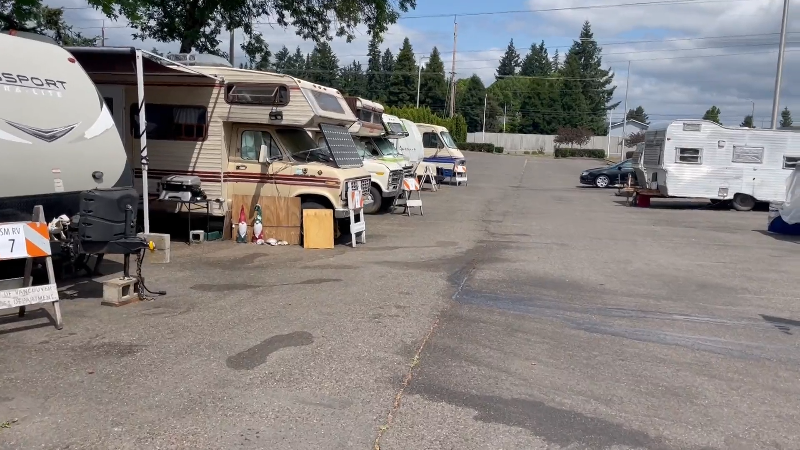
What I found when I arrived was inelegant: a large parking lot full of vehicles and RVs, supplied with a few portable toilets, trash cans and spouts with running water; a place specifically designed to provide refuge for at least some of what local officials describe as the growing population of people living in vehicles.
It’s a safe parking site, a relatively new approach to providing emergency shelter for a distinct subset of those experiencing homelessness that has gained traction in recent years.
In Vancouver, city officials describe the site, which opened in 2020, as a success. There are roughly 60 spaces, two-thirds of which are capable of serving people living in RVs or trailers — giving it a leg up from the start, considering the scarcity of places for people experiencing homelessness in RVs or trailers to legally park.
There are also unknowns: namely, the lack of available data showing how many people have successfully moved from the site into more permanent housing. That’s the metric elected leaders and government agencies often rely on when assessing the effectiveness of emergency shelter services, even though the availability of such housing is almost always limited and out of a provider’s control.
One thing that’s known for certain: The site is relatively cheap.
It costs Vancouver only $400,000 a year to operate, a fraction of the cost some places, like Tacoma, are paying to address an emerging problem.
It also took a matter of weeks to set up.
“The success that we’ve reported on is that people are there versus living on the streets,” said Jamie Spinelli, Vancouver’s Homelessness Response Coordinator.
“(The site’s residents) have access to basic necessities that they wouldn’t have access to otherwise, they’re able to more easily engage with services, and they aren’t having frequent interactions with law enforcement and/or having their vehicle towed from the streets,” Spinelli told me.
West Coast safe parking
As the number of people living in cars and RVs has grown in recent years, particularly on the West Coast, parking programs have become increasingly popular.
There are many examples.
In California, Palo Alto launched a safe parking program in 2019. Santa Cruz opened one in 2022. Alameda County has one, too, as does Los Angeles. San Diego debuted what the city describes as a 24/7 safe parking lot the same year, after more than 700 area residents were found living in vehicles during the annual Point In Time count, which attempts to tally the number of people experiencing homelessness during one day in January each year.
Closer to home, there are similar approaches — or at least aspirations — and also reminders of the significant challenges often associated.
In Seattle, a safe parking program for RVs will open in August, after months of delay, Anna Patrick of the Seattle Times has reported; it will include space for 26 RVs and other oversized vehicles and nine tiny homes, paid for through a $1.9 million contract awarded to the Low Income Housing Institute in 2022 by the King County Regional Homelessness Authority. The regional authority has since solicited bids in hopes of opening more safe parking sites across King County, offering as much as $4.2 million the first year.
Seattle has previously opened safe parking sites for RVs, but the locations were shut down after a host of serious issues, including several deaths. It’s an experience that has influenced more recent plans, with local homelessness officials confident safe parking sites capable of serving people in RVs can be operated safely.
Bellevue also wants a safe parking site, and it has available land and $450,000 a year over two years set aside to make it happen. But so far the city has struggled to find a provider to operate the site.
According to the Seattle Times, the program is envisioned to provide spaces for up to 20 vehicles — including RVs — in a lot that has served as a homeless men’s shelter. There are already several religious organizations on King County’s Eastside operating small safe parking programs.
Olympia and Thurston County have also grappled with issues related to vehicular homelessness, The Olympian and other local media outlets have reported.
In 2022, Olympia tried allowing people living in RVs to legally park along Ensign Road, which had long been home to dozens of RVs and trailers, provided they received a permit from the city. The program has since come to an end, with some former Ensign Road residents giving up their RVs and transitioning to a local tiny home community. A year earlier, the Olympia City Council purchased property on Franz Anderson Road for the creation of a safe parking site for RVs, but that never happened. Currently, the site is being developed into permanent supportive housing.
Nowhere for RVs in Pierce County
In Pierce County there are currently five safe parking sites for people who are homeless and live in their vehicles.
According to Paula Anderson, who oversees Pierce County’s safe parking network on behalf of the local nonprofit Homeward Bound, there are roughly 35 parking spaces between them, with a sixth location expected to open soon. The program’s current contract with Pierce County will pay Homeward Bound roughly $430,000 over two years. Under state law, the number of safe parking sites a church or religious organization can offer is limited, based on the overall size of the parking lot.
Separately, the city of Tacoma recently pledged an estimated $1 million for a year of safe parking at Holy Rosary Church, which is managed by Catholic Community Services. Located on a patch of black asphalt behind the otherwise shuttered church, the site opened in April and includes 20 parking spots.
None of the safe parking sites in Pierce County are open to people experiencing homelessness and living in RVs, local officials acknowledge.
It’s a gap that Anderson and Alan Brown, who runs Tacoma’s Holy Rosary site for Catholic Community Services, are both interested in filling. Independently, they described safe parking for RVs as desperately needed.
Caleb Carbone, Tacoma’s homeless services and strategy manager, told me that safe parking for RVs is a type of shelter the city is actively considering, but there are significant obstacles, including potential liability issues and added health and human safety concerns.
Heather Moss, Pierce County’s director of human services, sounded less sold on the idea, telling me that individuals living in RVs make up a relatively small subset of the county’s overall homeless population, and the county must make difficult decisions with the goal of using its limited resources to serve as many people as possible.
Eugene’s ‘Safe Sleep Sites’
Across the Columbia River, Oregon’s growing homelessness crisis has been well documented. Between 2020 and 2022, the state saw one of the largest increases of people experiencing homelessness in the country.
Eugene, the state’s second-largest city, was far from immune. There are more than 3,000 people experiencing homelessness there, available data suggests, with more than 2,000 of them living without shelter — giving the Eugene area one of the highest rates of homelessness in the nation, The Oregonian reported earlier this year.
The extent of the local homelessness crisis is one reason why, in recent years, the city has opened a handful of what it calls “Safe Sleep Sites.” It’s a robust operation, including several sites that provide space for cars and RVs.
Together, the sites — which have space for roughly 250 individuals, utilizing a mix of tents, other small shelters and at least 65 spots for vehicles and RVs — cost roughly $4 million a year to operate, according to city spokesperson Kelly McIver.
There’s another $3 million in costs associated with services that “directly and indirectly support and enhance” the program, McIver said.
Eugene’s Safe Sleep Sites, which opened in large part as a response to the COVID-19 pandemic, regularly have hundreds of names on its waitlist, McIver indicated.
Faced with a daunting challenge, McIver told me that the city’s significant investment in safe parking and related emergency shelter services has been warranted.
McIver also acknowledged that the Eugene area’s overall lack of affordable housing has severely limited the city’s ability to successfully move people into more stable forms of housing.
“It’s a very reasonable question. I think it’s impossible to answer because it’s very tough for people to look at the numbers that we’re dealing with locally. … Essentially, on average, there are more than 3,500 unsheltered people in the city of Eugene alone. And we have about 1,000 available shelter beds. So do the math,” McIver said when asked how the city assesses the value of its safe sleep sites program. “From a humanitarian crisis side … and from that angle of a healthy, functioning community, it’s very difficult to sit here and wave a banner.
“When you bring it down to that individual level, about making a difference for the people who are able to access those programs, it’s a huge success,” McIver then added.
“It’s tremendous in the way that it gives people an opportunity and connection with other things that can grow that stability,” he said.
As the Register-Guard in Eugene noted in April, there’s a “potentially less expensive solution” operating in west Eugene, under the guidance of a local pastor.
At the time, it was home to 17 RVs and trailers.
For roughly a year, the site has been provided with city-funded toilets and trash services, the Register-Guard reported.
Vancouver’s ‘bare-bones’ approach
In Vancouver, the city is attempting to take a pragmatic, cost-effective approach to an emerging problem, serving a challenging population with few other options.
When I arrived at the city’s no-frills safe parking side on the last day of May, Ann Roberts was one of the first people I met.
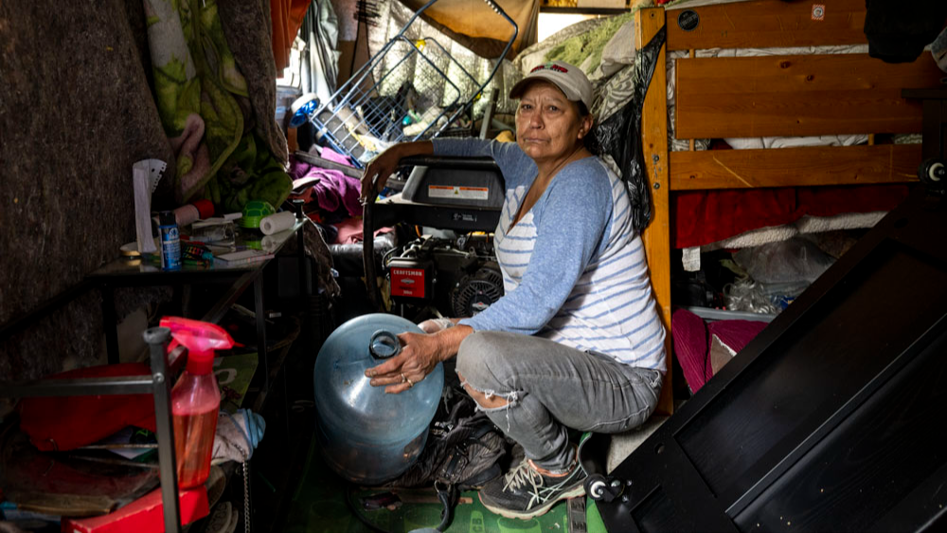
It took a few minutes for Roberts, 66, to emerge from her camper. It was an older model, white with lime green stripes. There was a reflective silver shade covering the windows, blocking out the heat of the sun.
Roberts told me she had lived in Vancouver’s safe parking site since August. It’s her second time utilizing the program since becoming homeless.
On any given night, approximately 90 other people in the city of roughly 200,000 also call the parking lot home, local officials said.
Slapped together in an otherwise unused transit center, not far from local schools, strip malls and subdivisions, the site opened three years ago. It costs the city less than half a million dollars a year to operate and is staffed by a small handful of city employees, according to Spinelli, Vancouver’s Homelessness Response Coordinator.
Local outreach workers and volunteers regularly visit the site to provide services, Spinelli said; when I was there, a pair of pro bono veterinarians were making the rounds.
Most importantly, at least as far as Roberts was concerned, the site is capable of serving people living in recreational vehicles and trailers.
Roberts, who moved to Clark County as a child in the 1970s, considers it a blessing, she said.
Her husband of 23 years died in 2017, after a long battle with cancer exhausted the couple’s savings. At first, she stayed in local motels and rented a room, but eventually she started living out of her green Chevy Blazer with her two dogs, including Finn, spelled like the Mark Twain character, she told me.
That’s when Roberts found her way to Vancouver’s safe parking site. When a former client of the site moved out and donated his old RV, Roberts inherited it.
Roberts’ SUV, which was parked nearby, had a black trash bag covering its roof on the day that we met, preventing rain from seeping through the vehicle’s broken sunroof.
The RV has been a major upgrade, Roberts said, and the site has given her a place to call home.
“Like anything else, there are issues, but they are usually handled, and all in all, it’s safe,” Roberts told me, squinting as the late-morning sun hit her hazel brown eyes.
“This is a community. We watch for each other. We take care of each other,” she continued. “I think this is a good model for every city in America to look at, and do the same thing.”
According to Spinelli, Vancouver first experimented with safe parking, as a city, in the direct aftermath of the COVID-19 pandemic, much like Eugene, Oregon. Motivated by the need to address emerging public health and safety concerns with the virus spreading, and with a small volunteer safe parking program recently discontinued, the city opened a safe parking lot of its own at the Vancouver Mall in April 2020. But after roughly two months, with business expected to return to the mall, the city had to find a new location.
That’s when a partnership was struck with the county’s public transit authority for the use of the otherwise mothballed Evergreen Transit Center, Spinelli said.
It’s essentially a sweetheart deal, to the tune of what Spinelli offhandedly described as, “$1 a year.”
According to city spokesperson Tim Becker, Vancouver actually doesn’t pay anything for the use of the site, but it is responsible for any damage that might occur.
Vancouver’s safe parking site for cars and RVs is “bare bones” by design, Spinelli told me. It’s free to use, and there are a handful of rules residents must follow. There’s also a criminal background check, including a screening for sex crimes. Families are welcome, Spinelli added; there were several staying at the site on the day I visited, including one with an infant child.
Residents’ vehicles don’t have to be operable, just “livable,” Spinelli told me — meaning they’re not leaking fluids, and the windows and doors are able to close, “at least for the most part,” she said.
Substance use and addiction aren’t disqualifying factors, Spinelli added, but clients must have lived in Vancouver for at least 30 days to be eligible. City staff is on-site 24/7 and there’s a security guard at night, but there’s no nonprofit to run it, no big contract to pay.
That’s part of the appeal, Spinelli indicated.
“It’s low barrier for entry, but also high support and high accountability once you’re in,” Spinelli said. “I wouldn’t say it’s super expensive, in comparison to a lot of other homeless programs.”
Despite its relatively low cost, the site has been a valuable resource, Spinelli argued, and one Vancouver could use more of — given what she described as a noticeable increase in vehicular homelessness the city has experienced in recent years.
Since February 2023, 122 individuals have utilized the site. There are “typically dozens” of people on the waitlist, Spinelli said.
It’s unclear how many people have successfully moved from Vancouver’s safe parking site into more stable housing, however.
Spinelli acknowledged the city only recently began tracking such data and it isn’t available yet, but her eyes tell her it’s working.
“I could fill another one of these tomorrow, if I had one open,” Spinelli said.
The Vancouver City Council has allocated funding for the operation of a second safe parking site, with a search for suitable locations underway, she noted.
Not for everyone
None of this is to suggest that Vancouver’s safe parking program is a panacea.
Ren Autry is the deputy director of Outsiders Inn, a Vancouver-based nonprofit with what she described as a “mission to lift people out of homelessness.”
With a staff that has grown from just two employees to more than 30 employees in recent years, in large part due to the availability of COVID- related relief funds, Autry told me that Outsiders Inn has been in operation for roughly a decade in the Vancouver area. Every staff member has lived experience with homelessness or related challenges, she said.
Today, the nonprofit runs a congregate men’s shelter at a local church and a modular pallet home community that serves roughly 40 individuals at another location. It’s also responsible for operating severe weather shelters in the winter, and the nonprofit employs a homelessness outreach team, Autry said.
Autry, 55, told me she’s experienced vehicular homelessness firsthand. It’s a hard way to live, she explained. While she views the city’s safe parking site as a welcome addition in Vancouver and would like to see more sites open across Clark County, Autry also said the site isn’t for everyone.
In some instances, potential safe parking site users are disqualified because of their criminal record or because they run afoul with program rules, she said — the types of barriers that often contribute to homelessness in the first place. And once a person is admitted to the site, there are other challenges and practicalities to contend with, Autry told me.
The open asphalt gets hot, particularly in the summer, Autry indicated. Meanwhile, with only a few portable toilets and limited access to other necessities, like places to cook or congregate outside of their vehicles, the site mostly provides a place to park and sleep in peace — and not much else, she said.
Still, Autry is glad the site exists.
She also thinks it’s an effort that could be expanded, particularly if Vancouver partnered with other service providers.
“I’m a fan of (Vancouver’s) safe parking program, in general. I think that we need more of them, obviously, and I think we need more provider support and interest, because sometimes just having it be a city program can be limiting,” Autry said.
“Things get handled in certain ways, and I think having more options and different styles and cultural connections could help,” she added.
Rethinking vehicle homelessness
Then there’s the big picture.
Despite the value of safe parking sites like the one in Vancouver, as Graham Pruss, the director of the National Vehicle Residency Collective suggested, safe parking programs simply represent a stopgap capable of providing momentary stability for residents.
The factors that create a widespread need for the programs will be much more to address, Pruss said.
Specifically, Pruss noted that people have long relied on vehicles for shelter — dating back centuries — and that the more recent development-related disappearance of organic forms of affordable housing, like mobile home and trailer parks, has only heightened the need for places people can afford to stay.
Pruss suggested that the real problem is our general insistence on looking at people who have turned to RVs and other large vehicles as shelter as strictly homeless. When we deny that it’s the most feasible option for many in a landscape of exploding housing costs, and then subject them to local codes and laws that make surviving in a vehicle more difficult, like 72-hour parking limits and outright bans, it’s harmful, he said.
The best approach, Pruss argued, would be changing our thinking — and to create the legitimate spaces and the infrastructure necessary to make living in an RV or recreational vehicle long-term legal in places like Tacoma.
Pruss believes cities should seriously consider making public land available for people living in RVs, including providing necessary amenities like wastewater dumping stations and other essentials.
“We need to be able to meet people where they’re at, and for some people, particularly those living in a smaller vehicle, helping them to exit that vehicle into more permanent housing is the absolute most important thing and can really help their lives,” Pruss said. “For many other people, particularly those living in larger vehicles, they may need longer-term spaces that allow them to use their private property as their affordable housing.”
“It can be affordable housing. We already know it’s affordable housing. It’s our biases that are blocking it from being accepted,” he added.
Reality on the ground
Back in Vancouver, dissecting the different ways cities and counties are responding to the increase in vehicular homelessness is of little use to Roberts.
Still, even a cursory evaluation, like the one I attempted, raises as many questions as answers.
Often, including in Tacoma and Pierce County, cities and counties rely on contracted service providers to operate emergency shelters like safe parking sites, and when a provider can’t be found, it can result in inaction. The reason is understandable: cities largely employ bureaucrats and policymakers, while established providers have direct experience serving the homeless. Existing service providers are the agencies best equipped to do this challenging work, the thinking goes, and many already have other established services in place.
But Vancouver’s approach suggests that with desire, creativity, collaboration and political will, it is possible for a city to create a functioning safe parking site that serves cars and RVs. Vancouver pulled it together in a matter of weeks, with only modest costs, and without the need for a provider or an expensive contract. Tacoma is expected to pay roughly $1 million for a year of safe parking at Holy Rosary, serving only people in small vehicles through 20 available spots. In Seattle, providing a home for 26 RVs and nine tiny homes will cost $1.7 million. Vancouver’s safe parking site has nearly 60 spots, including space for RVs and large vehicles.
At the same time, the payoff associated with the creation of safe parking sites can also be debatable. While a large part of this ambiguity is directly tied to the lack of affordable housing options — limiting the inability to smoothly transition shelter users to more stable forms of housing — there’s also no denying the philosophical quandaries inherent to settling for safe parking programs in response to a much larger problem:
How much good is really being accomplished simply by creating places for people to live in a vehicle — which is typically an act of desperation from the start?
How do you measure success when there’s no next step for most people to take — when you can’t lift them out of homelessness because there are no homes for them to climb into?
Finally, when it comes to people living in RVs, what if we’ve been thinking about it all wrong? At a time of skyrocketing housing costs and stagnant wages, what if many of these people weren’t all that homeless to begin with?
What if there’s just nowhere for them to go?
With her dog Finn by her side, Roberts said she’s hoping to eventually find a way out of Vancouver’s safe parking lot, even if she’ll be eternally grateful the site existed when she needed it most.
Having grown up in a rural setting, Roberts said she’d like to find a similar location to settle down, under a real roof, and with space of her own.
“I’d prefer to live outside the city — the outskirts,” Roberts said.
“Maybe a small cabin,” she told me.
This story was originally published July 27, 2023 at 5:00 AM.