‘The neighbors call it an eyesore.’ The truth about one man’s RV — and why it matters
READ MORE
RV Homelessness in Pierce County
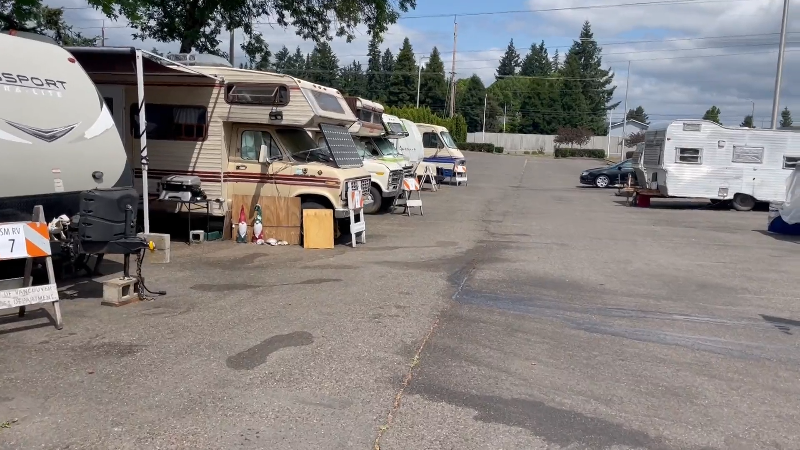
After Ivory Kelly’s RV was towed from its spot in Tacoma’s Hilltop in April, his life unraveled. In the process, he’s become part of a distinct population of vehicle-dwelling unhoused that’s increasing locally and nationally. The growth is straining government resources, businesses and neighborhoods.
Expand All
The morning of April 4 was overcast on Hilltop, one of those days when the mountain hides and the area’s character is cloaked in a sleepy blanket of gray.
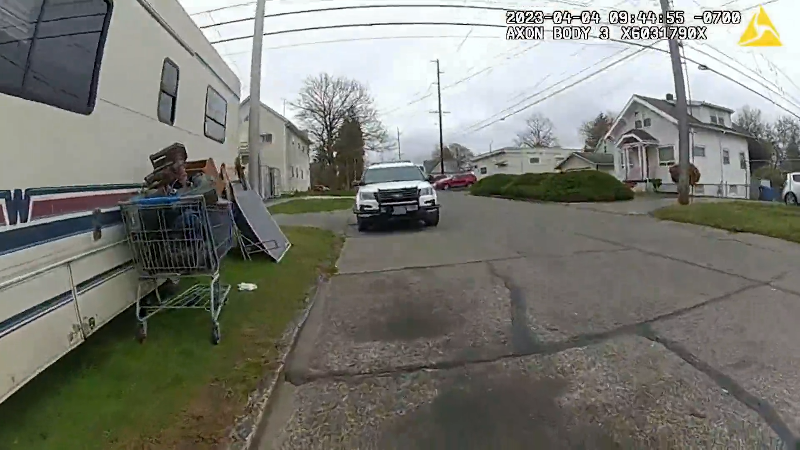
It was also the morning when Tacoma police officers and a driver with Bill’s Towing showed up ready to take Ivory Kelly’s RV, marking the moment when the company became entangled in a dispute that would stretch months and, today, remains partially unresolved.
For the longtime owner of Bill’s Towing, Tom Lomis, it would set in motion a series of events that would lead to a brief investigation being launched by the state Department of Licensing and questions about whether Lomis’ company was in breach of its contract with the city.
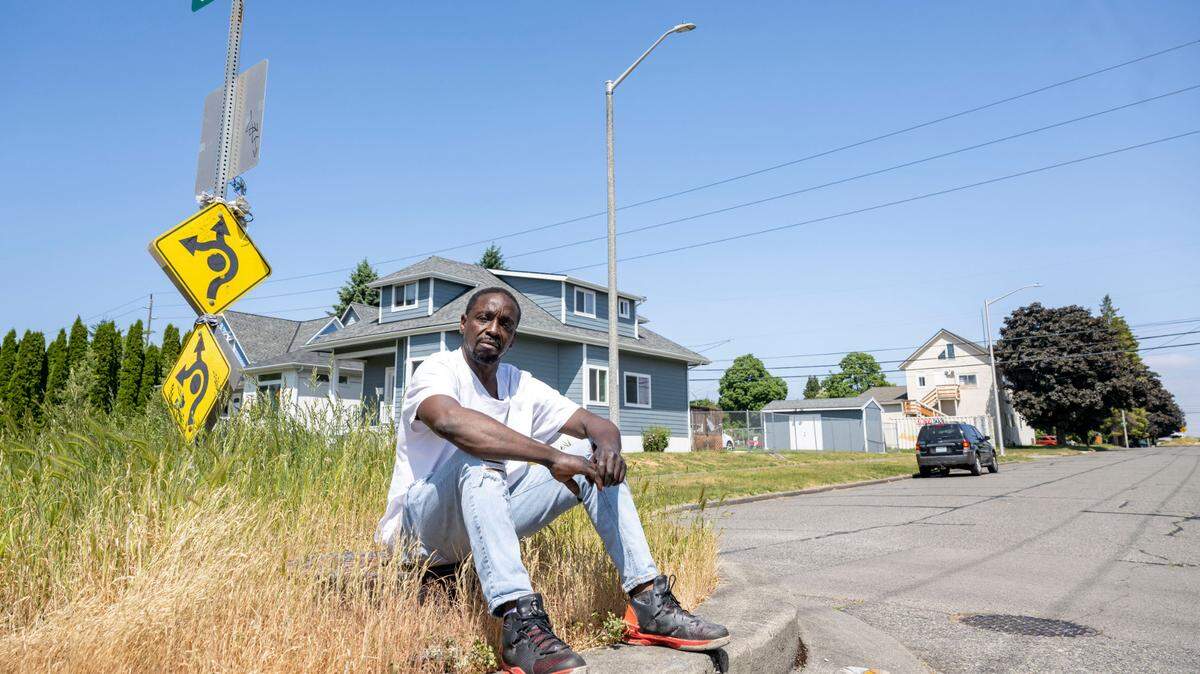
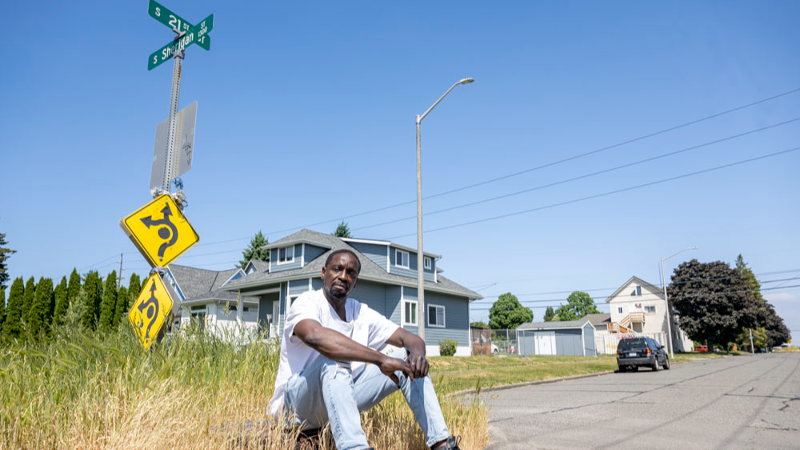
Kelly, the subject of The News Tribune’s series on vehicle homelessness, wasn’t home when it happened, he told me. He was on foot, a few blocks away, on his way back after getting into another argument with his girlfriend, Amanda. This is part four of the series.
The disagreement, Kelly said, led to a brief moment of clarity — at least before the storm hit.
His sister, Mary, delivered the news. She would later tell me, after expressing her hesitancy to speak with a reporter, that she was shocked by what transpired.
Like her brother, Mary Kelly said she never saw the RV tagged with a warning sticker.
“I said, ‘What’s going on? What happened?’ And they said, ‘We’re towing it away,’ ” Mary Kelly said, describing her brief interaction with police. “I said, ‘Why? This is my brother’s only place to live.’ And they told me, ‘Well, the neighbors call it an eyesore.’ ”
Ivory Kelly has his own recollections and remains equally perplexed.
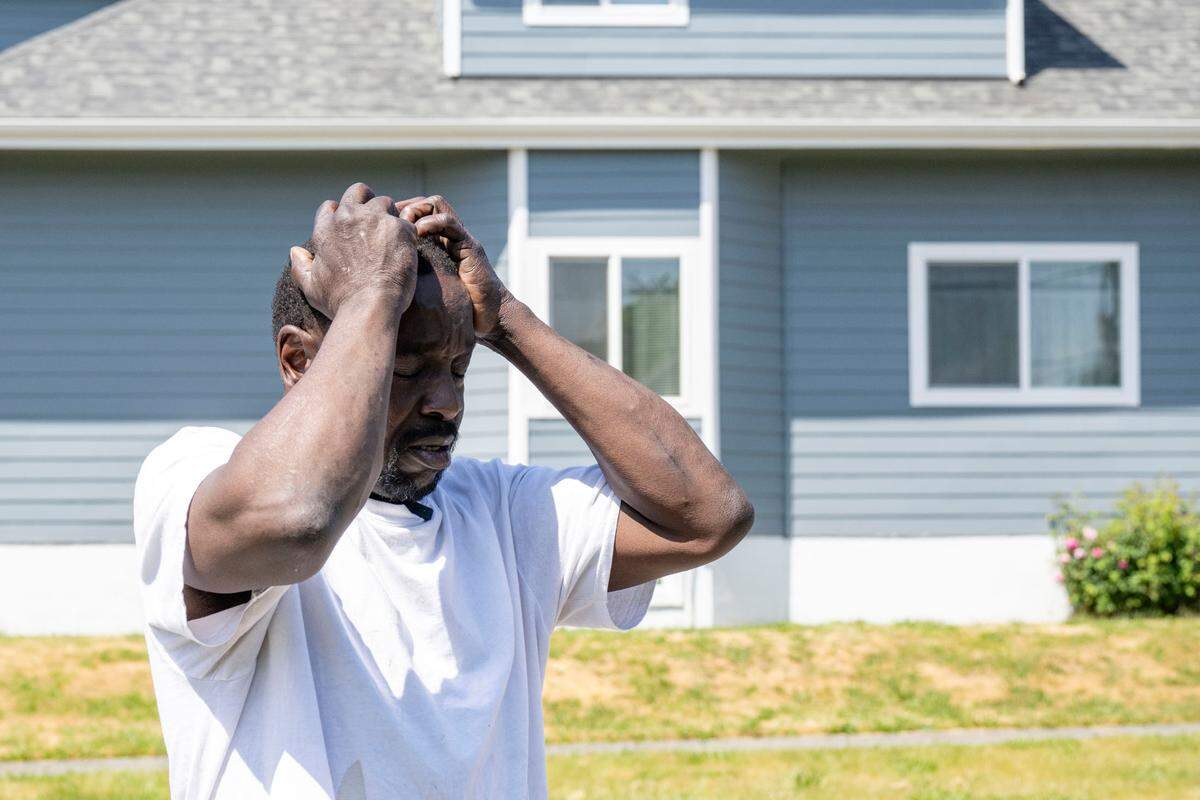
“It was beautiful. I was walking, and thinking, and thinking about where I am in life and where I want to go,” Kelly said of the moments before he learned his RV was being towed.
“Then, when I got to the hill, my sister called,” he told me.
“When I got here, it was gone.”
It’s at this point in Kelly’s story when his life, as chaotic as it already was, truly began to unravel.
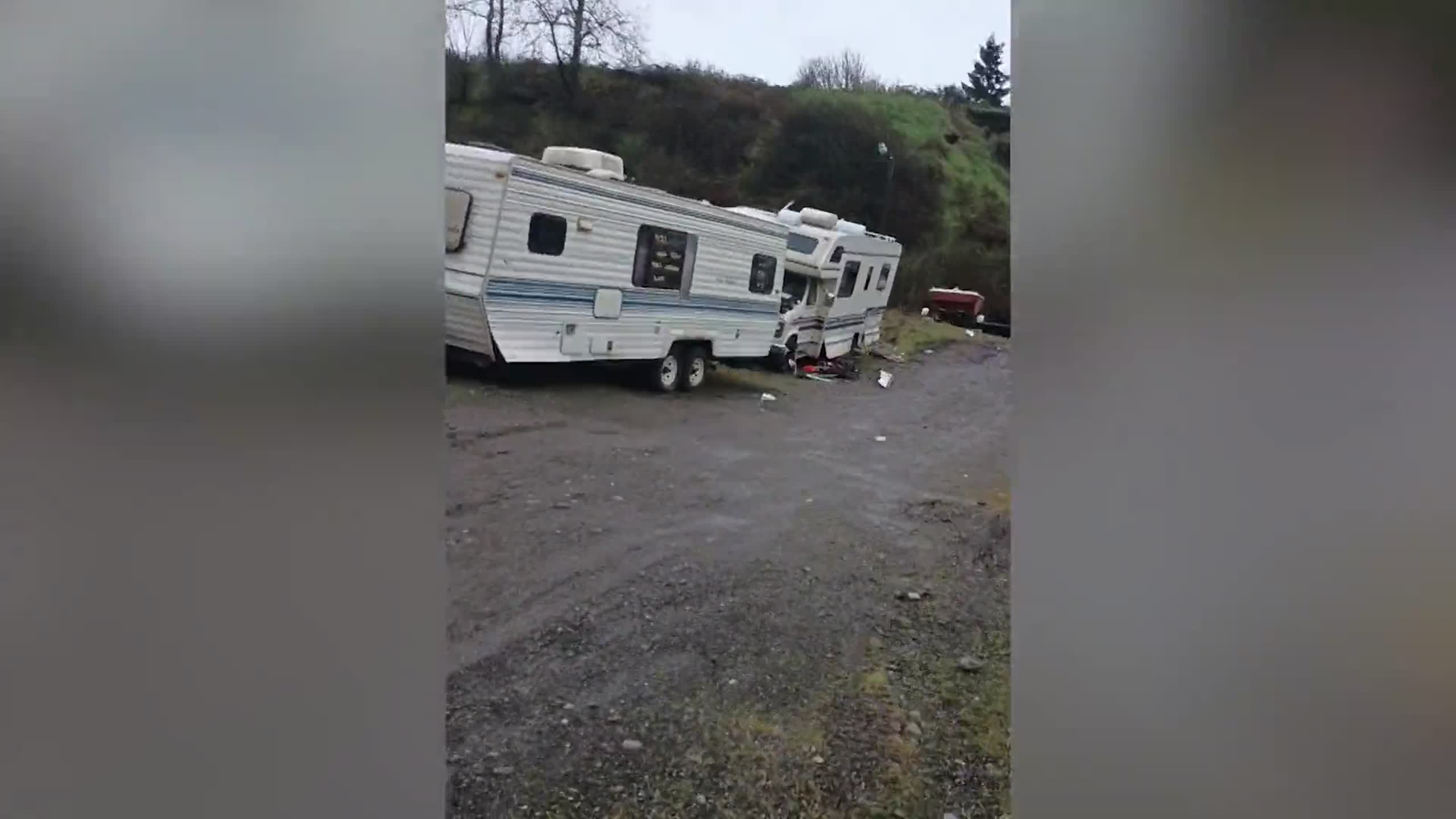
As Kelly told me the first time we met, he wouldn’t see his RV again for at least 24 hours after it was towed when a staff member at Bill’s directed him to a dirt lot in the Nalley Valley, where South Alaska Street runs into the hill and dead ends. When he arrived, Kelly claims, he discovered the RV had been ransacked and all his belongings were gone, including the cremated remains of his late wife.
He didn’t know what to do or who to turn to, he told me. At some point, he decided to take video on his phone, which he later provided to The News Tribune. On April 13, he filed a police report.
The lengthy delay — nine days — between the date of the tow and when Kelly filed a police report is one thing Lomis points to when telling his side of the story.
Declining an interview, Lomis provided lengthy written statements on behalf of the company.
Lomis recently stepped away from running Bill’s full-time but maintains daily contact with staff, he said. It’s Lomis’ signature on the city of Tacoma contract Bill’s Towing agreed to in January, which describes the company as a family business that also employs Lomis’ brothers and wife. He described himself as “the president and sole stockholder of the corporation.”
Lomis’ emails indicated that he doesn’t believe Kelly’s story holds up.
“Mr. Kelly was in our office inquiring about his vehicle shortly after it was removed per TPD instruction. It was clear that he did not intend to redeem the vehicle to get it out of impound,” Lomis wrote. “Mr. Kelly stated he was there specifically to retrieve his personal belongings. He signed the paperwork allowing for” this retrieval.
According to Lomis, after signing the paperwork — a copy of which he supplied to The News Tribune — Kelly was given directions and a map to the Bill’s Towing facility on South Center Street, which is home to the company’s overflow lot. Kelly arrived 20 to 30 minutes later, Lomis said.
Lomis explained that only “authorized personnel” are allowed in the company’s fenced storage facility, for safety reasons, given the forklifts and heavy equipment that are often used. With Kelly on the way, Lomis said the RV was transported to the unfenced, dirt lot. He described it as an effort to provide “easy access” for Kelly when he arrived.
On the first day, Lomis said, “It appeared Kelly removed a bag of clothing, a shopping store handheld basket and what looked to be cables and an assortment of small items.” It’s unclear from the statements Lomis provided whether the 77-year-old witnessed the events.
It wasn’t until his third visit when Kelly said anything was missing, Lomis told me. He forwarded photos to The News Tribune showing damage inside and out to Kelly’s RV, contending it predated the vehicle’s impound.
Kelly disputes this, claiming his RV wasn’t fancy, but it was habitable when it was towed, and he originally intended to pay to have the vehicle released — before discovering it had been trashed. A News Tribune review of police body cam footage from the day of the impound suggests that the RV’s hood and storage boxes were secured when it was towed; in Lomis’ photos and Kelly’s personal video, they’ve clearly been opened. It’s impossible to know when this occurred.
The RV was parked in the unsecured lot the entire time, Lomis confirmed. He said Kelly was eventually given the opportunity to take possession of the RV “free of charge,” but he declined.
Lomis indicated that Kelly’s RV had since been “disposed of as an abandoned vehicle.”
Secure storage of impounded vehicles
Registered tow companies like Bill’s Towing are required, by state law, to store impounded vehicles in a fenced lot or another secure location.
Washington Administrative Code provides the specifics, defining a secure storage location as either an enclosed building or “an area completely enclosed by a fence of sufficient height and construction to prevent access by the general public, with a gate which can be locked.”
The fence must be at least six-feet high, with an additional two feet of barbed or razor wire, creating at least an eight-foot barrier. The state Department of Licensing can waive the fencing requirement, in some instances, when topography or zoning would make it “impracticable” — and the storage area is secure without a fence.
According to Christine Anthony, a spokesperson for the Department of Licensing, Bill’s Towing has never received such a waiver.
In response to The News Tribune’s inquiry, Anthony said the Department of Licensing opened an investigation into storage procedures at Bill’s Towing. The case ultimately identified two violations: failing to secure the vehicle in an approved tow yard and failing to store it in a fenced area. The case has since been “finalized and closed,” she said, with Bill’s Towing admitting the mistakes. What Anthony described as an “education letter” was sent to Bill’s Towing on June 22.
Meanwhile, the company’s contract with the city requires Bill’s Towing and its subcontractors to comply with state law.
Asked about the violations the Department of Licensing identified, city spokesperson Maria Lee said staff “will review the Department of Licensing’s finding, and work with Bill’s Towing to ensure it is in full compliance with its agreement with the city.”
Despite all of that, Lomis told The News Tribune he believes Bill’s Towing acted in good faith.
Lomis described the multi-day storage of Kelly’s RV in an unsecured lot as an honest mistake.
“We don’t allow the public in the yard when using a forklift for safety reasons, but someone dropped the ball and forgot to move it back into the yard after Mr. Kelly got his personals,” Lomis said.
In July, Kelly told me that he’d recently been contacted by an insurance representative who indicated he’d be reimbursed for the approximate value of his RV — roughly $3,000.
Kelly said he’ll be grateful when a check arrives but also believes he should be compensated for the full extent of his losses, including his belongings, and in particular the cremated remains of his wife.
He doubts it will happen, he said.
“How do you come up with a momentary price? How do you put a dollar sign on these things?” Kelly asked me rhetorically.
“How are you going to call my stuff junk? One man’s junk is another man’s treasure.”
Legal landscape
As Kelly has explained repeatedly during our time together, in days and weeks following the tow and impound of his RV he had no idea how to respond, or what his options were.
He felt like he’d been wronged, but the obstacles he faced trying to quickly learn local and state towing laws were significant. His attempts to find a lawyer were futile, and office staff at Bill’s Towing did little more than provide him with a form to request a contested tow hearing in Pierce County District Court, he said, a proceeding that allows petitioners to challenge the legal validity of a tow.
Asked about the delay between the April 4 towing of his RV and the filing of a police report nine days later, Kelly said the explanation is simple: He suddenly found himself with nowhere to live and had never been in a situation like that before.
By the time we met, Kelly seemed almost resigned to the idea that he’d have to walk away and start over.
There’s good reason for confusion. The intersection of parking codes, local responses to homelessness and state laws dictating the lawful towing and impounding of vehicles is difficult to navigate, particularly when it involves vehicles serving as someone’s shelter.
A 2021 state Supreme Court decision in the case of Long v. Seattle affirmed a lower court’s ruling that established the sale or auctioning off of a vehicle that served as someone’s home as a potential violation of Washington’s Homestead Act. Dating back to 1862, the Homestead Act forbids the state from forcibly selling someone’s home. The Court’s ruling also “greatly expanded the circumstances under which an individual may bring an ‘excessive fines’ challenge to a civil infraction under the Eighth Amendment of the U.S. Constitution,” according to an analysis of the decision by the nonprofit Municipal Research and Services Center.
Some legal experts now consider the state Supreme Court’s ruling in Long v. Seattle established precedent. Others, like Emily Wade, the administrative director for the Towing and Recovery Association of Washington, argue that gray areas still exist.
Either way, the Court’s ruling has made it more precarious for tow companies to impound cars and RVs that potentially served as someone’s home and then unload many of the vehicles would have previously sold at auction. It’s also created potential legal liabilities if they do — and for the cities that hire them — according to homeless law experts.
Criminalization of homelessness
For Kelly, the trouble with all this legalese and what it means is straightforward enough:
Even if he has valid legal arguments to make, his only real remedy is the courts. And for a guy surviving on disability income recently living in a Kia Rio, bringing legal action against Bill’s feels like a tall task, he said.
According to Fadi Assaf, an attorney with the Northwest Justice Project who specializes in housing, employment and education rights law, Kelly might well have a case, but it’s complicated. The process often starts when someone files for a contested tow hearing in local court within a 10-day window that officially begins the day the registered owner attempts to redeem it. In 2022, Pierce County District received 133 such requests, according to records obtained by The News Tribune; only 23 resulted in an improper tow finding by the court, the data shows.
Speaking generally, Assaf said the towing and storage of Kelly’s RV raises questions about adherence to Washington’s Homestead Act, which could implicate the city since it contracts with Bill’s Towing for towing and impound services.
Assaf also said Bill’s Towing could be held liable for failing to store the vehicle in a secure location, and possible tort damage claims or violations under common law.
“I would argue that the towing company likely had a limited duty to protect the vehicle and leaving it in an unsecured lot in the middle of nowhere, it’s probably not exercising a duty of reasonable care,” Assaf said of the storage of Kelly’s RV.
“But it would depend on the specifics of the case,” Assaf cautioned.
More importantly, Assaf also told me that Kelly’s saga fits within a larger, national trend that’s seen laws against public camping, vehicle residency and other activities related to homelessness multiply in recent years, much like Tacoma’s targeted ban on homeless encampments, 72-hour parking limits and vehicle habitation laws.
“This issue is not going away in Washington. It needs some policy solutions at the state level, and we need to keep pushing the issue in court,” Assaf said. “Individuals are being targeted by policies or being targeted by sweeps who own property and who have shelter, and they’re being put in really unfortunate situations because of it.”
The National Homelessness Law Center has been a vocal opponent of the criminalization of homelessness in the U.S. for more than 30 years. Since 2006, the NHLC has tracked the proliferation of such laws across the United States, finding an increase in “every measured category of prohibited conduct” each year, according to the agency’s 2021 Housing Not Handcuffs report.
Between 2006 and 2019, the NHLC reported that laws restricting vehicle residency increased by more than 200 percent across the country.
Eric Tars, the NHLC’s legal director, told The News Tribune that what Kelly’s predicament demonstrates, more than anything, is the harm caused by local laws and codes that penalize homelessness, intentionally or not.
All these policies really produce, he suggested, are temporary solutions when a homelessness-related headache arises.
In the process, the criminalization of the unhoused inflicts pain and suffering on those who are targeted, he said, often creating additional barriers to services and housing along the way.
“Regardless of whether it creates legal liability, Mr. Kelly’s RV would not have been in that lot to be vandalized were it not towed in the first place. This is the tragic, but predictable result of a system that criminalizes poverty and punishes those experiencing it, and makes it harder to escape,” Tars said.
“Mr. Kelly’s homelessness has been in no way shortened, Tacoma’s homelessness crisis has only been made worse, so I challenge anyone to tell me how this policy makes sense,” he added.
Ivory’s last call
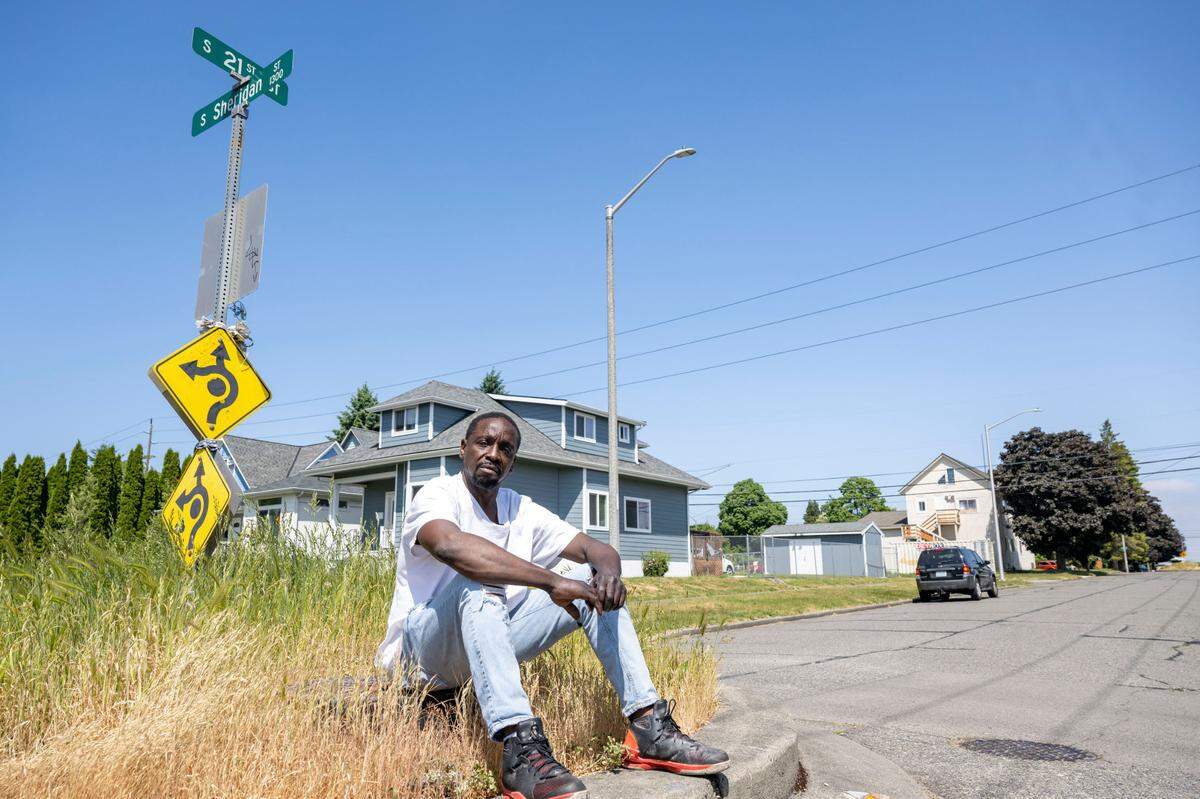
The last time I spoke to Ivory Kelly it was by phone. He was calling from Fort Worth, Texas, 2,000 miles and two time zones away. The location rang a bell. By this time I’d spent more than three months getting to know him — recording hours of our sprawling conversations — so it registered as significant, familiar from one of the small details he mentioned along the way.
As Kelly began to unspool everything that had transpired since the last time we talked, it quickly came back to me. His daughter’s mother, Carolyn, lives in Fort Worth, I recalled.
Kelly said he’d flown to Texas five days prior, intent on finally kicking his addiction to drugs. He’s stayed in contact with Carolyn over the years, he reminded me, and there had long been a standing invitation for him. When he was ready, she’d give him a place to stay and an opportunity to escape a bad situation and get clean.
It wasn’t the first time Kelly said he wanted to quit using, but it was the first time he’d taken a real step to make it happen. So far, at least, the withdrawal symptoms hadn’t been too bad, he told me.
There was a new calmness in Kelly’s voice. He described the days leading up to his breaking point: He’d ended up in the hospital battling an infection near his waistline, which he attributed to sleeping in a car, poor hygiene and an abrasion caused by the piece of rope he was using as a belt.
He told me about the last time he saw Amanda. She’d won big at a local casino and picked him up shortly after he was discharged from St. Joe’s. Things devolved quickly when they began arguing over money, he said. At one point, she slammed the car into park and he got out and walked, eventually catching a bus home from Tillicum.
It gave Kelly time to think, he explained, and in that moment he knew he had to stop.
He was stuck in a toxic cycle fueled by pain and dependency, and if something didn’t change, he’d end up dead or incarcerated, he said he realized.
Kelly indicated he wasn’t sure what the future holds, or whether he’ll return to Tacoma. When he closes his eyes, he dreams of singing gospel again. The last time he used drugs was the day he left, he said.
“Shame is what kept me on drugs. When I use the drugs, the shame is covered, and I can stand up and try to be all big and tall,” Kelly said. “But that’s not a true feeling. It’s a false feeling. I want my real feelings back.”
Unanswered questions
I don’t know exactly what happened to Kelly’s RV from the time it was towed back in April and when we first met a month later. I’ve tried the best I can to put the pieces together, studying the police reports, reviewing the videos, comparing pictures and differing accounts, but in the end too many unknowns remain.
Most of the time, I’ve felt like Kelly was telling the truth, or at least the closest version he was capable of, given the circumstances of his life. But it would be disingenuous to suggest I haven’t had moments of doubt, or to deny lingering questions hang in the air.
There are parts of the story that work against Kelly, or at the very least create gaps that are difficult to overlook. As Lomis noted, more than a week elapsed between the towing of his RV and when he filed a police report, which creates uncertainty alone. And given the RV’s known location for much of that time — the unfenced dirt lot — anyone had access to the vehicle, including Kelly. There remains a chance he’s running a con.
There’s also a chance that he’s not.
Over the course of reporting Kelly’s story, I’ve often reflected on my first encounter with him, on that rainy Hilltop afternoon so long ago. I’m reminded that he wasn’t looking for attention and he didn’t seek me out. He just told me his story.
For more than three months, Kelly’s account has never wavered. His sisters, separately, corroborated his version of events, at least to the extent that they can. I’ve had long heart-to-hearts with Kelly, providing multiple opportunities for him to change his tune. Every time I’ve asked him, it’s the same thing.
Whether candidly discussing his battle with addiction or allowing me to interrogate his version of events, just one more time, he’s often told me, with humility and apparent sincerity: “The truth will set you free.”
They’re meaningful words in Kelly’s life, I’ve come to learn, and as I’ve attempted to navigate the messy details and loose ends that are part of his story, I’ve allowed them to provide me with guidance. Maybe that was the point.
Here’s what we know:
Regardless of Kelly’s claims, there’s no doubt Bill’s Towing broke the rules. The company has an obligation to store impounded vehicles in a secure location, under state law and, in this case, the terms of a $500,000 city contract. That didn’t happen, and if it had, the situation would likely be different — even with the modest payout Kelly now expects to receive.
It’s also clear that the system failed Kelly, whether you’re convinced he deserved second and third chances or not. It also failed local residents and business owners, like Skip Smith at Smith and Western Co. and Kristen Wynne at Historic 1625, who expressed their growing concerns related to vehicle homelessness with me. It failed Bill’s Towing, too, for increasingly putting the ill-equipped towing company in the precarious position of having to contend with the area’s homelessness epidemic firsthand. It even failed the neighbors who got tired of looking at Kelly’s RV and decided to file anonymous complaints.
It’s been six years since Tacoma declared homelessness a public health emergency; during that time city leaders have increased shelter capacity, erected tiny home villages and crafted plans and contingency plans for how best to reach those who need help. They’ve also enacted a handful of ordinances and policies that make all of that work more difficult, while levying harsh consequences on those who fall by the wayside.
It strains credibility to suggest anything’s better. By most measures, it’s worse.
On the day Kelly’s RV was towed, a Tacoma police officer banged on the door to make sure he wasn’t inside. Then the officer painstakingly positioned his cruiser, over the course of several minutes, so he could shine a spotlight through each of its windows. It’s a scene I keep coming back to.
I’ve watched all of it unfold on body cam footage at least half a dozen times now, searching for clues and details, but each time I do, I’m left with much larger questions:
What would have happened if similar efforts were made with similar conviction in the eight days leading up to the tow? What if the goal wasn’t to impound Kelly’s RV or compel him to leave, but to contact Kelly and provide him with the help that he needed — even if it was difficult and took more than a week?
What would have happened if someone had stopped, just for a moment, to think about the implications and weigh the alternatives? What if addressing people like Kelly’s individual circumstances was the priority, not enforcing arbitrary parking laws and falling back on apathetic protocols?
What would have happened if, in situations like these, there was simply a place where people living in RVs could go?
Trying to hang on
I’ve been frequently reminded over the last few months that this story stretches far beyond Kelly and is far more important than any attempt to parse the specifics of one tow or the actions of one individual tow company. That’s why it’s worth telling.
Outside my downtown Tacoma office window, the struggle on our streets is palpable. There are a growing number of people living in their vehicles, and the situation is bleak for almost all of them, no matter what the local data and numbers suggest. The homeless outreach workers see it. The cops see it. Everyone sees it.
At its core, Kelly’s saga illustrates what so many Tacoma and Pierce County residents increasingly face: an unattainable cost of living, a housing market that no longer has a place for them and a merciless choice for survival.
Kelly is indicative of a national trend that has seen vehicle residency take off in cities big and small, and a local example of the stakes — a Hilltop kid pushed to the margins.
So what’s the truth?
When Ivory Kelly had nowhere else to turn, he chose his RV. He was trying to hang on.
Our approach to addressing homelessness took it away.
“I was gonna call you a bunch of times and say, ‘Man, forget it. I was on drugs, no one will believe me,’ ” Kelly admitted before we hung up for the final time.
“But then I kept thinking, ‘You know what? My addiction has nothing to do with it, and I can’t hide from my past anyway.’
“That RV was my home,” Kelly said.
This story was originally published July 27, 2023 at 5:00 AM.