These Pierce County police continue to use neck holds after deaths of Floyd, Ellis
READ MORE
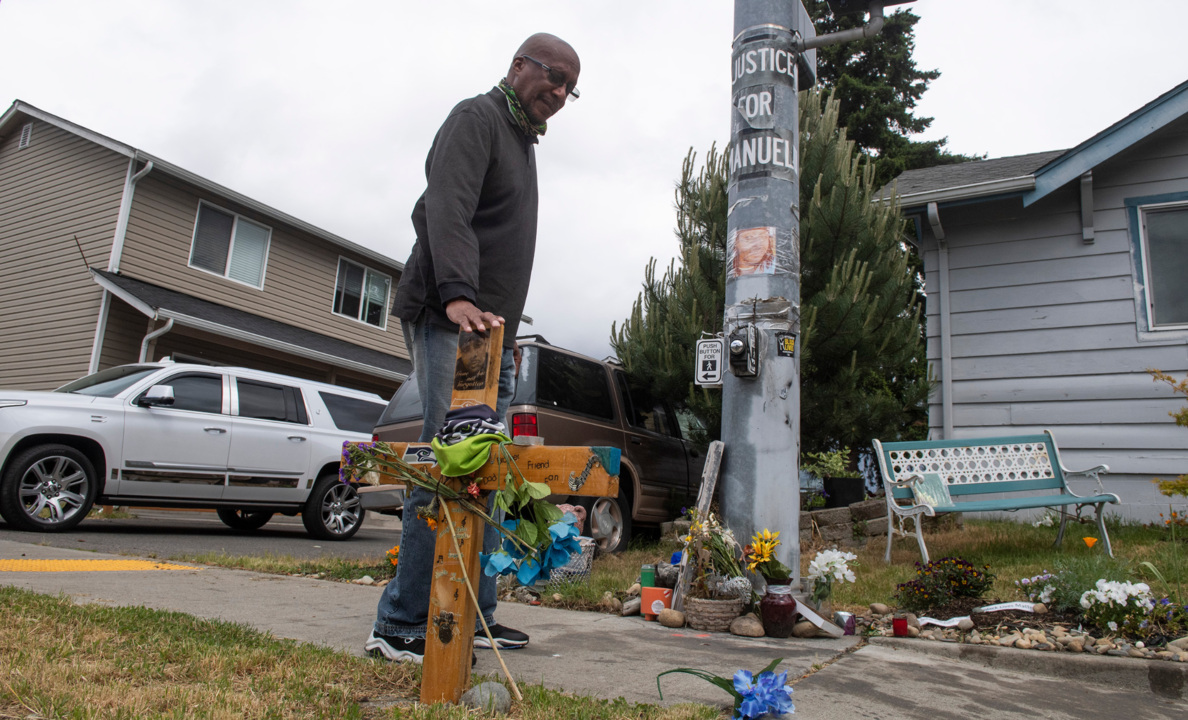
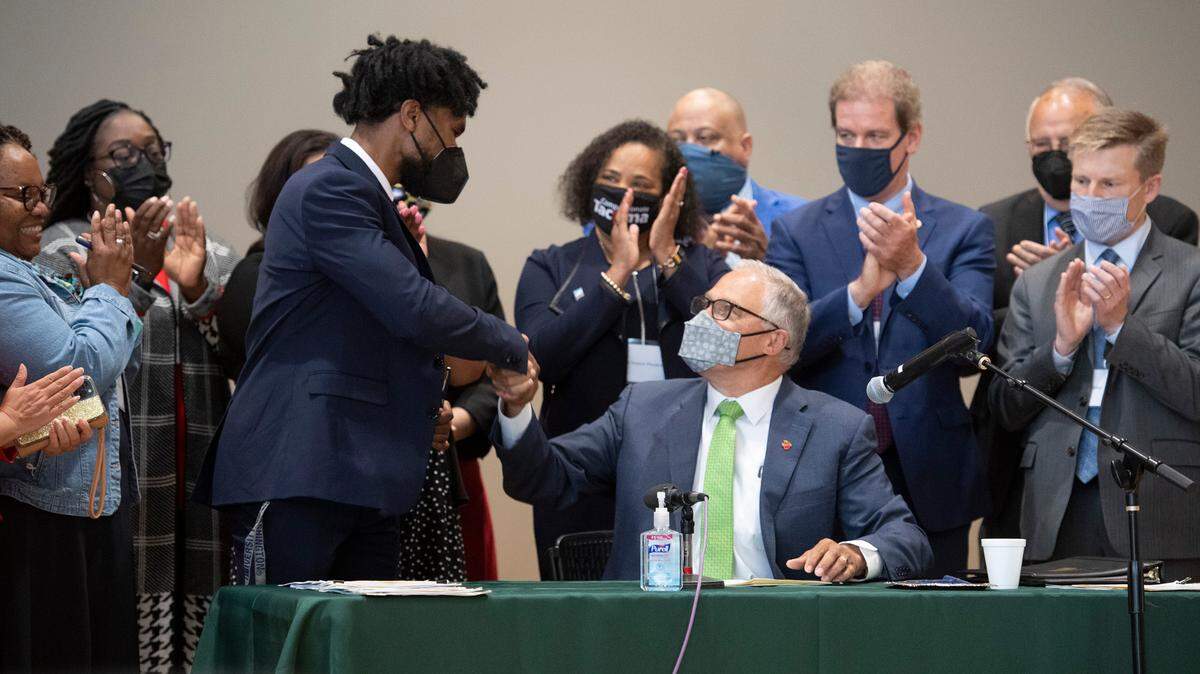
The police death of Manuel Ellis
More than a year after Manuel Ellis died in police custody, the attorney general charged three officers in his death.
Expand All
While Pierce County police chiefs say chokeholds haven’t been allowed for decades, some defend the continued use of different varieties of neck restraints despite recent public outcry.
The issue gained widespread attention following the May 25 death of George Floyd after a Minneapolis police officer pressed his knee to Floyd’s neck for more than seven minutes.
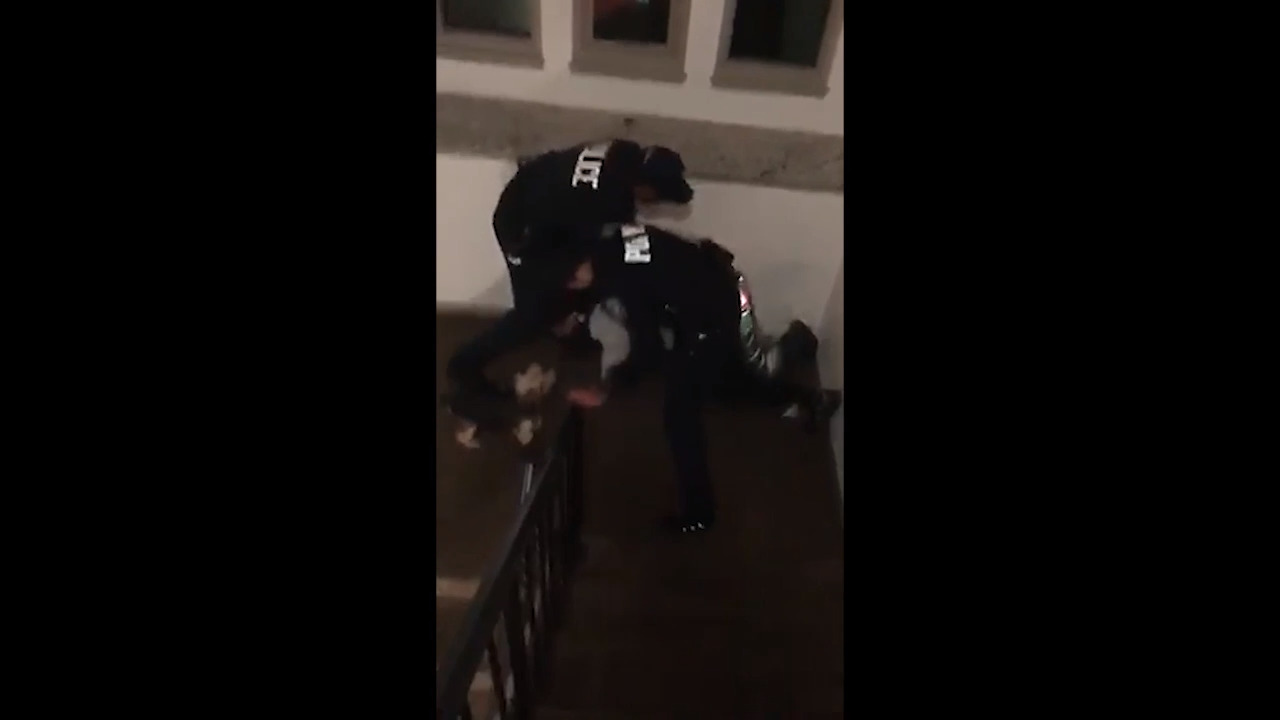
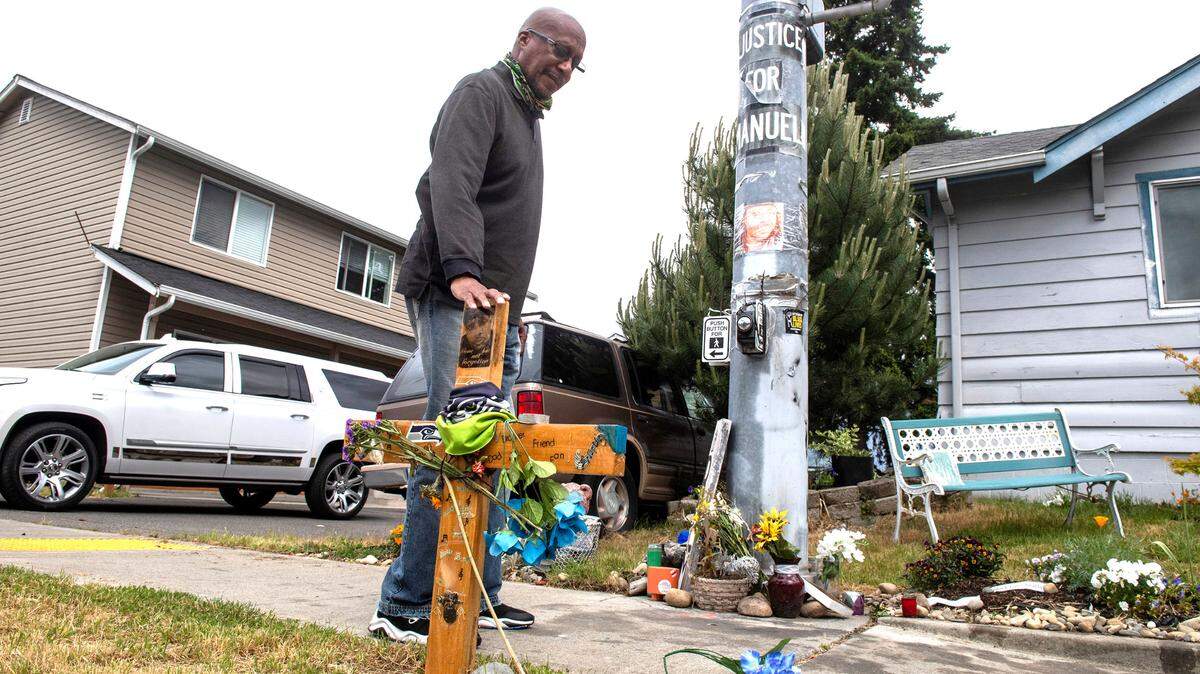
The conversation became local when videos were released showing Manuel Ellis struggling with Tacoma police moments before he died due to oxygen deprivation from being physically restrained.
His family and many supporters say the officers involved used a neck restraint and kneeled on Ellis as he called out that he couldn’t breathe.
Protests and calls for police reform prompted several police departments nationwide, including the Tacoma Police Department, to ban or strengthen restrictions on the use of neck restraints.
In June, the Seattle Police Department updated its use-of-force policy to prohibit neck holds. Some legislators have taken the matter in their own hands. In Spokane, the City Council is considering forbidding the police department from neck restraints, according news reports.
Some of the biggest law enforcement agencies in Pierce County and the Washington State Law Enforcement Academy say that if officers have the proper training, using a vascular neck restraint can be the safest option for both citizens and officers.
There are 19 police departments in Pierce County, at least seven of which allow officers to use neck restraints: the Sheriff’s Department, Lakewood, Puyallup, Bonney Lake, Milton, Buckley and Pierce Transit.
Neither Orting nor Ruston police chiefs responded to requests for information on their neck restraint policies.
Local activists like Rev. Gregory Christopher of the Shiloh Baptist Church said police should find ways to restrain people other than putting hands on their necks.
“It’s been proven over and over again that those neck restraints aren’t good,” Christopher told The News Tribune. “I don’t think that the officer meant to kill Manuel Ellis. I think that he used a tool in the tool box of policing, and it unintentionally caused Mr. Ellis’ death.”
Law enforcement agencies and policing policy institutes emphasize there is a major difference between vascular neck restraints and chokeholds: vascular neck restraints are not lethal when properly applied.
“The public needs to know that there is a big difference between strangling someone and cutting off their airway and using a neck restraint, which leads to no injury and no death,” said Sgt. Jason Youngman of the Pierce County Sheriff’s Department, who has been a defensive tactics instructor since 2013 and taught martial arts for more than 23 years.
There have been no recorded deaths or serious injuries resulting from the use of vascular neck restraints in Pierce County, according to statistics from several departments.
Chokehold vs. carotid hold
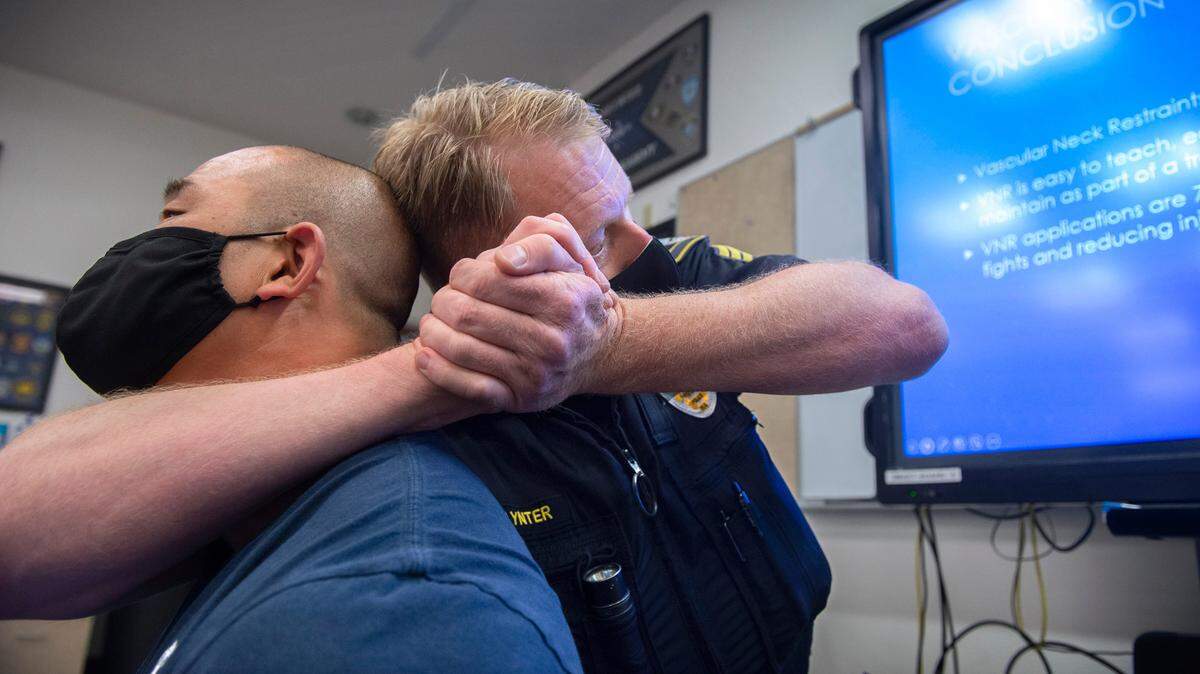
There are two types of neck restraints: the chokehold, which restricts breathing, and the carotid hold, which limits blood flow to the brain.
The use of either can render a person unconscious.
Chokeholds are considered deadly force; carotid holds are often considered non-lethal force.
For chokeholds, an officer standing behind the suspect places a forearm against the front of the throat of a person and pulls backward, compressing the airway. In vascular neck restraints, the arm goes around the neck but the trachea is protected by the crook of the elbow and compression is on the sides of the neck.
“We don’t teach or advocate chokeholds; there is absolutely no exception,” said Sean Hendrickson, de-escalation program manager for the state’s Criminal Justice Training Commission, which determines policing standards and provides training.
The Washington State Law Enforcement Academy, which teaches all recruits statewide, hasn’t taught neck restraints as part of the standard curriculum since the 1980s.
Nowadays, agencies can choose to send their recruits to an additional 12-hour class at the academy that teaches officers how to use a vascular neck restraint.
The course includes medical components of how the technique works, legal implications and how to offer medical aid after a neck restraint has been used. It also involves hands-on training.
Out of the 323 law enforcement agencies in Washington state, Hendrickson estimates no more than 75 officers or deputies are trained to use the vascular neck restraint at the academy each year.
Several departments, including the Pierce County Sheriff’s Department and the Lakewood Police Department, do in-house training instead.
Pierce County Sheriff’s Department
The Sheriff’s Department uses neck restraints more than any other law enforcement agency in the area.
Deputies applied 330 vascular neck restraints from January 2016 to July 14, 2019, according to department statistics.
Of those, 127 people (45 percent) were rendered unconscious.
Academy officials says Pierce County is one of the most well-trained departments in the use of neck restraints,
“And we use it the most,” Youngman said. “We believe in it as a safe tool that we know how to use.”
Seth Stoughton is a law professor at the University of South Carolina and former cop.
Stoughton told The News Tribune the number of neck restraints used by the Sheriff’s Department seemed like “a lot.” Stoughton, who was an officer in Tallahassee, Florida for five years and has frequently lectured on policing, said the vascular neck restraint can be dangerous if not properly applied. Learning proper application takes longer than a day, he said, which is the length many officers spend in training.
Nearly all of the Sheriff’s Department’s 345 commissioned personnel are trained and authorized to use a VNR, and Youngman said the size of the department and the large area they patrol — including several remote areas — play a role in boosting the use of the technique.
Deputies are more likely to use a neck restraint if they’re patrolling a remote area alone and know backup is far away, and deputies say a VNR is the quickest and safest way to restrain a combative suspect.
They’ve been using VNR since 1998, and there are clear guidelines in the department’s use-of-force policy, which is reviewed every year by department officials. It was last updated in May.
Deputies who have been trained may use VNR as non-deadly force “in restraining a violent individual,” according to the policy.
Tacoma Police Department
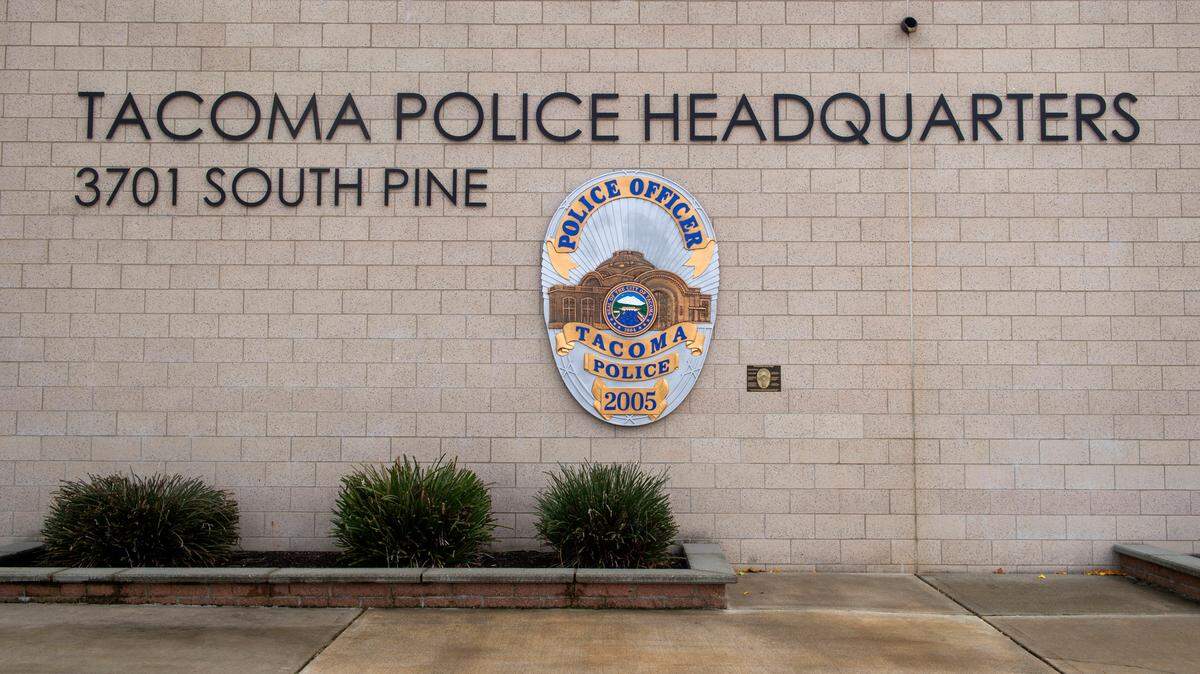
Tacoma police do not use or train any type of neck restraint, and there is currently no mention of them in the department’s use-of-force policy, which was updated last year.
That may soon change because the policy is being reviewed at the request of Police Chief Don Ramsdell.
In June, the chief announced that he wanted to clarify the policy to outright ban all neck restraints unless an officer was in a life-threatening situation.
There was one such incident Sept. 30, 2018 — the only time a vascular neck restraint has been used by a Tacoma officer in the last five years, according to department statistics.
Two officers witnessed a man punch a woman in a parking lot and when they tried to arrest the man, he allegedly struggled and managed to put one of the officers in a chokehold.
The second officer, who’d been trained in the technique when he worked at a previous agency, was able to use a VNR to render the suspect briefly unconscious. Police then used a Taser to get the suspect under control and into custody.
No discipline was doled out to the officer since neck restraints can be used if an officer’s life is in danger.
Spokesperson Wendy Haddow said the department doesn’t use or train neck restraints partially because they’re controversial.
“We continually balance training needs, wants and mandates as well as community concerns. Such techniques would require additional instruction, hands-on, as well as continual training to ensure the technique is being utilized and applied correctly,” she said.
Puyallup Police Department
The department once banned all neck restraints but began allowing the vascular neck restraint, also known as the carotid control hold, “several years ago,” Puyallup police spokesperson Dan Pashon said.
The neck restraint was reported to have been used three times in 2019 and has yet to be used in 2020, he said.
Out of 68 commissioned police officers, 12 are trained and can use a carotid control hold but only in specific situations. If an officer who was not trained in the hold used it, corrective action would follow, Pashon said. Almost all of those certified to use the hold received the training when they were with another agency, Pashon said.
“Allowing the CCH was a best practice option to apprehend a violent offender,” he said in an email. “We avoid using neck restraints on females known to be pregnant, elderly individuals, obvious juveniles, or individuals who appear to have Down Syndrome or have neck deformities or visible neck injuries.”
Lakewood Police Department
Lakewood Sgt. Jeff Paynter is a defense tactics master instructor with the Washington State Criminal Justice Training Commission. Paynter cites the 1943 Rossen Study as proof that a vascular neck restraint does no long-term damage when applied.
The study issued by the federal government conducted a full compression vascular neck restraint on people for up to 100 seconds and found no seriously negative impact to the participants’ health. A 2012 study on 24 officers concluded there was no significant impact to arterial pressure or heart rate.
Police Chief Mike Zaro cited the department’s use of force statistics to show the hold is not used frequently but is effective when used. Lakewood averages about 2,200 arrests a year, and reports 100 uses of force annually, 13 of which were a vascular neck restraint.
“We are not reckless or careless about any use of force we use,” Zaro said. “This hold, the VNR, is not used often, but when it is, it’s a valuable tool, and there is a low likelihood of risk at all.”
An estimated 70 percent of Lakewood’s use of vascular neck restraints were deemed effective by the police department, which means that the officer “gained compliance” after using the hold. The other 30 percent of the time, officers had to use another move to make the arrest, Zaro said.
In June, U.S. Congressional Democrats proposed a legislative package that would ban all neck restraints.
One officer said if it is taken away, it limits the options police officers can use in an aggressive encounter.
“If you gave me a choice of being punched in the face, pepper sprayed or VNR-ed, I would take the VNR any day,” Lakewood officer John Babcock said.
Community opposition to use of force
Jamika Scott is a native of Tacoma’s Hilltop and co-founder of the Tacoma Action Collective, a community group committed to ending systemic oppression of people of color.
Scott questions why being punched in the face, pepper sprayed or VNR are the only options. Police are too quick to physically engage rather than de-escalate a situation, she said.
“The fact that they are defending that cutting the blood flow, not cutting air flow, and saying, ‘It’s not that bad,’ it doesn’t make much sense,” Scott said. “It looks like they are trying any excuse to engage physically.”
The Tacoma Action Collective has called for the firing of officers involved in Ellis’ death. She points to his deadly police encounter as an example of police using force in place of communication.
“There are so many times in which someone is arrested that could have easily been a citation,” she said. “And there are certain offenses that leave it up to the officer’s discretion. It’s not working.”
Christopher, the pastor at Shiloh Baptist Church, said he wants every officer and person approached by police to be alive at the end of the day. He thinks that even if the vascular neck restraint isn’t designed to be lethal it still should be outlawed.
“It’s too risky,” he said. “It’s such an aggressive maneuver, and, when a person sees how debilitating that it is, it’s traumatizing for a community to see that.”
He believes there are other ways to make an arrest.
“I’m not buying into the idea that one particular restraint is that valuable to a police officer in controlling a person,” he said.
Training on neck restraint techniques
Training is a critical component of using neck restraints, and police and experts agree that law enforcement officers need regular training to properly use the technique.
At the Sheriff’s Department, deputies undergoing defensive tactics training learn how to do vascular neck restraints and chokeholds. Youngman said it’s important for law enforcement officers to be able to recognize when they are doing a hold incorrectly and potentially endangering the suspect and themselves.
“Even if you’re going to ban neck restraints and not use them, you should still train your officers,” he said.
Once certified to use the vascular neck restraint, law enforcement officers must undergo annual training to prove they’re doing it properly no matter if the training is done at the academy or by individual departments.
“If agencies are going to allow neck restraints, then they have to provide their officers with enough training so they reduce the likelihood of an improper neck restraint,” Hendrickson said. “It’s a really effective and efficient tool for officers to use and doesn’t require beating people up, but it requires a lot of training.”
Some police experts do not believe annual training is enough.
Stoughton, who co-authored “Evaluating Police Uses of Force,” said there are weeks or months of training, like in martial arts, until police officers are conversant in a greater repertoire of techniques and tactics.
He pointed out that practicing complex motor skills on a compliant partner in a training environment is starkly different than employing them in the field with a struggling person.
“The way the technique is trained matters a lot; police training typically is not ‘live,’ as it’s called in the martial arts community,” Stoughton said in an email. “It’s cooperative, which means that officers don’t get much more than the textbook application of the technique.”
In response to Stoughton’s comment, Paynter said police officers aren’t trained as competitive martial artists.
“In the competitive fighting world, you’re a training fighter and you’re fighting another person with the same training and the same weight class,” he said. “They know the date and the time. When you think about it, their situation is pretty controlled, as well.”
Use in a struggle
The tactical difference between a vascular neck restraint and a chokehold is inches.
Zaro, the Lakewood police chief, said officers certified in the hold would not allow for a vascular neck restraint to become a chokehold in a fight.
“There’s a pretty distinct difference, and that’s part of being trained,” he told The News Tribune. “You can’t complete a VNR and compress the airway.”
Paynter said being prepared for using the hold in a fight is part of the skill.
“If there is a kind of a struggle, you’ll have to forcefully move their head to a position so that you don’t hit their airway,” he said.
Stoughton said limited training can impact the use of a neck restraint in the field.
“When someone isn’t fully conversant with neck restraint — or with the physical struggle in which a neck restraint might be used — the natural human instinct is to double down, to try harder to apply the neck restraint by squeezing more or the like,” he said.
Asked how officers ensure that a vascular neck restraint does not become a chokehold with constant movement in a fight, Pashon said: “When properly applied, this would not occur based on the technique. However, if this did occur, the officers would either reapply to get in the correct position or move to another tactic.”
Many smaller departments opt out
Many of Pierce County’s smaller police departments have suspended or banned vascular neck restraints because they don’t have any officers who are trained in the hold or the recent protests have sparked review.
Gig Harbor Chief Kelly Busey said neck restraints were banned in this summer’s revision of policy.
“I was never fully comfortable with the carotid restraint (even when I was briefly trained in the academy in 1991), and I knew it was still within our policy,” he said in an email. “With recent scrutiny of the appearance of those sorts of techniques, coupled with the knowledge that we had nobody trained in it, I felt it was best to just remove it as an option.”
DuPont and Pacific police also recently suspended the vascular neck restraint.
Steilacoom Police Chief Tom Yabe said the department has never explicitly authorized chokeholds, strangleholds or neck restraints, but no officer has been certified or trained to use a VNR.
Fife currently has one officer trained in the hold, but he is directed to not use the neck restraint, Chief Peter Fisher said.
In a life or death situation, many of the departments say that a neck restraint is allowed in order to keep the officer alive.
“If the officer was using the restraint in a deadly force situation, then, no, there would not be any punishment. Members of the department can only use the amount of force which is reasonable and necessary to effect an arrest or assume control over any given situation,” Fircrest Police Chief John Cheesman said.
“An employee may use deadly force only when they reasonably believe that the action is in defense of human life, including the employee’s own life, or in the defense of any person in immediate danger of serious physical injury.”
This story was originally published August 13, 2020 at 5:05 AM.